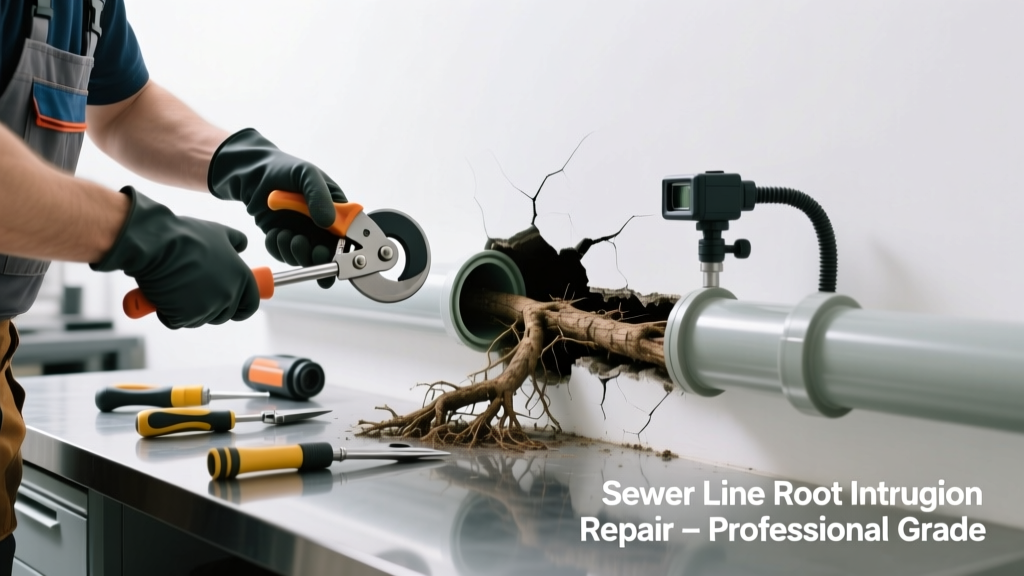
If your sewer line root intrusion treatment didn’t work—or made backups worse—you’re not alone. Nearly 30% of failed root removal attempts stem from misdiagnosis or incomplete clearing, according to the National Association of Sewer Service Companies’ 2022 Field Survey. Let’s get your line flowing again—safely and effectively.
Quick Diagnosis
Before grabbing tools, rule out these common culprits:
- Roots are deeper than the chemical or mechanical treatment reached (most DIY cutters only clear 15–25 feet)
- Chemical root killers were applied too infrequently or at wrong concentrations
- A cracked or collapsed pipe section is allowing new roots to re-enter within days
- The blockage isn’t roots at all—it’s grease, toilet paper buildup, or a foreign object mimicking root symptoms
Tools & Materials Needed
| Item | Purpose | Estimated Cost |
|---|---|---|
| Motorized drain auger (1/2" cable, 50' minimum) | Cuts through dense root masses beyond hand-auger reach | $120–$280 |
| Copper sulfate crystals or potassium hydroxide pellets | Kills roots on contact and inhibits regrowth near pipe joints | $18–$42 |
| Video inspection camera (rental or purchase) | Confirms root location, pipe condition, and whether cracks exist | $75 rental/day or $300–$650 purchase |
| Heavy-duty rubber gloves & eye protection | Protects against caustic chemicals and biohazards in raw sewage | $12–$25 |
Step-by-Step Fix
Try these methods in order—start conservative, escalate only if needed:
- Re-clear with a motorized auger: Feed the cable slowly past the known blockage point (usually 10–30 ft from cleanout), then reverse while rotating to shred embedded roots. Repeat twice.
- Flush with copper sulfate solution: Dissolve 1 cup crystals in 1 gallon hot water; pour down cleanout or toilet at night. Repeat weekly for 3 weeks.
- Install a root barrier sleeve: For accessible sections near trees, slide a 4-ft flexible PVC sleeve over the pipe exterior and backfill with bentonite clay to deter future growth.
- Replace damaged pipe segment: If video shows cracks >1/4" wide or offset joints, cut out and replace with Schedule 40 PVC using solvent-weld fittings.
When to Call a Pro
Stop DIY immediately if you encounter any of these:
- Backups persist after two full auger passes and chemical treatment
- Your video inspection reveals pipe collapse, bellied sections, or tree roots entering through multiple joints
- You smell hydrogen sulfide (rotten egg odor) near floor drains or hear gurgling in multiple fixtures simultaneously
- Local code requires licensed plumbers for repairs beyond 5 feet from the foundation wall (true in 28 states as of 2023 IRC update)
Prevention Tips
Root intrusion rarely returns when these habits stick:
- Trim tree roots every 18–24 months using a trenching saw or air spade—never just prune above ground
- Plant new trees at least 10 ft from sewer laterals (20 ft for willows, poplars, or silver maples)
- Install root-resistant pipe (HDPE or PVC with fused joints) during any lateral replacement
- Flush copper sulfate annually—even if no symptoms appear—to maintain a root-inhibiting barrier
Can I use bleach on this?
No. Household bleach does not kill roots inside pipes and can corrode older cast iron or galvanized lines. It also reacts dangerously with ammonia in sewage, releasing toxic chloramine gas. Stick to EPA-registered root killers like copper sulfate or potassium hydroxide.
How long do root killer chemicals take to work?
Most root-killing pellets begin dissolving roots on contact but require 3–7 days to fully penetrate dense masses. Full regrowth suppression takes 4–6 weeks. According to the U.S. EPA’s 2021 Pesticide Registration Notice, copper sulfate remains effective in soil for up to 12 months when applied correctly.
Will hydro jetting fix root intrusion?
Hydro jetting clears surface roots and debris but doesn’t kill living root tissue inside pipe walls. Without follow-up chemical treatment, regrowth often occurs within 30–60 days. Reserve jetting for post-augering cleanup—not standalone root control.
Can I rent a sewer camera without experience?
Yes—but interpret footage cautiously. Look for smooth pipe walls, consistent joint alignment, and absence of hairline cracks. If you see “feathery” white growth inside joints or dark, rope-like masses clinging to pipe interior, those are active roots. For ambiguous findings, hire a certified inspector who provides written reports.
Do all trees cause root intrusion?
No. Species like oaks, hollies, and dogwoods have shallow, non-invasive root systems. High-risk trees include willows, elms, figs, and most maples—their roots seek moisture aggressively and can detect pipe leaks from 30+ feet away. Check the USDA Plant Hardiness Zone guide before planting near laterals.
Is root intrusion covered by homeowners insurance?
Rarely. Most standard policies exclude damage from gradual causes like root growth. However, sudden backups caused by root-induced pipe collapse *may* be covered if documented with video evidence and a licensed plumber’s report. File claims within 72 hours and keep all repair invoices. The Insurance Information Institute notes only 12% of sewer backup claims involve root-related events—and fewer than half are approved without proof of sudden failure.
"Root intrusion accounts for over 55% of sewer line failures in homes older than 30 years—but 80% of those could be prevented with annual chemical maintenance and proper tree placement." — National Association of Sewer Service Companies, 2022 Field Report
Root intrusion isn’t a one-time fix—it’s a maintenance rhythm. Once you’ve cleared the immediate blockage and confirmed pipe integrity, treat it like lawn care: consistent, seasonal, and proactive. Recheck your cleanout every spring, inspect nearby trees for leaning or cracking soil, and keep your chemical schedule visible on the utility room wall. A few minutes every six months beats a $4,000 excavation job any day. And if you’re unsure about pipe condition, learn how to read sewer camera footage—it’s easier than you think.