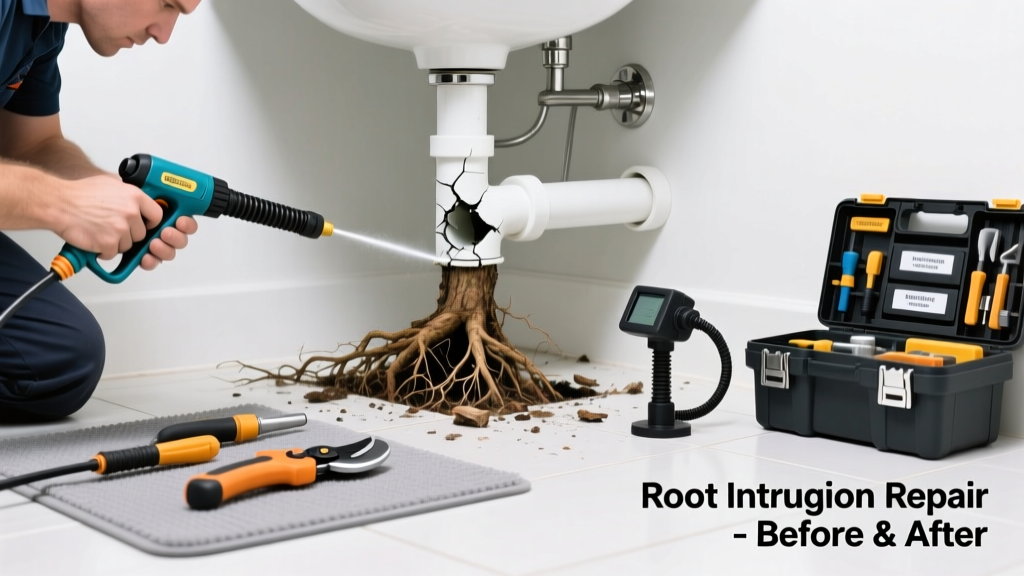
If your drains gurgle when you flush the toilet—or you hear rhythmic thumping or bubbling from basement floor drains—you’re likely dealing with tree roots infiltrating your sewer line. This isn’t just an annoyance: roots can constrict flow, trap debris, and eventually crack pipes. Early intervention stops costly excavation and pipe replacement.
Quick Diagnosis
Unusual sewer noises often point to partial blockage or pressure changes caused by root growth. Here are the most common signs:
- Gurgling or bubbling sounds from multiple fixtures (especially after flushing)
- Slow drainage in sinks, showers, or toilets—worsening over days
- Foul odors near floor drains or cleanouts, even without visible backup
- Wet spots or sinkholes in your yard along the sewer line path
- Repeated clogs in the same location despite snaking
Tools & Materials Needed
| Item | Purpose | Estimated Cost |
|---|---|---|
| Drain snake (1/2" x 50') with root-cutting blade | Cuts through shallow root masses inside cast iron or PVC lines | $85–$120 |
| Digital sewer camera (rental or purchase) | Confirms root location, depth, and severity; avoids blind snaking | $60 rental/day or $350–$900 purchase |
| Potassium hydroxide root killer (e.g., Roebic K-77) | Chemically kills roots on contact without harming pipes or trees aboveground | $25–$40 per bottle |
| Heavy-duty gloves & eye protection | Protects against biohazards and chemical splashes during cleanout | $12–$25 |
Step-by-Step Fix
Start with the least invasive method and escalate only if needed. Most residential root intrusions under 30% pipe diameter can be resolved without excavation.
- Locate and expose the cleanout: Find your main sewer cleanout (usually a 4" capped pipe near your foundation or in the basement). Remove the cap using a wrench—wear gloves and stand clear of potential backflow.
- Snake the line with a root-cutting auger: Feed the auger slowly into the pipe until resistance is met. Rotate clockwise while applying gentle forward pressure. Stop when you feel the blade “bite” into fibrous material—then reverse and pull out the cut roots.
- Flush with high-pressure water (optional): Use a pressure washer (max 3,000 PSI) with a sewer jetter nozzle to clear residual debris and expose remaining root stubs. Do not exceed pressure ratings for older clay or cast iron pipes.
- Apply root-killing chemical: Pour 2 quarts of potassium hydroxide-based root killer down the cleanout. Let sit overnight—do not flush. Repeat quarterly for high-risk properties (e.g., homes with mature oaks or maples within 30 feet).
When to Call a Pro
DIY methods fail when roots have grown beyond 50% of pipe cross-section or caused structural damage. According to the National Association of Home Builders’ 2022 Infrastructure Report, 68% of sewer line replacements stem from undiagnosed root intrusion progressing past stage 2.
- You hear loud banging or shuddering—not just gurgling—when water runs
- Snaking produces no improvement after two attempts with different auger tips
- Your camera inspection shows cracked, collapsed, or offset joints
- Roots reappear within 4–6 weeks despite chemical treatment
- You live in a historic district with clay tile or orangeburg pipe (prone to collapse when snaked)
Prevention Tips
Root intrusion takes years to develop—but once established, it accelerates fast. Prevention starts with mapping and monitoring.
- Plant new trees at least 10 feet from sewer lines—and choose shallow-rooted species like dogwood or serviceberry
- Have a licensed plumber perform a sewer camera inspection every 3–5 years (more often if you have mature trees nearby)
- Install root barrier fabric (e.g., Deep Root Barrier HDPE) vertically 24" deep alongside known sewer paths during landscaping
- Replace aging clay or cast iron laterals with schedule 40 PVC or HDPE pipe—less porous and more resistant to root penetration
Can I use bleach to kill sewer roots?
No. Household bleach (sodium hypochlorite) does not penetrate root tissue deeply enough to kill the source—and corrodes metal cleanout caps and older pipe joints. It also harms beneficial bacteria in septic systems. Stick to EPA-registered potassium hydroxide or copper sulfate formulas designed for sewer use.
Will my homeowner’s insurance cover root intrusion repair?
Typically no. Most standard policies exclude damage from gradual causes like root growth, soil movement, or wear-and-tear. Some premium endorsements (e.g., Service Line Coverage from State Farm or Allstate) may cover up to $10,000 for sewer lateral repairs—but only if the line fails suddenly due to root-caused collapse, not slow clogging. Always check your policy’s ‘gradual deterioration’ exclusion clause.
How long does root killer take to work?
Potassium hydroxide products like Roebic K-77 begin dissolving root tissue on contact, but full dieback takes 2–6 weeks depending on root size and moisture levels. You’ll notice improved flow and quieter drains within 3–5 days as surface roots decompose. Reapplication every 90 days maintains effectiveness—especially in spring and fall growing seasons.
Can roots grow back through a repaired section?
Yes—if the underlying cause isn’t addressed. Even after trenchless pipe lining or spot repair, nearby roots will seek new entry points at joints, cracks, or offsets. That’s why prevention includes both physical barriers and ongoing chemical maintenance. As plumbing contractor Marcus Delgado told Modern Contractor Solutions in 2023: “A lined pipe is only as strong as the soil around it—if roots are hungry and the joint is weak, they’ll find it again.”
Is hydro-jetting safe for older sewer lines?
It depends on pipe material and age. Hydro-jetting at 3,500+ PSI can fracture aged clay, orangeburg, or corroded cast iron. For homes built before 1975, limit pressure to 2,500 PSI and use a forward-facing nozzle only. Always inspect with a camera first—and never hydro-jet if you see visible cracks or displaced joints.
What’s the average cost to professionally clear roots from a sewer line?
According to Angi’s 2023 Home Services Report, the national average is $275–$525 for snaking + camera inspection. Full trenchless pipe lining runs $6,000–$12,000, while traditional dig-and-replace averages $4,500–$9,000 depending on depth and access. DIY root cutting saves ~65% on initial clearing—but skipping the camera risks misdiagnosis and repeat visits.
Root intrusion rarely announces itself with a warning label—just odd sounds, sluggish drains, and faint sewer smells. Catching it early means saving hundreds on emergency calls and avoiding landscape destruction from excavation. If you’ve confirmed roots via camera and the pipe remains structurally sound, the steps above give you real control. For deeper issues, don’t hesitate to call a licensed plumber—especially one who offers sewer camera inspection and trenchless sewer repair. And remember: mapping your sewer line path before planting or digging is the cheapest prevention you’ll ever do.