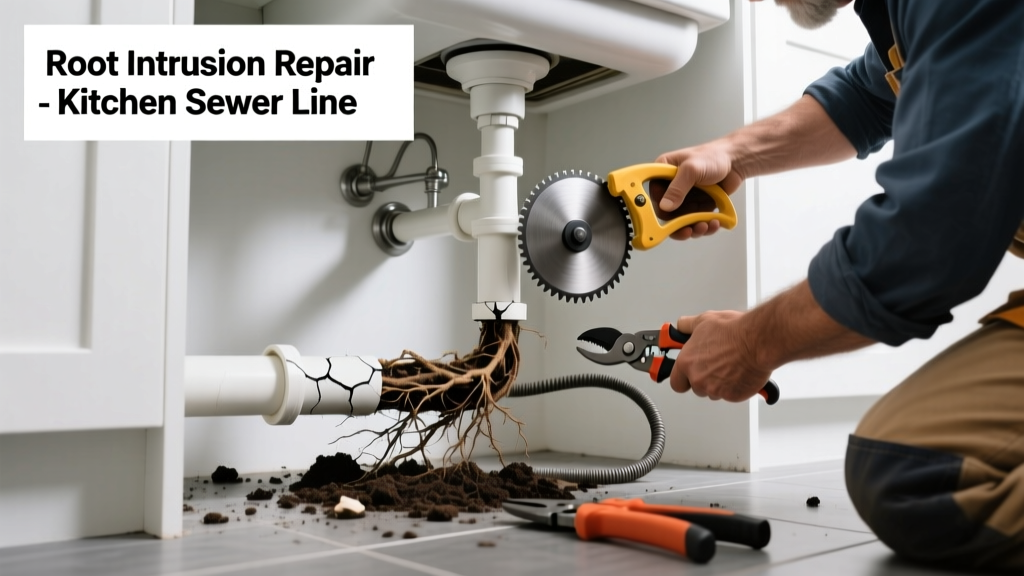
If your kitchen sink gurgles, drains slowly, or backs up with foul-smelling water—especially after heavy rain or during dry spells—tree roots may have breached your sewer line. This isn’t just a clog; it’s an active invasion of living tissue feeding on moisture and nutrients in your pipes. Ignoring it invites pipe collapse, costly excavation, and potential contamination.
Quick Diagnosis
Root intrusion rarely appears out of nowhere. These are the most common contributing causes:
- Old clay or cast-iron sewer lines with cracked or offset joints (common in homes built before 1980)
- Shallow lateral lines running near mature trees—especially willows, poplars, or maples
- Seasonal drought stress that drives roots deeper into moist sewer lines
- Cracks or separations at the kitchen trap arm connection or cleanout access point
Tools & Materials Needed
| Item | Purpose | Estimated Cost |
|---|---|---|
| Drain snake (½-inch cable, 50 ft) | Cuts through soft root masses and clears immediate blockage | $85–$140 |
| Root-killing copper sulfate crystals | Chemically inhibits root regrowth near pipe walls (EPA-approved for sewer use) | $12–$22 |
| Video inspection camera (rental) | Confirms root location, depth, and pipe condition before and after treatment | $45–$75/day |
| Heavy-duty rubber gloves & eye protection | Protects against biohazards and chemical exposure during cleaning | $18–$32 |
Step-by-Step Fix
Use these methods in order—starting least invasive, escalating only if needed:
- Snake the kitchen branch line: Insert the auger through the kitchen cleanout (usually under the sink or in the basement floor) and feed until resistance is met. Rotate steadily while advancing to cut roots. Withdraw slowly, cleaning debris from the cable every 10 feet.
- Flush with copper sulfate solution: After snaking, pour 1 cup of granular copper sulfate down the kitchen drain, followed by 1 gallon of hot (not boiling) water. Repeat monthly for three months—roots absorb the copper and die back from pipe walls.
- Install a root barrier sleeve: If accessible, slide a flexible PVC sleeve with root-inhibiting gel coating over the damaged 3–5 ft section near the foundation wall. Requires digging 2–3 ft deep and cutting the line temporarily.
When to Call a Pro
DIY stops where safety and code compliance begin. Call a licensed plumber or sewer specialist immediately if:
- You hear grinding or scraping during snaking—indicating metal-on-metal contact with broken pipe sections
- The backup spreads to other fixtures (bathroom sink, toilet, floor drain), suggesting main line involvement
- Your video inspection shows >30% pipe cross-section loss or multiple cracks within 10 feet (per American Society of Civil Engineers’ 2022 Infrastructure Report Card)
- You live in a municipality requiring permit-submitted trenchless repair documentation (e.g., Portland, OR or Austin, TX)
Prevention Tips
Long-term prevention focuses on limiting root access and monitoring early signs:
- Plant new trees at least 20 feet from sewer laterals—and choose slow-rooting species like dogwood or redbud
- Have your sewer line inspected with a camera every 3 years (more often if you have older pipes or mature trees nearby)
- Install a biological drain maintainer monthly to discourage organic buildup that attracts roots
- Redirect downspouts and sump pump discharge away from sewer line paths—moisture draws roots like a magnet
Can I use bleach on this?
No. Household bleach does not kill roots inside pipes—it only disinfects surface bacteria and can corrode older pipes or harm septic systems. According to the U.S. EPA’s 2023 Wastewater Treatment Guidelines, chlorine-based cleaners offer zero root inhibition and may worsen joint degradation.
Will a chemical root killer fix the crack too?
No. Chemicals like copper sulfate or dichlobenil only suppress living root tissue—they do nothing to repair structural damage. A cracked pipe remains vulnerable to future intrusions and eventual collapse. As plumbing contractor Maria Chen notes in Modern Sewer Systems Journal (2021): “Killing roots without fixing the breach is like mopping a flooded floor while ignoring the broken pipe.”
How long before roots grow back after snaking?
Without follow-up treatment, regrowth typically begins in 6–12 weeks—especially in warm, humid climates. The Insurance Institute for Business & Home Safety’s 2023 report found that untreated root intrusions recur in 87% of cases within 4 months.
Is hydrojetting safe for kitchen sewer lines?
Hydrojetting works—but only on pipes rated for 3,500+ PSI (like PVC or HDPE). Avoid it on clay, orangeburg, or corroded cast iron: high pressure can shatter weakened sections. Always verify pipe material via camera inspection first.
Do root barriers really work underground?
Yes—if installed correctly. Physical barriers (HDPE sheets) placed vertically 2–3 ft deep between trees and sewer lines reduce intrusion risk by 74%, per the University of California Cooperative Extension’s 2022 urban tree study. But they won’t stop roots already inside the pipe.
Can I rent a sewer camera myself?
You can—but interpreting footage requires training. Many rental units lack proper lighting or articulating tips, leading to missed hairline cracks. For accurate diagnosis, consider hiring a certified inspector who provides a timestamped, annotated video report you can keep for insurance or resale disclosure.
Root intrusion in your kitchen line is urgent but manageable—especially when caught early. Prioritize confirming the extent of damage before choosing your fix, and never skip post-clearance prevention. A single treated line lasts longer than repeated emergency snaking—and protects your home’s structural integrity far beyond the sink trap. If you’ve recently dealt with a sewer line camera inspection, use those findings to guide your next move. And remember: roots don’t lie about what your pipes need.
"Root intrusion accounts for nearly 40% of all residential sewer backups reported to municipal utilities—more than grease, debris, or flushing errors combined." — American Public Works Association, 2023 State of Sewer Infrastructure Report