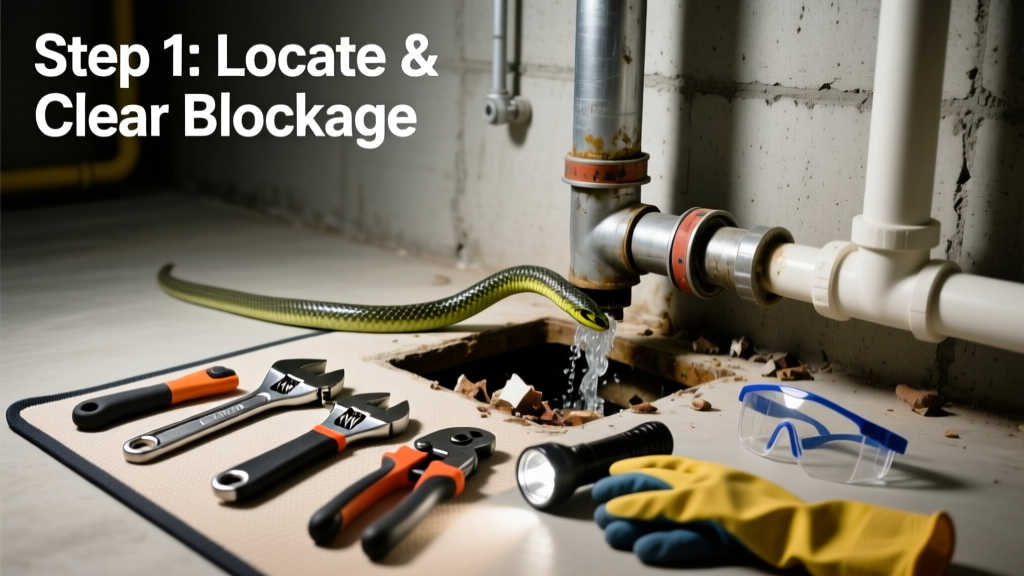
That gurgle from your basement floor drain—or the hollow knocking sound when you flush—means your sewer line isn’t just slow; it’s compromised. Unusual noises often signal partial blockages, trapped air, or structural issues like bellied pipe or root intrusion. Ignoring them risks sewage backup, pressure buildup, and expensive emergency repairs.
Quick Diagnosis
Unusual sewer noises rarely appear in isolation. Match your symptoms to these common causes:
- Gurgling from multiple fixtures (especially after flushing): air escaping past a partial clog downstream
- Knocking or banging when water runs: trapped air compressing in a collapsed or offset pipe joint
- Bubbling or sucking sounds from floor drains: vent stack obstruction or main line restriction
- Rattling pipes combined with slow drainage: tree roots cracking or constricting cast iron or clay pipe
- Wet spots or sinkholes near the sewer lateral: possible pipe collapse causing shifting soil and vibration transmission
Tools & Materials Needed
| Item | Purpose | Estimated Cost |
|---|---|---|
| Motorized drain auger (1/2" x 50') | Clears obstructions beyond 25 feet and cuts through roots or hardened grease | $120–$280 |
| Plumber's snake (manual, 25') | Initial probing of cleanout access points and shallow clogs | $15–$35 |
| Drain camera (rental or DIY kit) | Identifies pipe deformation, root penetration, or joint separation causing noise | $40–$90/day |
| Wet/dry vacuum (heavy-duty) | Creates reverse suction to dislodge air pockets and light debris near traps | $80–$160 |
| High-pressure water jet attachment | Flushes sediment and biofilm from pipe walls without damaging aged pipe | $75–$220 |
Step-by-Step Fix
Start at the easiest access point—the exterior cleanout—and work upstream. Never use chemical drain cleaners on main sewer lines—they corrode older pipes and mask real issues.
- Locate and open the main cleanout: Usually a 4-inch capped pipe near your foundation or in the yard. Loosen the cap slowly—if gas or pressure escapes, wait 2 minutes before fully removing.
- Run a manual snake 10–15 feet: Feel for resistance. If you hit a firm obstruction within 20 feet, it’s likely a grease trap or foreign object—not a deep-root intrusion.
- Use motorized auger if resistance persists: Feed slowly while rotating. Stop immediately if you feel sudden give or hear metal-on-metal scraping—this may indicate broken pipe or bellied section.
- Deploy drain camera after clearing: Check for cracks, offsets, or root masses beyond 30 feet. Note depth and orientation—many rental cameras include GPS tagging.
- Jet flush only after visual confirmation: Attach high-pressure nozzle to garden hose (max 2,500 PSI), feed into cleanout, and flush downstream for 3–5 minutes. Do not jet upward toward house—risk of forcing debris into branch lines.
When to Call a Pro
Some noises mean more than a clog—they signal imminent failure. Call a licensed plumber or sewer specialist immediately if:
- You hear continuous vibrating or humming from underground during heavy rain (indicates pipe collapse under hydrostatic pressure)
- The gurgling coincides with wet drywall, warped flooring, or musty odors (sign of sewer gas infiltration)
- Camera inspection reveals >25% pipe deformation or root mass covering >40% of interior diameter (per National Association of Sewer Service Companies’ 2022 field standards)
- Your home has clay or orangeburg pipe installed before 1970—these degrade unpredictably and require trenchless lining or full replacement
"Over 62% of sewer backups reported to municipal utilities begin with unaddressed noise symptoms—gurgling is the most underreported early warning sign." — American Society of Plumbing Engineers, Residential Drainage Failure Trends Report, 2023
Prevention Tips
Prevent recurrence by targeting root causes—not just symptoms:
- Install a sewer line camera inspection every 3 years if your home is over 30 years old or near mature trees
- Replace outdated cast iron or clay laterals with HDPE pipe during renovations—its smooth interior resists root penetration and sediment buildup
- Use enzyme-based drain maintenance monthly (not caustic chemicals) to break down organic film where roots latch on
- Redirect downspouts and sump pump discharge away from the sewer lateral path—excess water saturates soil and encourages root growth toward pipes
- Plant willows, poplars, and maples at least 30 feet from sewer lines; choose shallow-root species like dogwood or redbud instead
Can I use bleach on this?
No. Household bleach does not dissolve organic clogs in main sewer lines—it reacts with ammonia in waste to produce toxic chloramine gas and accelerates corrosion in iron or galvanized pipes. It also kills beneficial bacteria in septic systems. Skip it entirely.
Will a plunger fix a noisy sewer line?
Only if the noise originates in a single fixture’s P-trap—not the main line. A vigorous plunger can dislodge air pockets in sink or tub traps, but it lacks the force or reach to affect a 4-inch sewer lateral buried 3–6 feet underground.
Why does my toilet gurgle when the washing machine drains?
This points to a shared vent issue or main line restriction. When the washer pumps 15–20 gallons rapidly, air gets forced backward through the least-resisted path—often your toilet’s trap. It’s a red flag that the main line is partially blocked or the roof vent is obstructed by bird nests or ice.
Is sewer gas dangerous if I hear hissing?
Yes. Hissing or whistling from floor drains or toilets suggests pressurized sewer gas (hydrogen sulfide, methane) escaping through compromised seals or cracks. At concentrations above 100 ppm, H₂S causes eye irritation and headaches; above 500 ppm, it’s potentially fatal. Ventilate the area and shut off water supply until inspected.
How long should I wait before calling someone if the noise persists?
If gurgling or knocking continues more than 48 hours after clearing visible clogs and checking vents, call a pro. According to the U.S. EPA, homes with untreated sewer line issues average $4,200 in remediation costs—versus $1,100 for interventions caught within 72 hours.
Can frozen ground cause sewer noises in winter?
Absolutely. Frost heave can shift or crack buried pipes, especially older clay or concrete laterals. You’ll hear rhythmic ticking or popping as thawing cycles stress cracked joints. Inspect your cleanout cap for frost-lifted soil and check for effluent pooling near the foundation after warm spells.
Noise from your sewer line isn’t just annoying—it’s your plumbing system’s distress signal. Address it methodically: inspect, clear, verify, protect. A few hours now can prevent thousands in damage later. For persistent issues, don’t gamble with DIY—reach out to a certified sewer specialist or explore trenchless sewer repair options that minimize landscape disruption and offer 50-year warranties on cured-in-place pipe liners.