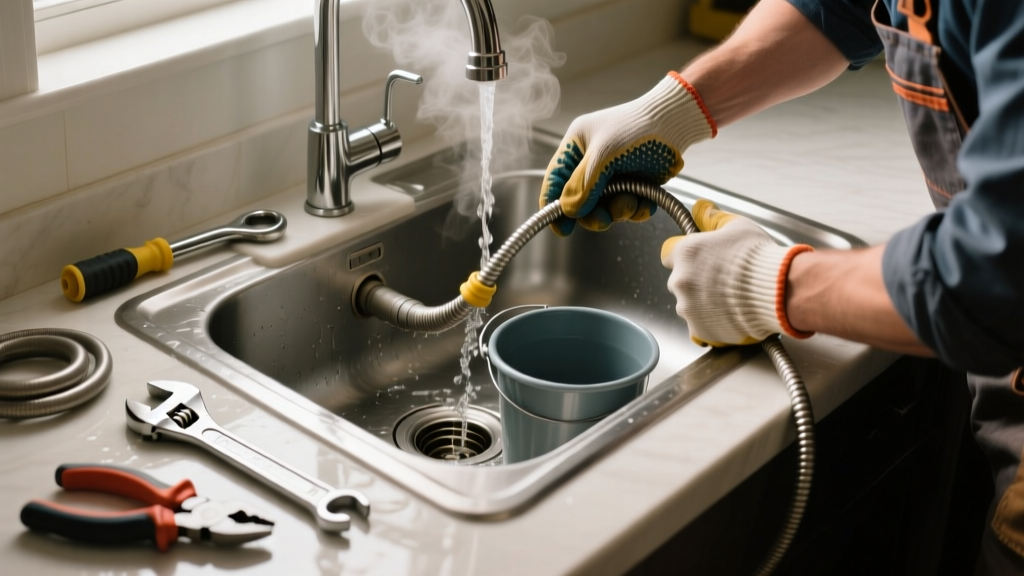
That gurgling sound from your kitchen sink—followed by slow drainage or standing water—isn’t just annoying; it’s a red flag that your main sewer line may be backing up. Unlike a simple sink trap clog, this issue affects multiple fixtures and can escalate fast if ignored.
Quick Diagnosis
Before grabbing tools, confirm it’s truly a sewer line issue—not just your sink’s P-trap or garbage disposal. Look for these telltale signs:
- Multiple drains (kitchen, bathroom, laundry) draining slowly or backing up simultaneously
- Gurgling sounds from toilets or floor drains when running the kitchen faucet
- Sewage odor near floor drains or basement cleanouts
- Water pooling around the base of the toilet or in the lowest drain in the house
If only the kitchen sink is affected and the disposal hums normally, the clog is likely localized—and not in the main sewer line.
Tools & Materials Needed
| Item | Purpose | Estimated Cost |
|---|---|---|
| Motorized drain auger (1/4" x 50 ft) | Reaches past branch lines into the main sewer lateral (typically 10–30 ft from cleanout) | $85–$120 |
| Slip-joint pliers & adjustable wrench | For removing cleanout caps and securing pipe fittings without stripping threads | $12–$25 |
| Heavy-duty rubber gloves & eye protection | Protects against biohazards and splashing during cleanout access | $8–$15 |
| Wet/dry vacuum (shop vac) | Creates strong suction on accessible drains to dislodge shallow blockages | $60–$110 |
| Enzyme-based drain maintainer (e.g., Green Gobbler) | Breaks down organic buildup over time—safe for pipes and septic systems | $10–$18 |
Step-by-Step Fix
Start with the safest, most accessible method first—and escalate only if needed:
- Locate and open your sewer cleanout. It’s usually a 4-inch capped pipe near your foundation (outside or in basement), within 3–5 ft of where the kitchen drain exits the house. Use an adjustable wrench to loosen the cap—expect pressure and possible overflow; place a bucket underneath.
- Run a motorized auger through the cleanout. Feed the cable slowly (no more than 1 ft/sec) until you feel resistance. Rotate while feeding, then reverse to break up or retrieve debris. Pull out the cable every 5 ft to inspect and wipe off sludge.
- Flush with a garden hose (optional but effective). After augering, insert a spray nozzle into the cleanout and run cold water at full pressure for 2–3 minutes to flush loosened material downstream.
- Test all drains. Run water in the kitchen sink, bathtub, and toilet for 2 minutes each. No gurgling or backup? The line is clear. If backups return within hours, the clog is deeper—or roots or pipe collapse may be involved.
When to Call a Pro
DIY isn’t safe or effective in these scenarios:
- You’ve augered 50+ feet with no resistance or debris retrieval—suggesting a collapsed or offset pipe
- Raw sewage backs up into your home (especially floor drains or basement)—this requires EPA-certified cleanup and inspection
- Your home is older than 1975 and has clay or cast-iron sewer laterals (prone to root intrusion and corrosion)
- You smell hydrogen sulfide (rotten egg odor) near the cleanout or basement—indicates dangerous gas buildup
According to the Insurance Institute for Business & Home Safety's 2023 report, 68% of sewer backups in homes built before 1980 were linked to undetected pipe fractures or root penetration—not simple blockages.
Prevention Tips
Stop future clogs before they start:
- Install a grease trap under your kitchen sink—or pour cooled cooking oil into a sealed container for trash disposal (never down the drain)
- Run hot water for 30 seconds after each use of the garbage disposal, followed by 1 tbsp baking soda + 1 tbsp vinegar monthly
- Have your sewer lateral scoped and cleaned every 3–5 years if you have mature trees nearby (roots seek moisture in joints)
- Use enzyme treatments like Bio-Clean biweekly—not monthly—as a maintenance habit, not a fix
Can I use bleach on this?
No. Bleach doesn’t dissolve grease, hair, or food solids—it only disinfects surfaces. Worse, mixing bleach with other cleaners (like ammonia in urine or vinegar) can create toxic chlorine gas. It also corrodes older pipes and harms septic bacteria.
Will boiling water clear a sewer line clog?
Not reliably—and it’s risky. Boiling water can soften PVC glue joints or crack older cast-iron pipes. It may temporarily melt grease near the trap, but that grease re-solidifies further down the line, worsening the blockage. Skip it entirely for suspected sewer issues.
Why does my kitchen sink back up when I flush the toilet?
This confirms a shared drain path obstruction downstream of both fixtures—most often in the main sewer lateral between your home and the municipal line or septic tank. The toilet’s larger volume forces wastewater backward into the lowest open drain: your kitchen sink.
How long does a sewer line auger last?
A quality 1/4" steel cable auger lasts 5–7 years with proper cleaning and storage. Replace it if the cable kinks easily, the drum slips under load, or the cutting head wears flat. Avoid forcing bent cables—they can puncture pipe walls.
Do chemical drain cleaners work on sewer line clogs?
Rarely—and they’re hazardous. Lye-based products (Drano Max Gel) generate heat that can warp PVC or ignite trapped methane. Sulfuric acid formulas corrode metal pipes and kill beneficial bacteria in septic systems. The U.S. EPA estimates that 14% of household water usage is from leaks—including those caused by chemical-induced pipe damage.
Is a camera inspection worth it after clearing the clog?
Yes—if the clog returned within 72 hours or you live in a home built before 1990. A $125–$250 sewer camera inspection identifies root intrusion, bellied pipe, or cracked joints—problems no auger can fix. Many plumbers apply that fee toward repair if you proceed.
Clearing a kitchen-linked sewer clog is doable—but only when approached methodically and with respect for what’s underground. Keep your cleanout access clear year-round, avoid pouring fats down the drain, and treat your sewer line like the critical infrastructure it is. For persistent issues, don’t hesitate to reach out to a licensed plumber—especially if you're considering a sewer camera inspection or need help diagnosing garbage disposal drainage problems. And if your home shares a sewer line with neighbors, check in with your HOA or municipality before digging—some lateral repairs require permits or joint responsibility.