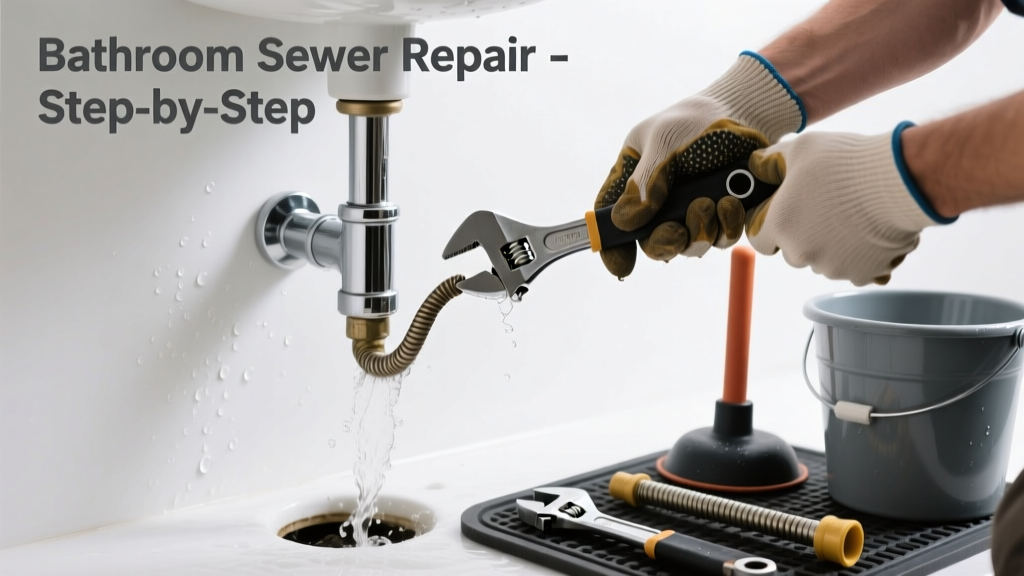
If your bathroom sink, shower, and toilet all back up at once—or gurgle when you flush—the clog isn’t in a single fixture. It’s likely in the main sewer line, and ignoring it risks overflow, sewage backup, or structural damage. This isn’t a slow-drain issue—it’s an urgent system-wide warning.
Quick Diagnosis
Before grabbing tools, confirm it’s a sewer line issue—not just a clogged trap or vent. Look for these telltale signs:
- All bathroom drains (sink, shower, tub, toilet) drain slowly or not at all
- Gurgling sounds from multiple fixtures when another is used
- Sewage odor near floor drains or basement cleanouts
- Water backing up into the lowest drain (often the shower or floor drain) when flushing the toilet
- No improvement after plunging or snaking individual fixtures
Tools & Materials Needed
| Item | Purpose | Estimated Cost |
|---|---|---|
| Motorized drain auger (1/2" cable, 50 ft) | Reaches past branch lines into main sewer (typically 10–30 ft from cleanout) | $120–$250 |
| Basement or yard cleanout cap wrench | Removes threaded cleanout caps without stripping them | $8–$15 |
| Rubber gloves, eye protection, N95 mask | Protects against raw sewage pathogens and hydrogen sulfide gas | $12–$25 |
| Wet/dry vacuum (shop vac) with sewer-rated filter | Extracts standing water before snaking; avoids pump contamination | $60–$140 |
| Enzyme-based drain maintainer (e.g., Green Gobbler) | Breaks down organic buildup without corroding pipes—safe for septic | $15–$22 |
Step-by-Step Fix
Start at the cleanout—the safest, most direct access point. Never snake from a toilet or sink if a cleanout exists.
- Locate and open the cleanout: Find the 4-inch threaded cap (usually in basement floor, crawlspace, or outside near foundation). Loosen with a cleanout wrench—not a pipe wrench—to avoid rounding the hex.
- Remove standing water: Use a wet/dry vac to extract any sewage pooling in the cleanout pipe. Do not let it overflow.
- Feed the auger: Insert the motorized auger cable slowly. Let the tool do the work—don’t force it. Stop when resistance increases sharply (likely the clog).
- Break and retract: Engage reverse rotation while gently pulling back. Retrieve debris on the cable tip. Repeat until cable moves freely past the 25-foot mark.
- Flush and test: Pour 5 gallons of hot water down the cleanout. Run water in each bathroom fixture for 90 seconds. Confirm no gurgling or backup.
When to Call a Pro
Stop and call a licensed plumber if any of these apply:
- You hit solid resistance within 5 feet of the cleanout—could indicate collapsed pipe or tree root intrusion
- Auger retrieves thick, fibrous material (roots) or hardened grease sludge that won’t break up
- Clog returns within 72 hours after clearing
- You smell rotten eggs (hydrogen sulfide) strongly near the cleanout or walls—indicates dangerous gas buildup
- Your home has a septic system and you haven’t had it pumped in over 3 years
According to the Insurance Institute for Business & Home Safety's 2023 report, 68% of sewer backups involving property damage occurred after homeowners attempted repeated DIY snaking without camera inspection.
Prevention Tips
Prevent recurrence with consistent habits and infrastructure checks:
- Install hair catchers in every shower and tub drain—and clean them weekly
- Never flush wipes (even "flushable" ones), dental floss, cotton swabs, or feminine products
- Use enzyme drain treatment monthly—not chemical drain cleaners, which corrode cast iron and PVC joints
- Have your sewer line scoped every 3–5 years, especially if your home is over 30 years old or near mature trees
- Divert downspout runoff away from your foundation—saturated soil encourages root growth toward pipes
Can I use bleach on this?
No. Bleach does nothing to dissolve organic clogs, grease, or roots—and it reacts dangerously with other cleaners, releasing toxic chlorine gas. It also kills beneficial bacteria in septic systems. Skip it entirely.
Will a plunger fix a sewer line clog?
Not reliably. A plunger only creates pressure in one fixture’s trap. If the clog is downstream in the main line, plunging may push wastewater up into another drain—like your shower or bathtub. It’s a temporary distraction, not a solution.
What if my cleanout is buried or missing?
Many older homes have cleanouts capped with concrete or covered by flooring. Check near exterior walls or under basement stairs. If truly missing, a plumber can install a new cleanout—typically $220–$450. Don’t attempt drilling into cast iron or clay pipe yourself.
Can tree roots re-clog the line right after cleaning?
Yes—especially with older clay or orangeburg pipe. Roots exploit tiny cracks and grow back within weeks. A professional hydrojetting + root-killing copper sulfate treatment helps, but long-term, consider trenchless pipe lining or replacement. See our guide on sewer line repair options.
Is it safe to run the washing machine while the sewer line is clogged?
No. Doing so forces 15–20 gallons of wastewater directly into an already compromised line—guaranteeing backup into your bathroom or basement. Shut off all water-using appliances until the line is fully cleared and tested.
How do I know if it’s the city’s sewer line vs. mine?
If only your home is affected, it’s yours. If neighbors report identical issues (especially during heavy rain), call your municipal utility. Most cities maintain the line from the main to the property line—but verify using your local home sewer map lookup tool.
A sewer line clog in the bathroom isn’t just inconvenient—it’s a red flag for aging infrastructure, poor habits, or environmental pressure on your pipes. Address it methodically, protect yourself from exposure, and invest in inspections before small problems become emergency floods. Regular maintenance beats crisis response every time.