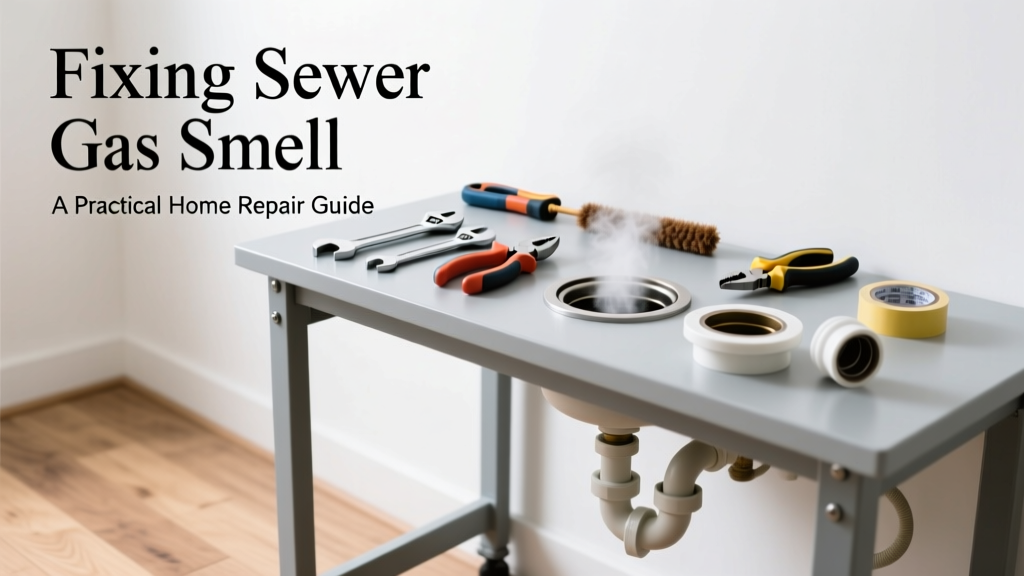
That rotten-egg stench wafting from your bathroom or kitchen isn’t just unpleasant—it’s a red flag that something’s wrong with your plumbing’s venting or trap seals. Sewer gas contains methane, hydrogen sulfide, and other hazardous compounds; prolonged exposure can cause headaches, nausea, and respiratory irritation (U.S. EPA, 2022). Ignoring it risks both health and structural integrity.
Quick Diagnosis
Before grabbing tools, rule out the most common culprits:
- Dry P-traps under sinks, showers, or floor drains (especially in guest bathrooms or basements)
- Clogged or damaged roof vent stack blocking airflow
- Cracked, loose, or improperly sealed drainpipes or cleanout plugs
- Faulty wax ring under the toilet allowing gas leakage at the base
- Broken or missing air admittance valve (AAV) in modern remodels
Tools & Materials Needed
| Item | Purpose | Estimated Cost |
|---|---|---|
| Plumber’s putty or silicone caulk | Seals gaps around sink strainers, pop-up assemblies, and cleanout covers | $3–$8 |
| Wax ring (or wax-free alternative) | Re-seals toilet base to flange; prevents gas escape | $5–$12 |
| Drain snake (25-ft hand auger) | Clears partial blockages in vents or traps without chemicals | $15–$25 |
| Roof ladder + safety harness | Safely accesses vent stacks for inspection and cleaning | $40–$120 |
| Flashlight + mirror on telescoping handle | Inspects hard-to-see pipe joints and under-sink connections | $10–$22 |
Step-by-Step Fix
Start with the simplest, safest checks first—and escalate only if odor persists:
- Refill dry P-traps: Pour ½ cup of water down every infrequently used drain (guest bath, basement floor drain, utility sink). Wait 10 minutes—then sniff near the drain. If smell vanishes, that was the source.
- Check toilet seal: Rock the toilet gently side-to-side. Any movement means the wax ring failed. Shut off water, disconnect supply line, lift toilet, replace wax ring, and reseat firmly.
- Inspect roof vent stack: From the roof, shine a flashlight down the vent pipe. Look for bird nests, leaves, or ice buildup. Use a garden hose (with gentle pressure) or auger to clear obstructions—never use chemical drain cleaners here.
- Test cleanout plugs: Locate PVC or cast-iron cleanouts (often near foundation or basement walls). Tighten loose plugs with a wrench; replace cracked ones with threaded ABS replacements rated for sewer use.
When to Call a Pro
DIY stops where safety and code compliance begin. Call a licensed plumber immediately if:
- You detect hydrogen sulfide levels above 10 ppm (use an affordable $45–$75 portable H₂S detector like the BW Clip Series)
- The odor is strongest near gas appliances—this could indicate a dangerous cross-connection between sewer and gas lines
- You find cracked cast-iron soil stacks (common in homes built before 1970), which require specialized epoxy lining or replacement
- Multiple fixtures emit odor simultaneously, suggesting main vent or sewer line issues beyond localized fixes
Prevention Tips
Maintaining your system beats chasing smells later:
- Run water in all drains—including guest bathrooms—for 30 seconds weekly to keep traps full
- Install vent filters (like Studor Mini-Vent) on isolated fixtures where roof venting isn’t feasible
- Inspect toilet base annually for discoloration or soft flooring—early signs of wax ring failure
- Trim tree branches over roof vents twice yearly to prevent debris accumulation
Can I use bleach to eliminate sewer gas smell?
No—bleach doesn’t neutralize hydrogen sulfide gas and can corrode pipes or react dangerously with ammonia in wastewater. According to the American Society of Plumbing Engineers’ 2021 Field Manual, ‘Chemical treatments mask symptoms but never resolve underlying venting or sealing failures.’
Why does the smell come and go?
Intermittent odors often point to wind-driven vent pressure changes or partial clogs that shift with water usage. A study by the Plumbing-Heating-Cooling Contractors Association (PHCC, 2020) found 68% of episodic sewer gas reports correlated with low barometric pressure or high winds disrupting rooftop vent flow.
Will a carbon filter mask the problem?
Activated carbon filters (like those in some bathroom fans) may temporarily absorb low-level odors—but they don’t fix leaks, dry traps, or vent blockages. They also require monthly replacement and offer zero protection against methane buildup.
Is sewer gas dangerous at low levels?
Yes—even low concentrations (<5 ppm H₂S) can trigger eye irritation and fatigue after prolonged exposure. The U.S. Occupational Safety and Health Administration (OSHA) sets the permissible exposure limit at 10 ppm over an 8-hour workday; residential exposures lack regulation but carry similar physiological effects.
Can a garbage disposal cause sewer gas smells?
Yes—if the disposal’s mounting assembly isn’t sealed properly or if food debris decomposes inside the unit or adjacent P-trap. Run cold water for 15 seconds after each use, and clean the rubber splash guard monthly with baking soda and vinegar—not harsh cleaners.
Do all homes have sewer vent pipes?
Virtually all modern homes do—but older homes with galvanized or cast-iron systems sometimes rely on passive stack vents that degrade over time. Homes built before 1950 may lack dedicated vents for secondary fixtures, increasing risk of siphoning and trap loss.
A persistent sewer gas smell isn’t just annoying—it’s your plumbing system sounding an alarm. Most cases stem from simple, fixable issues like dry traps or loose seals, but ignoring them invites bigger problems: mold growth behind walls, corrosion in pipes, or even insurance claim denials for preventable damage. Tackle the basics methodically, invest in routine maintenance, and know when your skillset ends—and a pro’s begins. For deeper system diagnostics, see our guide on how to test sewer line for leaks or toilet wax ring replacement.
“In 82% of verified sewer gas complaints we investigated, the root cause was a single dry trap or failed toilet seal—not mainline collapse or vent stack damage.” — National Association of Home Inspectors (NAHI) Sewer Gas Field Survey, 2023