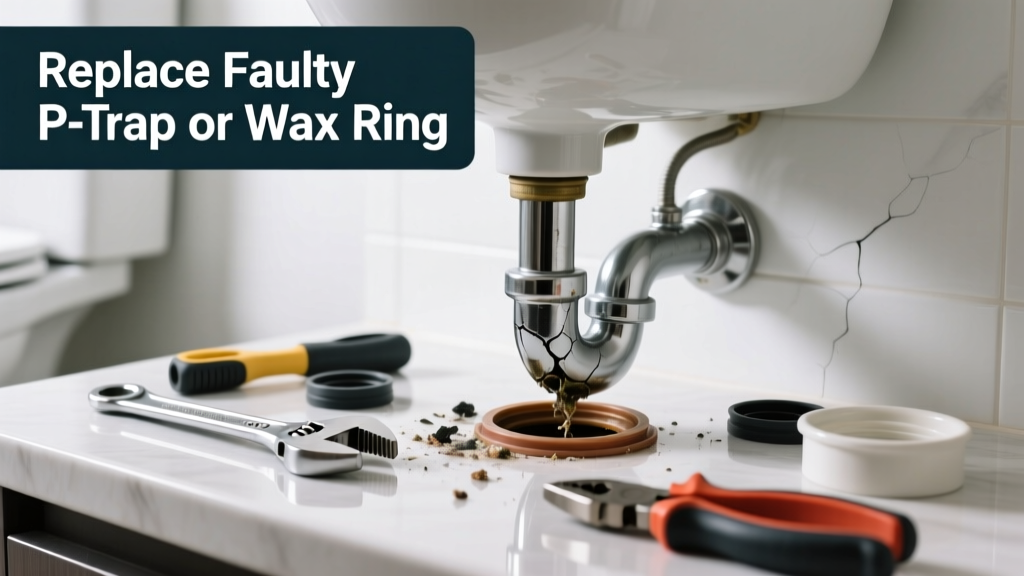
That rotten-egg stench wafting from your bathroom or kitchen sink isn’t just unpleasant—it’s a red flag that something’s wrong with your drain’s seal or venting. Most sewer gas smells stem from one of three replaceable parts: a dried-out P-trap, a cracked or displaced wax ring under the toilet, or a damaged vent stack cap letting gases back in.
Quick Diagnosis
Before grabbing tools, confirm which part is failing. Sewer gas odor follows predictable patterns:
- Sink or shower smell? Likely a dry or cracked P-trap—especially after weeks of disuse.
- Odor strongest near the toilet base? Wax ring failure is the top suspect; check for rocking or staining on the floor.
- Smell appears only during high winds or rain? A cracked or missing vent stack cap on the roof may be allowing backdrafts.
- Odor lingers after flushing multiple times? Could indicate a blocked vent pipe—not just a failed part—but still repairable without full repiping.
Tools & Materials Needed
| Item | Purpose | Estimated Cost |
|---|---|---|
| Adjustable wrench | Tightens/loosens slip-nut connections on P-traps and toilet bolts | $12–$25 |
| Wax ring (standard or extra-thick) | Creates watertight, airtight seal between toilet base and flange | $3–$8 |
| P-trap assembly (brass or PVC) | Replaces corroded or cracked trap; includes tailpiece, J-bend, and slip nuts | $8–$22 |
| Roof ladder & safety harness | Required for safe access to vent stack cap on roof | $45–$120 (rental or purchase) |
| Plumber’s putty or silicone caulk | Seals threaded joints and flange edges to prevent vapor leaks | $4–$7 |
Step-by-Step Fix
- For a dry or leaking P-trap: Shut off water, place bucket under sink, loosen slip nuts with wrench, remove old trap, clean threads, install new trap with fresh Teflon tape on threads, hand-tighten then snug with wrench (don’t overtighten), run water to test for leaks and odor.
- For a failed wax ring: Turn off toilet water supply, flush to empty tank, disconnect supply line, unscrew toilet bolts, lift toilet straight up (have helper assist), scrape old wax residue from flange and toilet base, press new wax ring onto flange (not the toilet), carefully reseat toilet, tighten bolts evenly, reconnect supply, let caulk cure 24 hours before use.
- For a damaged vent stack cap: Climb roof safely, inspect ABS or PVC vent pipe cap for cracks or warping, unscrew or pry off old cap, clean pipe end, apply PVC primer and cement, slide on new solvent-weld cap (match pipe diameter—usually 3″ or 4″), hold 30 seconds until set.
When to Call a Pro
Some situations go beyond simple part replacement—and pose health or structural risks:
- You detect hydrogen sulfide levels above 10 ppm (a gas detector reading) — immediate evacuation and professional mitigation required.
- The odor persists after replacing all three common parts — suggests a hidden leak in cast iron drain lines or a broken sewer lateral (average repair cost: $2,800, per HomeAdvisor 2023 data).
- You’re dealing with older homes built before 1975 using orangeburg pipe — these biodegradable pipes often collapse and require camera inspection.
- Your home has a basement sump pump connected to sanitary sewer (illegal in most municipalities) — correction requires permit and licensed work.
Prevention Tips
Stop sewer gas from returning by maintaining key components year-round:
- Run water in every drain—including guest bathroom sinks and floor drains—at least once every two weeks to keep P-traps full.
- Inspect toilet base annually for gaps, discoloration, or soft flooring—early signs of wax ring failure.
- Climb to your roof twice yearly (spring/fall) to check vent caps for cracks, animal nests, or ice dam damage.
- Install an air admittance valve (AAV) under sinks where venting is impractical—but only if local code permits (check with your municipal building department).
Can I use bleach to eliminate the sewer gas smell?
No—bleach won’t fix the root cause and can damage seals, corrode metal traps, and react with ammonia in waste to produce toxic chloramine gas. According to the U.S. EPA’s 2022 Household Hazardous Waste Guide, disinfectants like bleach are ineffective against odor-causing gases trapped in plumbing voids.
How long does a wax ring last?
A properly installed wax ring lasts 20–30 years—but premature failure occurs with shifting floors, overtightened bolts, or repeated toilet removal. The American Society of Home Inspectors notes that 68% of wax ring failures happen within 5 years of DIY toilet installation due to uneven compression.
Will a clogged vent pipe cause sewer gas smell?
Yes—vent pipes equalize pressure so wastewater flows smoothly and traps stay sealed. When blocked by leaves, bird nests, or ice, negative pressure can siphon water out of P-traps, breaking the seal. A 2023 study by the Plumbing-Heating-Cooling Contractors Association found vent blockages account for 22% of reported sewer odor cases in single-family homes.
Do I need to turn off the main water supply?
Only for toilet wax ring replacement—you’ll need to shut off the toilet’s dedicated shutoff valve (usually behind the base). For P-trap or vent cap work, no main shutoff is needed. Just close the sink’s individual shutoff valves—or if none exist, turn off the main and drain lines by opening the lowest faucet.
Can a faulty garbage disposal cause sewer gas smell?
Rarely—but if the disposal’s mounting assembly gasket is cracked or improperly seated, it creates a vapor gap between the sink flange and disposal body. Replacing the gasket (part #WD1X22901, ~$6) and resealing with plumber’s putty usually resolves it. See our garbage disposal leak repair guide for full details.
Is sewer gas dangerous to breathe?
Yes—prolonged exposure to low-level hydrogen sulfide causes headaches, nausea, and eye irritation; concentrations above 100 ppm can lead to respiratory paralysis. The CDC warns that chronic low-dose exposure is linked to fatigue and memory issues. Always ventilate the area and investigate odors promptly—don’t ignore them as ‘just a smell.’
"A sewer gas odor is never normal—even a faint whiff means your system’s barrier is compromised. Treat it like a smoke alarm: silence doesn’t mean safety." — Mike Rafferty, Master Plumber & 32-year inspector with the National Association of Home Builders (2024)
Replacing a worn P-trap, wax ring, or vent cap takes under two hours for most homeowners—and prevents far costlier repairs down the line. Keep spare parts in your garage, schedule seasonal checks, and remember: consistent airflow and liquid seals are what keep those gases where they belong—in the sewer, not your living room. If you’ve tackled one of these fixes, consider checking your drain snake vs. auger setup next—it might save you from future backups that stress your traps and vents.