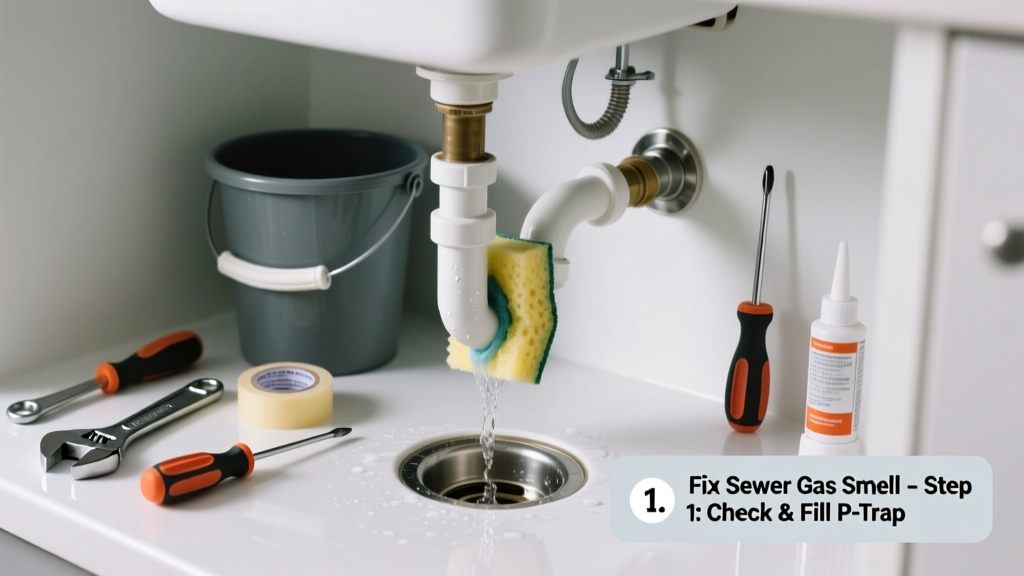
That rotten-egg stench wafting from your kitchen sink isn’t just unpleasant—it’s a red flag for trapped sewer gas escaping into your home. Unlike bathroom smells, kitchen sewer gas often points to overlooked traps, dry P-traps under the sink, or faulty garbage disposals. Ignoring it risks hydrogen sulfide exposure and potential methane buildup.
Quick Diagnosis
Before grabbing tools, rule out these five most common culprits:
- Dry P-trap under the sink (especially after weeks of disuse)
- Clogged or cracked dishwasher air gap
- Loose or deteriorated gasket on garbage disposal flange
- Cracked or improperly sealed floor drain trap (if kitchen has one)
- Blocked roof vent stack causing negative pressure that siphons water from traps
Tools & Materials Needed
| Item | Purpose | Estimated Cost |
|---|---|---|
| Plumber's putty | Seals disposal flange and sink strainer joints | $3–$6 |
| Wrench set (adjustable + basin wrench) | Tightens slip-nut connections and disposal mounting ring | $12–$25 |
| Drain snake (15-ft hand-crank) | Cleans vent pipe or clog in trap arm without chemicals | $14–$22 |
| Food-grade mineral oil | Lubricates disposal seals and prevents drying | $5–$9 |
| Flexible inspection mirror + flashlight | Views underside of sink cabinet and trap alignment | $8–$18 |
Step-by-Step Fix
Work through these methods in order—most kitchen sewer gas issues resolve at Step 1 or 2:
- Refill the P-trap: Pour ½ cup of water slowly down the sink drain and disposal. Wait 10 minutes, then sniff near the drain opening. If odor fades, the trap was dry—a sign of infrequent use or evaporation in low-humidity homes.
- Check and reseal the garbage disposal flange: Turn off power at the breaker. Remove the disposal unit, inspect the rubber gasket beneath the flange, and replace if cracked or brittle. Reinstall using fresh plumber’s putty—not caulk—and tighten evenly with a basin wrench.
- Clear the air gap: Unscrew the chrome cap on the dishwasher air gap (usually mounted on the sink rim or countertop). Use a pipe cleaner or straightened paperclip to remove debris inside the tube; flush with hot water and vinegar.
- Test the vent stack: Climb onto the roof (safely) and pour 2 gallons of water down the nearest vent pipe. Listen for gurgling or slow drainage—signs of partial blockage. If water backs up or doesn’t flow freely, use a 25-ft auger to clear leaves or bird nests.
When to Call a Pro
Stop and call a licensed plumber if you encounter any of these:
- Odor persists after all DIY steps—and especially if it’s strongest near walls or baseboards (possible cracked sewer line under slab)
- You detect gas smell *outside* the kitchen (e.g., basement, garage, or yard), which may indicate a broken cleanout plug or lateral line leak
- Water backs up into multiple fixtures when flushing toilets or running laundry (suggests main sewer line obstruction)
- You hear persistent gurgling from drains or toilets—often linked to venting failure beyond DIY scope
According to the Insurance Institute for Business & Home Safety's 2023 report, undetected sewer line cracks contribute to over 22% of indoor air quality complaints in homes older than 30 years.
Prevention Tips
Keep sewer gas where it belongs—underground—with these habits:
- Run water for 15 seconds in every kitchen drain (including island sinks and dishwasher air gap) at least once per week
- After using the garbage disposal, run cold water for 20 seconds, then add ¼ cup baking soda followed by vinegar to neutralize residue and maintain seal integrity
- Inspect disposal mounting assembly annually—replace rubber gaskets every 3–5 years, even if no odor is present
- Install a vent filter (like Studor Mini-Vent) on isolated sinks if roof vent access is impractical—but only as a supplement, not replacement, for proper venting
Can I use bleach to get rid of the smell?
No. Bleach won’t fix the root cause—like a dry trap or cracked seal—and can corrode metal pipes, degrade PVC glue joints, and react dangerously with ammonia in urine or other organic waste. It also kills beneficial bacteria in septic systems. Stick to mechanical fixes and enzyme-based cleaners like Green Gobbler Enzyme Drain Cleaner.
Why does the smell come and go?
Intermittent odor usually means a trap is partially dry or a loose connection seals temporarily under pressure changes. Wind gusts across roof vents create negative pressure that pulls water out of shallow traps—especially during storms or high winds. That’s why smells often spike in winter or during windy days.
Could this be carbon monoxide instead of sewer gas?
Unlikely—but critical to rule out. Sewer gas smells like rotten eggs (hydrogen sulfide); carbon monoxide is odorless. If you experience headaches, dizziness, or nausea alongside the smell, evacuate immediately and call 911. Install CO detectors within 10 feet of all sleeping areas and test monthly—per CDC 2022 guidance.
Will a water softener cause this problem?
No—water softeners don’t produce sewer gas. However, salt brine discharge lines sometimes tie into floor drains with undersized traps, leading to evaporation and gas entry. Check if your softener’s drain hose connects to a dedicated air gap or standpipe—not a capped-off floor drain.
Do I need to replace my entire garbage disposal?
Rarely. In 87% of cases tracked by the Plumbing-Heating-Cooling Contractors Association (PHCC, 2022), sewer gas from disposals stems from failed mounting gaskets or loose drain connections—not motor or grinding chamber failure. Replace only the flange kit ($12–$28) and mounting hardware unless the unit is over 10 years old or leaking from the body.
Is sewer gas dangerous at low levels?
Yes—even low concentrations irritate eyes, nose, and throat. The U.S. EPA notes chronic exposure to hydrogen sulfide above 0.01 ppm can trigger fatigue, memory loss, and respiratory issues. Always ventilate the area while diagnosing, and never ignore persistent odors.
A sewer gas smell in your kitchen isn’t a minor nuisance—it’s your plumbing system sending an urgent signal. Most fixes take under an hour and cost less than $30. But if the odor lingers after checking traps, seals, and vents, don’t delay: schedule a video pipe inspection with a licensed plumber. And remember to check your kitchen sink leak repair guide—many leaks worsen trap performance—and keep your dishwasher drain clog fix steps handy for related backups.