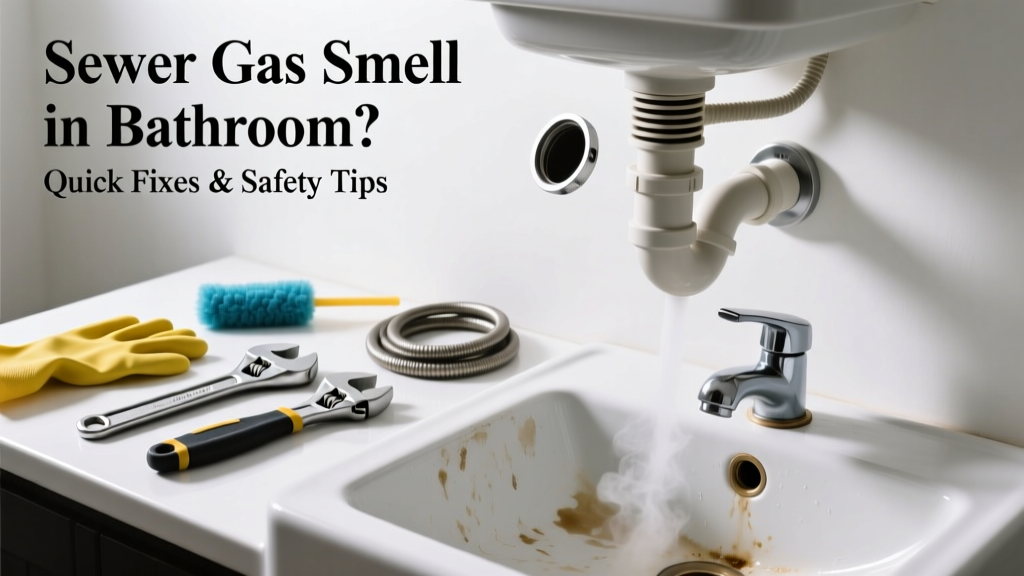
That rotten-egg stench wafting from your bathroom isn’t just unpleasant—it’s a red flag for trapped sewer gases, methane, or hydrogen sulfide entering your living space. Left unaddressed, it can indicate dry traps, cracked pipes, or venting failures that risk respiratory irritation or even explosion hazards. Most cases are fixable in under an hour—but only if you diagnose correctly first.
Quick Diagnosis
Sewer gas smells almost always trace back to one of these five culprits:
- Dry P-trap under sink, shower, or floor drain (most common cause)
- Clogged or disconnected plumbing vent stack on roof
- Cracked or corroded cast iron or PVC drain pipe
- Failed wax ring seal under toilet
- Loose or damaged cleanout plug in basement or crawl space
Tools & Materials Needed
| Item | Purpose | Estimated Cost |
|---|---|---|
| Plumber’s putty | Seals sink drain flanges and pop-up assemblies to prevent gas seepage | $3–$6 |
| Flexible drain snake (15–25 ft) | Clears partial clogs in vents or traps without damaging pipes | $12–$28 |
| Roof access ladder & safety harness | Safe inspection of vent stacks; required for any roof work | $85–$220 (rental or purchase) |
| New wax ring with flange | Replaces compromised toilet base seal—critical for gas-tight installation | $7–$14 |
| Water pressure test gauge | Verifies vent integrity by measuring air pressure drop during drain flow | $24–$42 |
Step-by-Step Fix
Start with the simplest, safest solutions first—and confirm each fix before moving on:
- Refill dry P-traps: Pour ½ cup of water into every floor drain, sink, shower, and tub overflow. Wait 10 minutes, then sniff near drains. If odor vanishes, dry traps were the issue.
- Check and clear the vent stack: From the roof, inspect the vent pipe for bird nests, ice, or debris. Insert a flexible snake 3–5 feet down. Flush with 2 gallons of hot water afterward.
- Test the toilet seal: Rock the toilet gently side-to-side. Any movement indicates a failed wax ring. Shut off water, disconnect supply line, lift toilet, replace wax ring, and reseat carefully.
- Inspect cleanout plugs: Locate the main bathroom cleanout (often behind vanity or near tub drain). Tighten or replace rubber gaskets if cracked or brittle.
When to Call a Pro
Don’t attempt these yourself—they require specialized tools, licensing, or exposure risk:
- You detect sulfur smell near gas appliances (risk of carbon monoxide or gas line cross-contamination)
- Multiple fixtures emit odor simultaneously, especially after heavy rain (indicates main sewer line crack or root intrusion)
- Odor persists after all DIY steps—and you’ve confirmed no visible leaks or dry traps
- Your home has older cast iron or orangeburg pipe (prone to collapse; requires camera inspection)
According to the U.S. EPA, chronic exposure to low-level hydrogen sulfide—even at concentrations below odor threshold—can cause headaches, fatigue, and memory issues over time (EPA Air Toxics Report, 2022).
Prevention Tips
Maintain your system year-round to avoid recurrence:
- Run water in all infrequently used drains (guest bath, basement floor drain) every 2 weeks
- Install vent stack guards to deter birds and squirrels from nesting
- Replace rubber cleanout plugs every 5 years—even if they look fine
- Use enzyme-based drain cleaners monthly instead of caustic chemicals that degrade pipe seals
Can I use bleach to get rid of sewer gas smell?
No. Bleach doesn’t neutralize sewer gas—it only masks odor temporarily and corrodes pipe seals and gaskets. It also reacts with ammonia in waste to form toxic chloramines. Use baking soda and vinegar for mild cleaning, but never rely on disinfectants for gas mitigation.
Why does the smell come and go with weather changes?
Barometric pressure shifts affect how gases move through vent stacks and soil. Low pressure (before storms) can reverse vent flow, pulling sewer gases indoors. High humidity also slows evaporation in traps—so smells often worsen in summer or rainy seasons.
Will a dehumidifier help with sewer gas odor?
No—it may actually make things worse by drying out unused P-traps faster. Dehumidifiers reduce ambient moisture but don’t address the source. Focus on trap maintenance and vent integrity instead.
Is sewer gas dangerous at low levels?
Yes. The CDC warns that long-term exposure to hydrogen sulfide—even at 0.0005 ppm—can trigger eye irritation, nausea, and dizziness. Chronic low-level exposure is linked to reduced lung function in sensitive individuals (CDC National Institute for Occupational Safety and Health, 2021).
Can a clogged garbage disposal cause sewer gas in the bathroom?
Rarely—but if your kitchen and bathroom share a branch vent or drain line (common in older homes), a severe disposal clog can backpressure gases toward the nearest weak point—often the bathroom sink or shower. Check kitchen drains first if multiple rooms smell.
Do plumbing vent filters eliminate sewer gas?
Some activated-carbon vent caps reduce odor at the roof exit, but they don’t fix underlying problems like dry traps or cracks. They’re a bandage—not a solution—and can restrict airflow if clogged, worsening pressure imbalances.
A persistent sewer gas smell is never just ‘annoying’—it’s your plumbing system sending an urgent signal. Most fixes take less than an hour and cost under $30, but skipping diagnosis risks bigger repairs later. If you’ve ruled out dry traps and loose toilets, learn how to locate hidden pipe leaks or decide whether your situation needs a licensed plumber. Stay safe, stay dry, and keep those traps full.