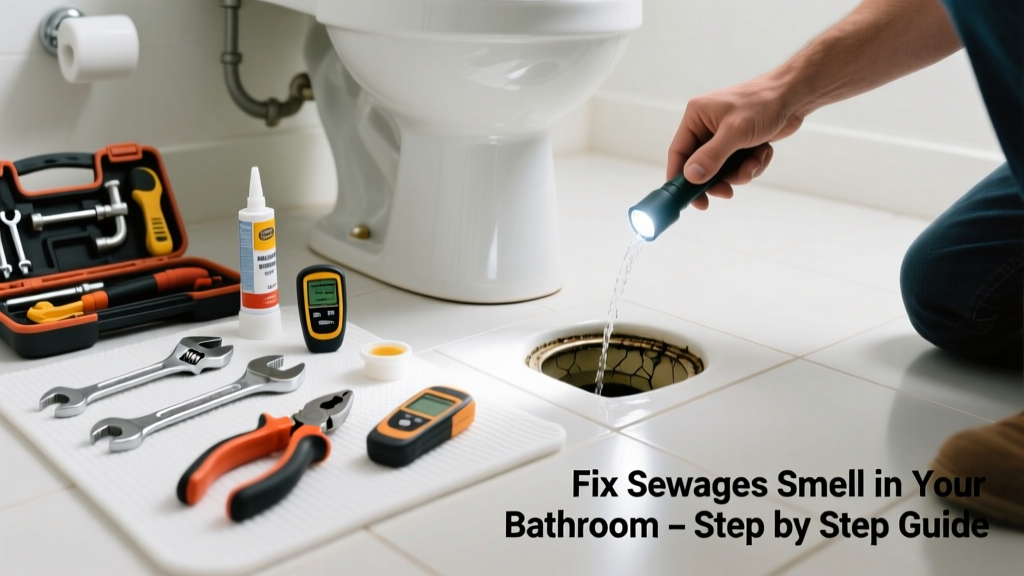
That sour, rotten-egg stench wafting from your bathroom isn’t just unpleasant—it’s a red flag. Sewage odor means something’s wrong with your plumbing’s barrier between waste gases and your living space, and ignoring it risks health hazards like hydrogen sulfide exposure or mold growth behind walls.
Quick Diagnosis
Before grabbing tools, rule out the obvious. Sewage smells almost always trace back to one of these five culprits:
- Dry P-trap under sink, shower, or floor drain (most common cause)
- Clogged or damaged vent pipe blocking airflow in the drainage system
- Cracked or loose wax ring under the toilet
- Broken or corroded sewer line joint near the bathroom
- Failed air admittance valve (AAV) on modern retrofit systems
Tools & Materials Needed
| Item | Purpose | Estimated Cost |
|---|---|---|
| Plumber’s putty or silicone caulk | Seals base of toilet or sink drains during reassembly | $3–$8 |
| Wax ring kit (with flange extender) | Replaces degraded seal between toilet and drain flange | $7–$15 |
| Drain snake (25-ft hand-crank) | Cleans hair/debris from trap and branch lines without chemicals | $12–$22 |
| Roof access ladder & safety harness | Safe inspection of vent stack (if roof-mounted) | $40–$120 (rental or purchase) |
| Manometer or smoke test kit | Diagnoses vent blockages or hidden leaks (pro-grade tool) | $85–$220 |
Step-by-Step Fix
Work through these methods in order—they’re ranked by likelihood and ease:
- Refill dry P-traps: Pour ½ cup of water down every infrequently used drain (floor drain, guest shower, spare sink). Run water for 30 seconds. Wait 15 minutes—smell gone? You’re done.
- Check and replace the toilet wax ring: Turn off water, flush to empty tank, disconnect supply line, unbolt toilet, lift carefully. Inspect old wax ring for cracks or compression loss. Install new ring (use flange extender if flange is recessed below floor level).
- Clear the vent stack: Climb to roof safely. Insert snake into vent opening and feed 10–15 ft down. Rotate while pushing; pull out debris. Flush with garden hose afterward—listen for gurgling, which signals proper airflow restoration.
- Test for sewer gas leaks with incense: Light unscented incense stick near base of toilet, sink overflow, and cleanout plugs. Watch smoke drift—if it’s sucked inward, you’ve found a leak point.
When to Call a Pro
Stop DIY immediately if you observe any of these:
- Foul odor persists after all traps are full and wax ring replaced
- Water pooling near foundation or basement floor near bathroom walls
- Gurgling sounds from multiple fixtures simultaneously
- Sewage backup in tub or shower when flushing toilet
- Visible cracks in cast iron or orange PVC sewer pipe (common in homes built before 1990)
According to the Insurance Institute for Business & Home Safety's 2023 report, 68% of undetected sewer line failures begin as intermittent odors—delaying professional inspection increases repair costs by up to 300%.
Prevention Tips
Maintain your system year-round with these habits:
- Run water in every bathroom drain for 10 seconds weekly—even unused guest baths
- Inspect toilet base annually for discoloration or soft flooring (early sign of wax ring failure)
- Install vent screen caps to keep birds and rodents out of stacks
- Use enzyme-based drain cleaner quarterly—not chemical caustics that degrade seals
Can I use bleach on this?
No. Bleach doesn’t neutralize hydrogen sulfide gas—the main component of sewage odor—and can corrode pipes, damage septic systems, and react dangerously with ammonia in urine. It masks smell temporarily but worsens underlying issues. Stick to mechanical cleaning and seal replacement.
Why does the smell come and go?
Intermittent odor usually points to partial vent blockage or an intermittently dry trap—like a floor drain in a laundry room used only during deep cleaning. Air pressure shifts from wind or HVAC systems can also push trapped gas past weak seals momentarily.
Will a dehumidifier help?
Only indirectly. High humidity encourages mold that mimics sewage odor—but won’t eliminate true sewer gas. If you suspect mold, test with mold test kits first. True sewage smell requires plumbing intervention, not moisture control.
Is sewage smell dangerous to breathe?
Yes—especially over time. The U.S. EPA estimates that chronic low-level exposure to hydrogen sulfide (even at 0.0005 ppm) causes headaches, nausea, and respiratory irritation. At concentrations above 100 ppm, it poses immediate neurological risk. Don’t ignore persistent odor.
What’s the difference between sewer gas and methane?
Sewer gas is a mix: ~55% nitrogen, 30% hydrogen sulfide, 10% carbon dioxide, plus trace methane and ammonia. Methane alone is odorless and flammable—but rarely the source of the ‘rotten egg’ smell. That signature stink comes from hydrogen sulfide, produced by anaerobic bacteria in stagnant wastewater.
Can I rent a sewer camera to find the problem?
You can—but interpreting footage requires training. Rental units often miss hairline cracks or offset joints unless paired with dye testing. For accurate diagnosis, hire a licensed plumber who uses calibrated cameras and provides a written report. Many offer free video reviews with service calls—check local plumber near me listings for transparent pricing.
A sewage smell isn’t just annoying—it’s your plumbing system shouting for attention. Most cases resolve with simple, low-cost fixes done in under two hours. But when odor lingers or intensifies, treat it like a warning light on your car dashboard: investigate now, before small problems become costly, hazardous failures.