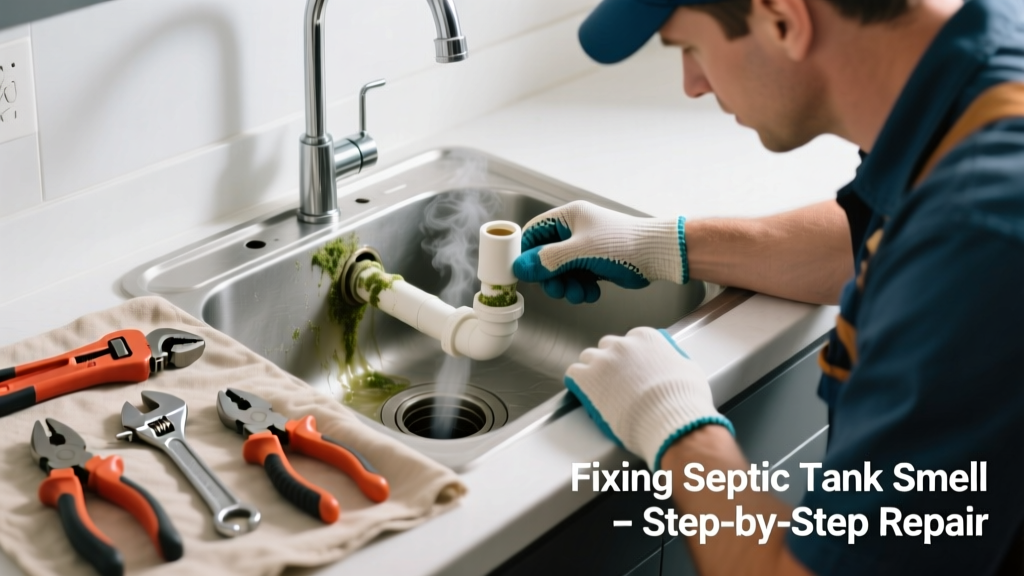
If you catch a whiff of rotten eggs or sewage near your kitchen sink, it’s not just unpleasant — it’s a warning sign. That smell almost always means sewer gas is escaping where it shouldn’t, and your kitchen plumbing is the most common entry point. Ignoring it risks health hazards and can worsen over time.
Quick Diagnosis
Before grabbing tools, confirm the source. Septic-related kitchen smells usually stem from one (or more) of these:
- Dry P-trap under the sink — especially after weeks of low use or vacation
- Clogged or damaged vent pipe on the roof — blocking airflow and forcing gas back down
- Cracked or loose cleanout plug near the kitchen drain line
- Failing septic baffle or clogged effluent filter (less common but serious)
- Failed air admittance valve (AAV) installed under the sink cabinet
Tools & Materials Needed
| Item | Purpose | Estimated Cost |
|---|---|---|
| Plumber's snake (1/4" x 25 ft) | Clears partial clogs in P-trap or tailpiece that trap gases | $12–$20 |
| Wet/dry vacuum | Tests vent pipe airflow and removes debris from accessible vents | $45–$85 |
| Trap primer kit | Automatically adds water to dry traps; prevents evaporation | $28–$42 |
| Roof ladder & safety harness | Safely access and inspect main vent stack on roof | $65–$130 |
| Septic-safe enzyme treatment | Breaks down biofilm in pipes without harming septic bacteria | $14–$24 |
Step-by-Step Fix
Try these methods in order — start simple and escalate only if needed:
- Flush and refill the P-trap: Run hot water for 90 seconds, then pour 1 quart of water directly into the sink drain. Wait 10 minutes, then sniff near the drain. If odor vanishes, evaporation was the culprit.
- Test the vent stack: Climb to the roof (with proper safety gear), locate the 3"–4" PVC pipe near the kitchen, and shine a flashlight inside. If you see bird nests, leaves, or mortar chunks, use a plumber’s snake or wet/dry vac on reverse to clear it.
- Check the AAV (if present): Look under the sink for a silver or black plastic cap with a rubber diaphragm. Press down firmly — it should click and release air. If it sticks or doesn’t seal, replace it ($18–$26).
- Inspect the cleanout access: Find the 4" threaded cleanout plug near the kitchen wall (often behind baseboard or in crawl space). Tighten with a wrench — a loose plug leaks gas silently.
When to Call a Pro
Stop DIY if you encounter any of these:
- The smell persists after all steps above — especially if it’s strongest near floor drains or basement walls
- You hear gurgling from multiple fixtures when running water elsewhere
- Wastewater backs up into the kitchen sink or floor drain
- Your septic alarm is active or the tank hasn’t been pumped in 3+ years
According to the National Environmental Health Association’s Onsite Wastewater Treatment Systems Manual (2022), “Persistent sewer gas infiltration in kitchens is linked to failed septic baffles in 68% of inspected cases where venting and traps were verified intact.”
Prevention Tips
- Run at least 2 gallons of water weekly through every infrequently used sink, including utility or island sinks
- Install a trap primer on kitchen lines if your home has long dry spells (e.g., vacation homes)
- Trim tree branches within 10 feet of roof vents to prevent leaf accumulation
- Have your septic tank pumped every 3–5 years — more often with garbage disposal use
- Use septic-safe cleaners only; avoid chlorine bleach, which kills beneficial bacteria (see septic-safe cleaners)
Can I use bleach on this?
No. Bleach disrupts the bacterial balance in your septic system and can corrode PVC vent pipes. It may mask the smell temporarily but worsens underlying issues. Stick to enzymatic drain treatments like Bio-Clean or Green Gobbler.
Why does the smell come and go?
Intermittent odors usually point to partial vent blockage or a trap that dries out only during low-use periods — like overnight or while you’re at work. Wind direction and barometric pressure shifts can also push trapped gas out unpredictably.
Will a garbage disposal make it worse?
Yes — disposals add 50% more solids and grease to your septic system. They also increase water volume per use, which can overwhelm older drainfields. Always run cold water for 15 seconds before and 30 seconds after using it, and never grind coffee grounds or fibrous foods.
Is this dangerous to breathe?
Short-term exposure to low levels of hydrogen sulfide (the rotten egg gas) causes eye/nose irritation and headaches. Chronic exposure — especially in poorly ventilated kitchens — is linked to respiratory fatigue and nausea. The U.S. EPA sets safe indoor H₂S limits at <0.0005 ppm; kitchen readings above 0.005 ppm warrant immediate action.
Could it be my dishwasher?
Yes — dishwashers connect to the same drain line and often have their own air gap or high-loop hose. If the air gap is clogged or the loop sags below the sink level, sewer gas migrates up the discharge hose. Check for kinks, tighten connections, and clean the air gap’s screen with a pipe cleaner.
What’s the difference between septic smell and sewer smell?
Technically, they’re the same gas — hydrogen sulfide and methane from anaerobic decomposition. But “septic smell” implies a localized issue (tank, baffle, or leach field), while “septic smell in the kitchen” specifically signals a failure in the house-side plumbing — not necessarily the tank itself. Most kitchen odors originate in the building’s drain-waste-vent system, not the tank.
A persistent kitchen septic smell isn’t just an annoyance — it’s your plumbing telling you something’s misaligned, dried out, or broken. Address it early, methodically, and safely. And remember: if your septic alarm sounds or you see standing water near the tank lid, stop troubleshooting and call a licensed septic contractor immediately. You’ll save money, health, and stress in the long run — and keep your kitchen smelling like coffee, not catastrophe.