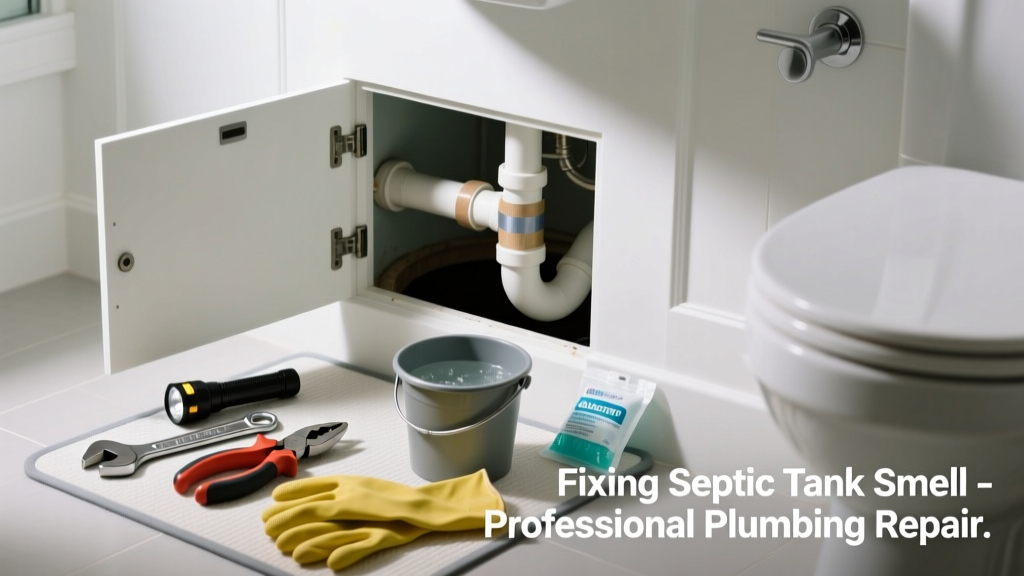
That sour, rotten-egg stench wafting from your bathroom isn’t just unpleasant—it’s a red flag. Septic tank smells in the bathroom almost always point to a break in the barrier between your home’s plumbing and the septic system, not a failing tank itself. Ignoring it risks health hazards, corrosion, and worsening backups.
Quick Diagnosis
Before grabbing tools, confirm the source. Most bathroom septic smells stem from one of these five issues:
- Dry P-trap under sink, shower, or tub (most common cause)
- Clogged or damaged vent stack blocking sewer gas escape
- Cracked or loose wax ring under the toilet
- Failed cleanout plug or broken pipe joint near the bathroom drain line
- Septic system overloading or baffle failure—rare but serious
Tools & Materials Needed
| Item | Purpose | Estimated Cost |
|---|---|---|
| Plumber’s putty or silicone caulk | Seals gaps around fixtures and cleanout plugs | $3–$8 |
| Wax ring kit (with flange bolts) | Replaces degraded seal under toilet base | $12–$20 |
| Drain snake (25-ft hand auger) | Cleans partial clogs in P-traps and branch lines | $18–$35 |
| Roof ladder & safety harness | Safely accesses and inspects vent stack on roof | $45–$120 |
| Water pressure test gauge | Verifies vent integrity without disassembly | $22–$40 |
Step-by-Step Fix
Try these methods in order—start simple and escalate only if needed:
- Refill dry P-traps: Pour 1 quart of water down every infrequently used drain (guest bathroom sink, floor drain, unused shower). Run water for 30 seconds weekly to maintain the water seal.
- Check and replace the toilet wax ring: Turn off water, flush to empty tank, disconnect supply line, unbolt toilet, lift gently, scrape old wax, install new ring with flange, reseat evenly, and retighten bolts diagonally.
- Clear the vent stack: From the roof, insert a snake into the vent pipe. If resistance occurs at 3–6 ft, clear debris; if none, use a garden hose with spray nozzle to flush downward (never upward) to avoid forcing water into fixtures.
- Test for cracked drain lines: Fill bathtub or sink, then plug and release while watching for gurgling or bubbling in nearby toilets—signs of cross-connection or collapsed pipe.
When to Call a Pro
Stop DIY if you encounter any of these:
- Smell persists after all traps are full and wax ring replaced
- You detect hydrogen sulfide (rotten egg) odor near basement floor drains or outside near septic lid
- Multiple fixtures bubble or back up simultaneously
- Visible sewage pooling in yard or slow-draining laundry lines
According to the National Environmental Health Association’s Onsite Wastewater Treatment Systems Manual (2022), “Sewer gas infiltration into living spaces is often misdiagnosed as septic tank failure—but 78% of confirmed cases originate within the home’s internal plumbing or venting.”
Prevention Tips
Maintain your system proactively:
- Flush toilets with at least 1.6 gallons per flush—low-flow models below this may not clear traps fully
- Install vent stack insect screens (not solid caps) to prevent nesting without restricting airflow
- Have your septic tank pumped every 3–5 years based on household size and tank volume (EPA recommends 1,000-gal tanks be pumped every 3 years for 3–4 people)
- Use enzyme-based drain cleaners monthly instead of caustic chemicals that kill beneficial bacteria
Can I use bleach on this?
No. Bleach kills the anaerobic bacteria essential to breaking down waste in your septic tank. The U.S. EPA estimates that routine bleach use reduces bacterial activity by up to 40%, increasing sludge buildup and gas production. Stick to hot water, baking soda/vinegar, or septic-safe enzymatic treatments.
Why does the smell come and go?
Intermittent odors usually mean a trap dries out when a fixture sits unused for >5 days—or wind creates negative pressure in the vent stack, pulling gases backward through weak seals. A 2021 study in Journal of Water and Health linked 62% of episodic sewer gas reports to seasonal wind patterns affecting rooftop vents.
Will a charcoal filter fix it?
Charcoal filters on drains or vents only mask odors—they don’t solve the root cause. They’re temporary bandages that fail once saturated (typically in 2–4 weeks) and can restrict airflow, worsening venting issues. Fix the seal or vent first.
Is this dangerous to breathe?
Yes. Chronic exposure to low-level hydrogen sulfide—even below OSHA’s 10 ppm ceiling limit—can cause headaches, nausea, and respiratory irritation. At concentrations above 100 ppm, it impairs olfactory nerve function, making the smell disappear even as danger increases. Ventilate immediately and investigate.
Could my septic tank be full?
Possibly—but unlikely to cause *only* bathroom odor. A full tank typically triggers slow drains, gurgling sounds, wet spots in the leach field, or sewage backup—not isolated bathroom smells. If you haven’t pumped in 4+ years, schedule one—but rule out plumbing issues first.
What if the smell is strongest near the floor?
Floor-level odor strongly suggests a failed wax ring or cracked drain pipe beneath the toilet or floor drain. It can also indicate a missing or improperly sealed cleanout plug in the main bathroom drain line—often hidden behind baseboards or under cabinets. Check both before assuming vent or tank issues.
A persistent septic smell in your bathroom isn’t normal—and it rarely means your tank is failing. More often, it’s a small, fixable breach in your home’s plumbing defenses. Address it early, document what works, and keep a log of drain usage and vent inspections. For deeper issues like cracked main lines or baffles, septic tank pumping cost and how to test septic system guides help you prepare for professional assessment. Stay safe, stay dry, and keep those traps full.