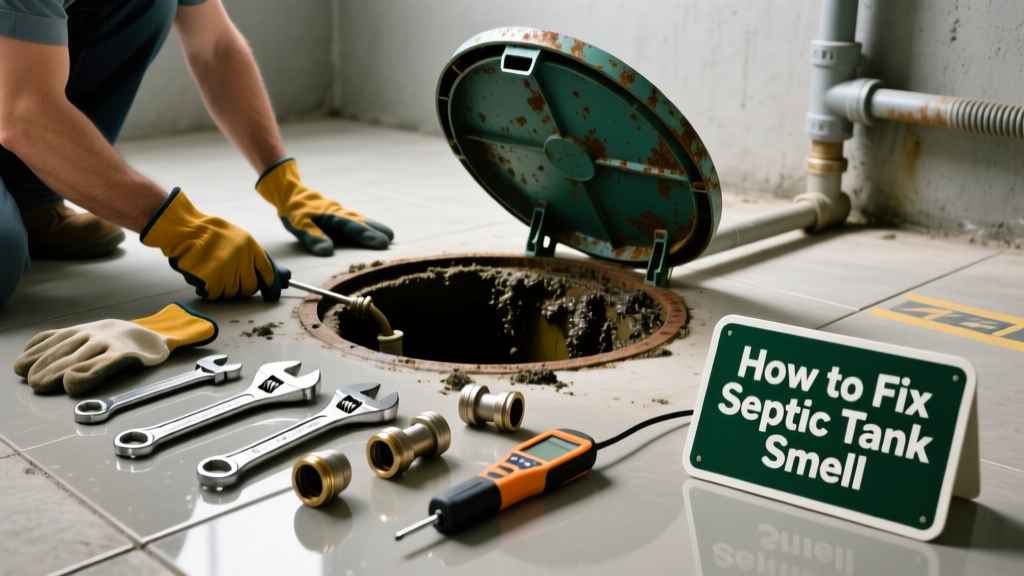
If you catch a whiff of rotten eggs or sewage near drains, floor drains, or outside your home, your septic system may be signaling trouble — not just an odor problem, but a potential health hazard. Left unaddressed, septic smells can indicate vent blockages, failing drain fields, or dangerous gas buildup like hydrogen sulfide.
Quick Diagnosis
Start by narrowing down the source before grabbing tools. Most septic-related odors stem from one of these five causes:
- Clogged or frozen plumbing vent stack (most common indoor cause)
- Dry P-traps under sinks, showers, or floor drains
- Cracked or displaced sewer line or cleanout cap
- Failing drain field allowing gases to surface
- Overloaded or neglected septic tank needing pumping
Tools & Materials Needed
| Item | Purpose | Estimated Cost |
|---|---|---|
| Plumber's snake (25-ft hand auger) | Clears debris from vent pipes and traps | $12–$25 |
| Roof ladder (24-ft extension) | Safely access roof-mounted vent stacks | $85–$160 |
| Drain trap primer or water | Refills dry P-traps to restore seal | $0–$8 |
| Septic-safe enzyme treatment | Breaks down organic scum without harming bacteria | $15–$32 |
| Butyl rubber repair tape | Temporarily seals cracked cleanout caps or pipe joints | $9–$14 |
Step-by-Step Fix
Try these methods in order — most issues resolve at the first or second step:
- Check and refill dry P-traps: Pour 1/2 cup water into every floor drain, basement sink, and infrequently used tub/shower. Wait 10 minutes — if odor vanishes, that was the culprit.
- Inspect and clear the vent stack: From the roof, look for bird nests, ice, or leaves blocking the PVC vent pipe. Use a plumber’s snake or garden hose with a nozzle to flush downward (never upward — risk of forcing debris deeper).
- Test cleanout caps and inspection ports: Locate your septic cleanout (usually near the house foundation). Ensure the cap is tight and undamaged. If cracked, wrap with butyl tape as a temporary fix until replacement.
- Apply septic-safe enzymes: Add a full dose of enzyme treatment directly into the toilet and flush. Repeat weekly for three weeks if odor persists — avoids harsh chemicals that kill beneficial bacteria.
When to Call a Pro
Stop DIY efforts and contact a licensed septic contractor immediately if you notice any of these red flags:
- Odor accompanied by slow drains, gurgling sounds, or sewage backup
- Wet, spongy ground or lush green grass over the drain field — especially in dry weather
- Visible cracks or pooling black liquid near the tank or distribution box
- Hydrogen sulfide levels above 10 ppm (detectable with a $45–$75 digital gas detector)
According to the National Environmental Services Center’s 2022 Septic System Maintenance Guide, 68% of septic odor emergencies linked to drain field failure result in system replacement within 12 months if not assessed early.
Prevention Tips
Maintaining your septic system prevents odor recurrence and extends tank life by 15+ years:
- Pump your tank every 3–5 years (every 2 years for households with >4 people or garbage disposals)
- Avoid flushing wipes, feminine products, coffee grounds, or grease — they clog pipes and disrupt bacterial balance
- Install vent filters (like OdorHog) on roof vents to trap gases without restricting airflow
- Divert roof gutters and sump pumps away from the drain field — saturated soil blocks oxygen needed for aerobic breakdown
Can I use bleach to eliminate septic tank smell?
No. Bleach kills the anaerobic bacteria essential for breaking down solids in your tank. The U.S. EPA estimates that just one gallon of household bleach can wipe out up to 30% of active microbes — increasing sludge accumulation and hydrogen sulfide production.
Why does the smell get worse after it rains?
Rain saturates the soil around your drain field, reducing oxygen flow and slowing bacterial digestion. This shifts decomposition toward sulfate-reducing bacteria, which produce hydrogen sulfide — the classic rotten-egg gas. It also increases pressure in the system, forcing gases back up through weak points like dry traps or loose caps.
Will baking soda and vinegar fix septic odor?
Only temporarily — and only for minor drain biofilm. Vinegar’s acidity can disrupt pH balance in the tank, while baking soda offers no microbial benefit. Neither addresses root causes like vent blockages or failing drain fields. For safe, long-term results, stick with septic-specific enzymes or mechanical fixes.
Is septic tank smell dangerous to breathe?
Yes. Chronic exposure to low-level hydrogen sulfide (H₂S) causes headaches, nausea, and respiratory irritation. At concentrations above 100 ppm — possible near cracked tanks or open cleanouts — H₂S can cause olfactory fatigue (you stop smelling it) and rapid loss of consciousness. Always ventilate affected areas and avoid confined spaces near suspected leaks.
How do I know if my septic tank is full?
Fullness isn’t about volume — it’s about scum and sludge layers. A professional inspection uses a sludge judge tool to measure solids depth. But warning signs include sluggish toilets, gurgling pipes, sewage odor outdoors, and unusually bright green grass over the leach field. Don’t wait: pumping costs $300–$600, far less than drain field replacement ($10,000–$25,000).
Can tree roots cause septic tank smell?
Absolutely. Roots infiltrate cracked pipes or loose joints, trapping debris and creating anaerobic pockets where odor-causing bacteria thrive. They also restrict airflow in vent lines. If you have mature trees within 30 feet of your lateral lines, schedule a camera inspection — root intrusion accounts for nearly 22% of septic odor complaints, per the Onsite Wastewater Treatment Association’s 2023 Field Survey.
A persistent septic smell isn’t just unpleasant — it’s your system’s distress signal. Tackle simple fixes like refilling traps or clearing vents first, but don’t ignore recurring odors. Regular maintenance, smart water use, and timely professional inspections keep your septic system running quietly and safely for decades. When in doubt, reach out to a certified septic inspector before the problem soaks deeper.