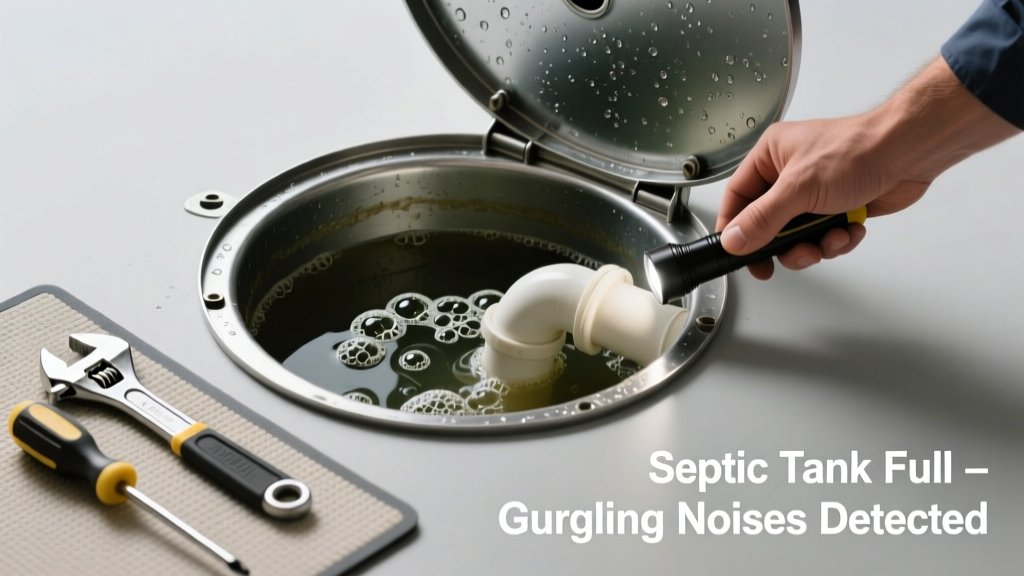
If your drains gurgle when you flush, toilets bubble up, or you hear low-frequency knocking near the septic tank access point, your system is likely overloaded — not just clogged. These noises signal pressure imbalances, trapped gases, or effluent backup that demand immediate attention before sewage backs into your home.
Quick Diagnosis
Unusual noises rarely mean a simple pipe clog. They point to deeper issues:
- High water table saturating the drainfield, preventing effluent absorption
- Sludge layer exceeding 24 inches (per EPA guidelines), restricting flow and trapping gases
- Clogged or collapsed distribution box or leach field lines
- Faulty or missing vent stack allowing airlock and pressure buildup
- Failed baffle in the tank inlet or outlet, letting solids migrate and obstruct downstream pipes
Tools & Materials Needed
| Item | Purpose | Estimated Cost |
|---|---|---|
| Septic-safe enzyme treatment | Breaks down organic scum without harming bacteria | $12–$28 |
| 3-ft fiberglass inspection rod | Measures sludge depth through tank access port | $18–$32 |
| Roofing hatch sealant (butyl rubber) | Seals cracked or warped tank lids to prevent gas escape | $9–$15 |
| Drain snake (¼" x 50 ft) | Clears minor blockages in house-side pipes before tank | $22–$45 |
| Manhole riser extension kit | Raises access point above saturated soil for safe pumping | $75–$130 |
Step-by-Step Fix
Start here — but only if your tank hasn’t been pumped in >3 years or shows visible pooling or odors:
- Check for vent obstructions: Climb onto the roof and inspect the main plumbing vent stack for bird nests, ice, or debris. Use a garden hose to flush it downward; never snake upward (risk of pushing debris into the system).
- Measure sludge depth: Insert the fiberglass rod vertically into the tank’s inlet baffle access port until it hits bottom. Mark where sludge begins (gray/black muck). If sludge exceeds 24 inches, pumping is non-negotiable — no DIY workaround exists.
- Apply enzyme treatment (if sludge <18"): Pour 1 quart of Septi-Plus Bio-Enzyme Concentrate down the lowest toilet at night for three consecutive nights. This reduces surface scum that traps methane and hydrogen sulfide gases — common culprits behind gurgling.
- Inspect and seal tank lids: Look for hairline cracks or warped concrete/metal covers. Apply butyl rubber sealant around all seams and hinges. A compromised lid lets gases escape unpredictably, creating audible hissing or popping.
When to Call a Pro
Stop immediately and call a licensed septic contractor if you observe any of these:
- Wet, spongy ground or standing water over the drainfield (sign of hydraulic failure)
- Raw sewage odor inside the home or near the tank — indicates baffle failure or line collapse
- Backflow into multiple fixtures simultaneously (not just one sink)
- Tank access ports are submerged or inaccessible due to flooding or erosion
- You lack a site map showing tank and drainfield location (digging without one risks cutting lines or hitting tank walls)
According to the National Environmental Services Center’s 2022 Septic System Maintenance Report, 68% of emergency septic calls involving noise and backup stem from systems overdue for pumping by more than 18 months — and DIY interventions delay professional response by an average of 11 days.
"Gurgling isn’t just annoying — it’s your septic system screaming for airflow relief or volume reduction. Ignoring it for more than 48 hours risks irreversible biomat buildup in the drainfield." — Dr. Lena Cho, Extension Specialist, Purdue University Cooperative Extension, 2023
Prevention Tips
Long-term quiet starts with routine habits:
- Pump every 3–5 years (or every 2 years for households with garbage disposals or >4 occupants)
- Install high-efficiency toilets (1.28 GPF or less) to reduce daily inflow by up to 60%
- Divert roof gutters and sump pump discharge away from the drainfield zone (minimum 20 ft)
- Avoid flushing wipes, dental floss, cat litter, or 'flushable' products — they contribute to 42% of baffle clogs per the Onsite Wastewater Treatment Systems Manual (EPA 2021)
- Plant only shallow-rooted grasses over the drainfield — avoid trees within 30 ft
Can I use bleach on this?
No. One cup of household bleach kills ~90% of beneficial bacteria in your tank within 90 minutes (U.S. EPA, Septic System Additives Fact Sheet, 2022). That bacterial die-off causes undigested solids to accumulate faster, worsening gas pressure and noise.
Will a plunger fix gurgling toilets?
Only temporarily — and only if the issue is a minor trap obstruction. Plunging won’t resolve tank-level gas buildup, high water tables, or baffle failures. In fact, aggressive plunging can dislodge inlet baffles, accelerating system failure.
How do I know if my drainfield is failing?
Look for: persistent wet spots or lush green grass over the field during dry weather; slow-draining sinks and showers even after clearing house-side pipes; and audible sucking or vacuum-like noises when appliances cycle. These indicate biomat saturation — a condition requiring professional evaluation and possibly replacement.
Can heavy rain cause septic noise?
Yes — and it’s often the first trigger. When the drainfield becomes saturated, effluent has nowhere to go. Pressure builds, forcing gases back up through vents and traps. This causes gurgling, bubbling, and even sewer gas odors indoors. Wait 48–72 hours after heavy rain before diagnosing — many systems self-correct as soils dry.
Is a noisy septic tank dangerous?
Yes — especially if accompanied by hydrogen sulfide (rotten egg) smell, which at concentrations above 10 ppm causes headaches and eye irritation (NIOSH, 2023 Hazard Alert). Methane buildup in confined spaces like crawlspaces or basements poses explosion risk. Never ignore persistent noise paired with odor or visible effluent.
What’s the difference between gurgling and knocking sounds?
Gurgling signals trapped air moving through liquid — usually from venting issues or partial blockages. Knocking or thumping suggests structural movement: a collapsing pipe, shifting tank lid, or sludge settling violently during heavy use. Knocking requires immediate visual inspection and often excavation.
Quiet shouldn’t be rare in a healthy septic system — it should be the default. Addressing noise early preserves your drainfield’s lifespan and avoids $5,000–$12,000 replacements. Keep a maintenance log, mark your tank location on your property survey, and treat your septic like the buried utility it is: essential, invisible, and worth protecting.