If your kitchen sink gurgles, drains slowly, or backs up with foul-smelling water, your septic system may be full—or failing. This isn’t just inconvenient; it’s a health hazard and potential sign of serious plumbing or tank issues.
Quick Diagnosis
Before grabbing tools, confirm the cause. A full septic tank rarely causes *only* kitchen symptoms—look for these red flags:
- Sink, dishwasher, and garbage disposal all draining sluggishly at once
- Gurgling sounds from nearby drains or toilets when running kitchen water
- Standing water or wet soil near the septic tank lid or drainfield
- Strong sewage odor near floor drains or basement sump pits
- Recent heavy rain or unusually high water usage (e.g., guests, laundry binge)
Tools & Materials Needed
| Item | Purpose | Estimated Cost |
|---|---|---|
| Septic-safe enzyme cleaner | Breaks down organic sludge without harming bacteria | $12–$25 |
| Plumber's snake (25-ft hand-crank) | Cleared clogs in P-trap or branch line—not main line | $18–$35 |
| Wet/dry vacuum (with sewer attachment) | Removes standing water safely from sink or floor | $60–$120 |
| Protective gloves & N95 mask | Blocks exposure to pathogens in raw sewage | $8–$20 |
| Septic tank riser key (if applicable) | Accesses buried tank lids without digging | $15–$30 |
Step-by-Step Fix
Try these methods in order—start simple, escalate only if needed:
- Stop all water use — Shut off dishwasher, garbage disposal, and faucet flow. Don’t flush toilets unnecessarily.
- Clear the P-trap and branch line — Use a hand-crank snake on the kitchen sink only. Avoid chemical drain cleaners—they kill beneficial septic bacteria and corrode pipes.
- Apply septic-safe enzyme treatment — Pour 1 quart of Roebic K-570 or Green Gobbler Septic Saver down the kitchen drain at night. Repeat daily for 3 days.
- Check for vent blockage — Climb onto the roof and inspect the main stack vent for bird nests, leaves, or ice. Use a garden hose to flush it—never use a snake inside the vent pipe.
- Test with water — After 24 hours, run cold water for 2 minutes. If it drains freely and no gurgling occurs, the issue was likely a temporary overload or minor clog.
When to Call a Pro
Don’t delay professional help if you observe any of these:
- Backflow of wastewater onto the kitchen floor or into other fixtures
- Foul odor persists >48 hours after stopping water use
- Visible pooling or soggy ground over the drainfield (a sign of system failure)
- Your tank hasn’t been pumped in 3+ years (or 2 years for households with >4 people)
- You hear bubbling sounds from the toilet when using the kitchen sink
According to the National Environmental Services Center’s 2022 Septic System Maintenance Report, 68% of emergency septic calls stem from delayed pumping or improper waste disposal—both preventable with routine care.
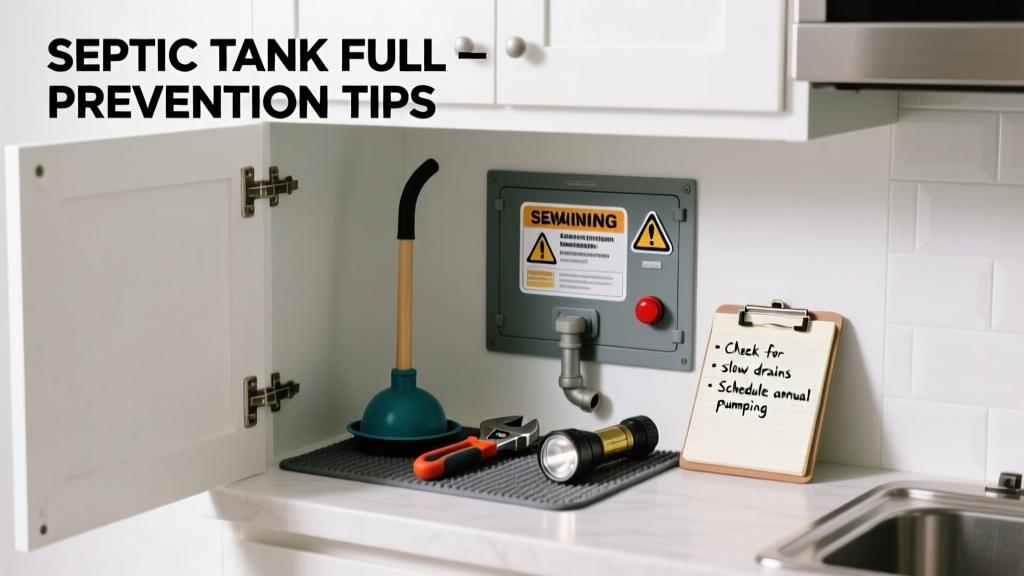
Prevention Tips
Long-term septic health starts in the kitchen:
- Never pour grease, oil, or fat down the sink—even with hot water. It solidifies and clogs baffles.
- Use a sink strainer and empty it into the trash *daily*—especially after cooking or using the garbage disposal.
- Limit garbage disposal use. Only grind small amounts of soft food scraps; avoid fibrous items like celery or onion skins.
- Space out high-water activities: run dishwasher and laundry on alternating days, not back-to-back.
- Install a septic alarm (e.g., Septi-Alert Pro) that triggers before backups occur.
Can I use bleach on this?
No. One cup of household bleach kills ~90% of the beneficial bacteria in your septic tank, according to EPA research published in Septic System Owner’s Handbook (2021). That bacterial die-off can trigger rapid sludge buildup and system failure within weeks.
Will a plunger fix a full septic tank?
A plunger may clear a sink trap clog—but it won’t resolve a full tank. If plunging works temporarily but returns within hours, the problem is upstream (tank or drainfield), not local. Save the plunger for isolated sink clogs, not systemic backups.
How often should I pump my septic tank?
The U.S. Department of Health recommends pumping every 3–5 years for a standard 1,000-gallon tank serving 3–4 people. Larger households or those using a garbage disposal should pump every 2–3 years. Check your local health department’s guidelines—some counties require inspections every 5 years, like in Massachusetts’ Title 5 rules.
Can heavy rain cause septic backup in the kitchen?
Yes. Saturated soil prevents effluent from dispersing in the drainfield, causing hydraulic overload. The Insurance Institute for Business & Home Safety’s 2023 report found rain-related backups account for 22% of all septic emergencies in clay-heavy regions. Divert downspouts and install French drains uphill of your drainfield to reduce risk.
Is it safe to use vinegar and baking soda?
It’s safe—but ineffective for septic-related slowdowns. While harmless to bacteria, the fizzing reaction only cleans surface residue in pipes. It won’t break down grease, hair, or biofilm deep in the line or tank. Reserve it for monthly maintenance, not emergency response.
What’s the first thing I should do when I notice slow drainage?
Immediately stop running water in the kitchen. Then check your other drains—if toilets, showers, or tubs are also sluggish, it’s almost certainly septic-related, not a localized clog. Turn off the dishwasher and garbage disposal, open windows for ventilation, and wear gloves before touching anything. See our guide on how to shut off septic system safely during emergencies.
A full septic tank in the kitchen is urgent—but rarely catastrophic if caught early. Most cases respond to prompt water conservation, proper enzyme treatment, and smart habits. When in doubt, err on the side of caution: a $200 service call beats $5,000 in water damage restoration and health risks. Keep your tank records updated, know your drainfield location, and treat your septic system like the living ecosystem it is—not just a hidden box under the yard.