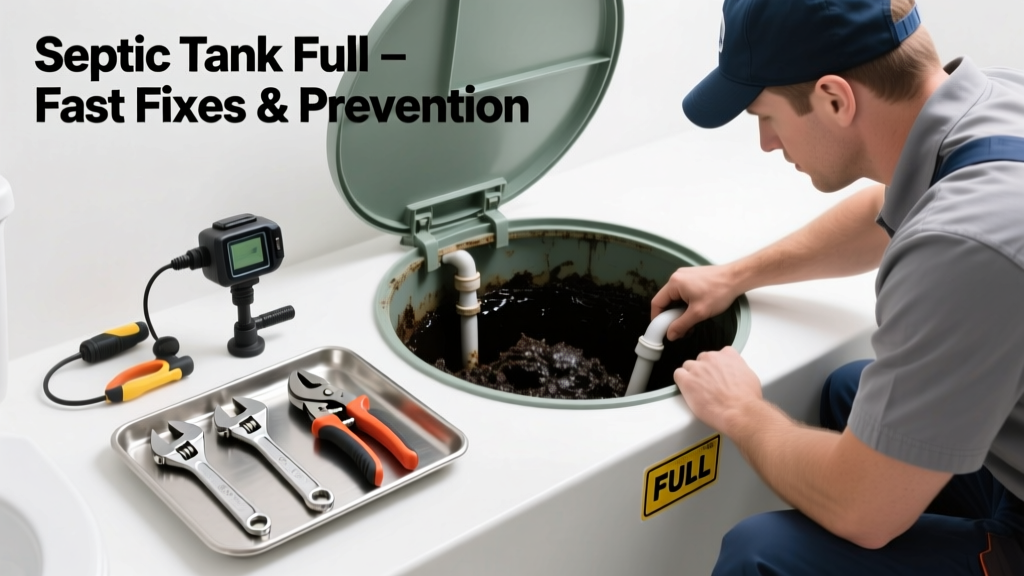
If your bathroom sink gurgles, your shower drains like molasses, or your toilet won’t flush without backing up — your septic system is likely overwhelmed or blocked. This isn’t just inconvenient; it’s a health hazard and potential property damage risk if ignored for more than 24 hours.
Quick Diagnosis
Before grabbing tools, confirm the issue isn’t a localized clog. A full septic tank typically shows these signs across multiple fixtures — especially low-lying ones like bathroom sinks and showers:
- Slow or stopped drainage in two or more bathroom fixtures simultaneously
- Gurgling sounds from drains or toilets when other water is running
- Sewage odor near floor drains or vent pipes on the roof
- Standing water or wet, spongy ground near your septic tank or drainfield
- Toilet flushes but wastewater rises in the shower or bathtub
Tools & Materials Needed
| Item | Purpose | Estimated Cost |
|---|---|---|
| Septic-safe enzyme treatment (e.g., Rid-X) | Breaks down organic solids temporarily while you assess severity | $12–$18 |
| Heavy-duty plumber's snake (25+ ft) | Clears blockages between bathroom and tank inlet pipe | $45–$85 |
| Septic tank riser access key or wrench | Opens inspection port on tank lid (often buried 6–12" underground) | $15–$30 |
| Measuring tape & flashlight | Determines sludge level inside tank through inspection port | $8–$20 |
| Work gloves & N95 mask | Protects against airborne pathogens and contact exposure | $10–$25 |
Step-by-Step Fix
These methods escalate from safest/least invasive to more involved — try them in order unless you see clear evidence of overflow or sewage surfacing:
- Stop all water use immediately. Shut off the bathroom faucet, toilet, and shower. No laundry, dishwashing, or long showers until resolved.
- Check the tank’s sludge level. Use your flashlight and measuring tape through the inspection port. If sludge is within 12 inches of the outlet baffle (or over 1/3 full), pumping is required — skip to 'When to Call a Pro'.
- Snake the main line from the cleanout. Locate the 4-inch PVC cleanout pipe (usually near foundation wall or under bathroom sink cabinet). Insert the snake past the P-trap and push toward the tank — you’ll feel resistance at the tank inlet. Rotate and retract slowly to break up grease or solid buildup.
- Apply septic enzymes and wait 24–48 hours. Pour 1–2 cups of septic-safe enzyme powder down the lowest bathroom drain (usually shower) and avoid flushing or draining during this time. According to the U.S. EPA, 14% of household water usage is from leaks — but enzyme treatments only help if solids haven’t yet hardened into crust.
When to Call a Pro
DIY stops here if any of these apply — delay risks contamination, structural damage, or code violations:
- You see raw sewage pooling in your yard or basement
- The tank lid is cracked, sunken, or emits strong hydrogen sulfide (rotten egg) odor
- You’ve pumped within the last 18 months and are experiencing repeat backups
- Your home uses a cesspool (not a modern septic system) — these require specialized licensing in most states
"Over 70% of septic failures stem from lack of routine maintenance — not age or soil conditions." — National Environmental Services Center, West Virginia University, 2022
Prevention Tips
Prevent recurrence by aligning habits with how your septic system actually works — it’s a living ecosystem, not a pipe:
- Pump every 3–5 years (every 2 years if you have a garbage disposal or >4 occupants)
- Use only septic-safe toilet paper (look for “biodegradable” and <10-second dissolve time in water)
- Install high-efficiency showerheads and faucet aerators — they cut water volume entering the tank by up to 40%
- Divert roof gutters and sump pump discharge away from the drainfield — excess water floods the soil absorption area
- Avoid pouring grease, coffee grounds, or wet wipes down any drain, even if labeled "flushable"
Can I use bleach on this?
No. Bleach kills beneficial bacteria that digest waste in your tank. One cup of bleach can wipe out 50% of microbial activity for up to 7 days. Instead, use vinegar-and-baking-soda for minor odors, or a septic-safe disinfectant like hydrogen peroxide-based cleaners.
Will a plunger fix it?
Only if the issue is strictly in the P-trap or sink trap — not the septic tank itself. If plunging causes water to rise in another fixture (e.g., shower backs up when you plunge the sink), the blockage is downstream, likely at the tank inlet. Stop plunging and move to snaking or professional assessment.
How long can I wait before calling someone?
More than 24 hours with standing water or sewage odor poses serious health risks. The CDC warns that exposure to raw sewage increases risk of hepatitis A, giardia, and E. coli infection. If backup persists beyond one day, call a licensed septic contractor — don’t wait for weekend availability.
Is it safe to shower during a backup?
No. Showering adds 2–5 gallons per minute directly into an already overloaded system. That water has nowhere to go except back up through lower drains or leach field saturation. Wait until flow resumes normally and the tank is confirmed below 25% capacity.
What does a full septic tank smell like?
It smells like sulfur (rotten eggs), ammonia, or damp earth — never mildew or mustiness. Strong, persistent odors near floor drains or outside near the tank indicate gases escaping due to failed baffles, broken seals, or excessive sludge. That’s a sign your tank needs immediate pumping and inspection.
Can heavy rain cause this?
Yes — but only if your drainfield is already compromised. Saturated soil prevents effluent from dispersing. If backups happen only after rain, your drainfield may be failing or compacted. A perc test and soil evaluation by a certified inspector will confirm whether replacement or restoration is needed. Learn more in our guide on drainfield repair options.
Fixing a full septic tank in your bathroom isn’t about brute force — it’s about reading the signals your system sends and acting before small issues become expensive emergencies. Keep a log of pumping dates, track water usage spikes, and treat your septic like the critical infrastructure it is. A well-maintained system lasts 25–40 years; neglect cuts that lifespan in half — and doubles your risk of emergency service calls.