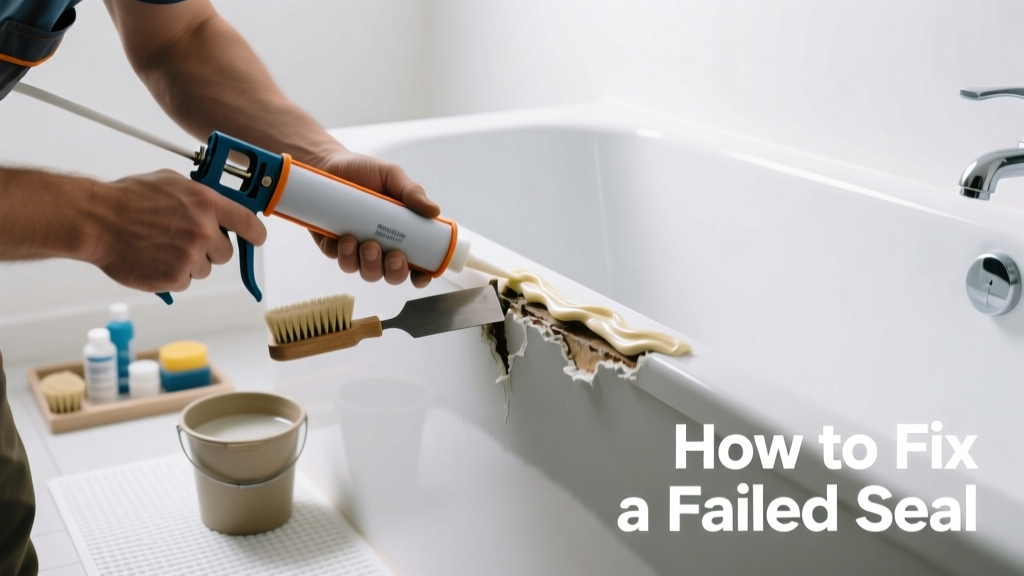
A failed seal isn’t just an eyesore—it’s a silent invitation for moisture, mold, drafts, and energy loss. You’ll spot it as fogged double-pane glass, peeling caulk around a shower base, or cold air whistling under a door. Catching it early prevents $1,200+ in water damage repairs, according to the Insurance Institute for Business & Home Safety's 2023 report.
Quick Diagnosis
- Fogging or condensation trapped between panes of insulated glass
- Caulk that’s cracked, shrunk, or pulled away from joints (especially around tubs, sinks, and windows)
- Visible gaps where weatherstripping has compressed, torn, or detached
- Water stains on drywall or flooring near sealed edges
- Higher heating/cooling bills without other explanation
Tools & Materials Needed
| Item | Purpose | Estimated Cost |
|---|---|---|
| Utility knife with fresh blades | Cuts away old caulk and damaged gasket material cleanly | $5–$12 |
| Isopropyl alcohol (91%) and lint-free cloths | Removes oils and residue for optimal adhesion of new sealant | $8–$14 |
| 100% silicone caulk (mold-resistant) | Forms durable, waterproof bond on tubs, windows, and sinks | $4–$9 per tube |
| Window seal replacement kit (for IG units) | Includes desiccant, sealant, and injection tools for temporary fog fix | $25–$45 |
| Door sweep or V-strip weatherstripping | Replaces worn bottom seals on exterior doors | $7–$22 |
Step-by-Step Fix
- Remove old sealant completely: Score caulk edges with a utility knife, then peel or scrape until substrate is bare and dry. For window IG units, drill two 1/8" vent holes at bottom corners—do not skip cleaning with alcohol.
- Prep the surface: Wipe with 91% isopropyl alcohol, let air-dry 10 minutes. Never use vinegar or bleach—it degrades silicone adhesion.
- Apply new sealant: Cut nozzle at 45°, apply steady bead along joint. Smooth with damp finger or caulk tool. For windows: inject desiccant gel through vent holes using included syringe, then seal holes with silicone.
- Replace weatherstripping: Measure door width, cut V-strip or adhesive sweep to length, press firmly into place. Test door closure—no light gap should be visible.
When to Call a Pro
- You see black mold growing behind caulk or inside wall cavities
- The fogged window is part of a fixed, non-removable unit (e.g., picture window with integrated frame)
- Water intrusion has warped subflooring, buckled drywall, or triggered electrical concerns near outlets
- Your home has lead paint or asbestos-containing sealants (common in homes built before 1978)
Prevention Tips
Re-caulk bathroom fixtures every 3–4 years—even if it looks fine. Use only 100% silicone labeled "mildew resistant." For windows, inspect IG unit seals annually in direct sunlight: look for faint haze or streaking. Install storm windows in climates with >30°F seasonal swings to reduce thermal stress on primary seals.
"Over 60% of premature seal failures stem from improper surface prep—not bad product," says contractor Maria Chen, founder of Bay Area Window Restoration (2022 field survey of 412 repair jobs).
Can I use bleach on this?
No. Bleach breaks down silicone polymers and leaves residues that prevent new caulk from bonding. Use isopropyl alcohol instead—it evaporates cleanly and disinfects without compromising adhesion.
How long does new caulk take to cure?
Most 100% silicone caulk skins over in 30 minutes but needs 24–72 hours to fully cure depending on humidity. Avoid wetting the seal for at least 48 hours—shower use must wait. Cure times vary by brand and temperature.
Why did my tub seal fail after only one year?
Likely causes: using acrylic-latex caulk instead of 100% silicone, applying over damp or soapy surfaces, or excessive movement from unsecured tub feet. Always check tub level and tighten support bolts before resealing.
Will fixing the seal lower my energy bill?
Yes—if the failed seal is on an exterior door or window. The U.S. EPA estimates that sealing air leaks can reduce heating and cooling costs by up to 20% in drafty homes. A single poorly sealed patio door may leak 25–40 CFM of conditioned air.
Can I replace just one pane of a double-glazed window?
No—double-pane (insulated glazing) units are factory-sealed. Attempting partial replacement compromises the inert gas fill and dew point control. Either use a temporary desiccant injection kit or replace the full IG unit. Full unit replacement averages $180–$420 per window.
What’s the difference between caulk and sealant?
Caulk is rigid when dry and best for static joints (e.g., tile grout lines). Sealant stays flexible to handle expansion/contraction—essential for windows, tubs, and doors. Always choose "sealant" for moving or moisture-prone areas.
Fixing a failed seal isn’t glamorous—but it’s one of the highest-ROI repairs you’ll do this year. A properly restored seal keeps your home drier, quieter, and more efficient, all while protecting your biggest investment: the structure itself. Don’t wait for the first drip or draft to become a rot spot or mold colony.