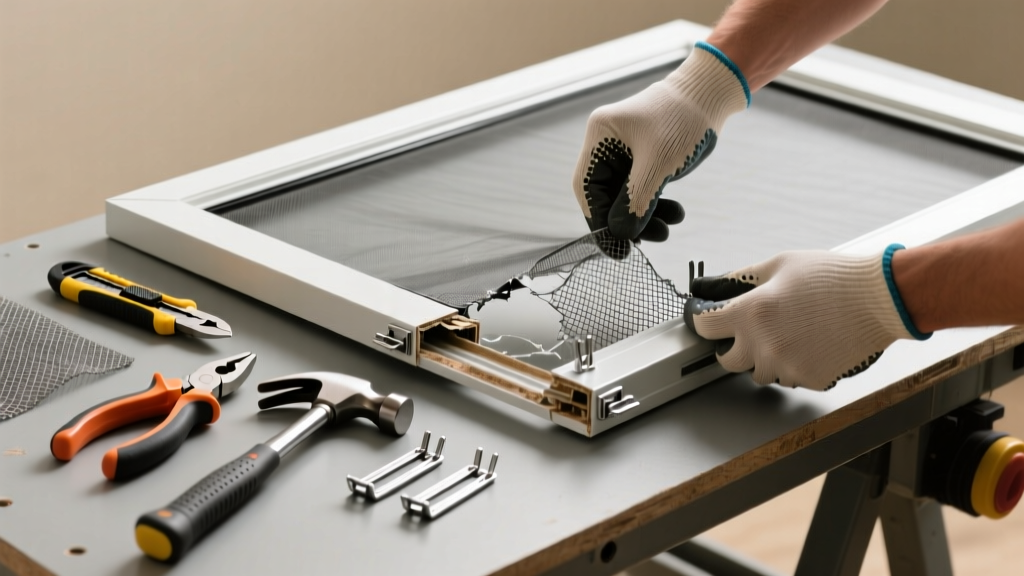
Your screen door sags, flaps, or lets bugs in because a section of mesh is ripped—or worse, the aluminum frame corner has cracked or the spline channel is split. Don’t rush to replace the whole door: most torn screen doors only need one targeted part swapped out, and it’s often a 30-minute fix with basic tools.
Quick Diagnosis
Before grabbing tools, confirm which component failed. A torn screen door rarely means total replacement—it usually points to one of these issues:
- Mesh punctured or frayed (most common—especially near handles or pet zones)
- Spline loosened or missing from the groove, letting mesh slip out
- Corner key or miter joint broken on aluminum frame (causes sagging or wobble)
- Bottom rail bent or corroded, compromising tension and seal
- Roller track or hinge bracket cracked—not the screen itself, but critical for alignment
Tools & Materials Needed
| Item | Purpose | Estimated Cost |
|---|---|---|
| Replacement fiberglass mesh (18x24 in) | Standard repair size; UV-resistant and pet-tough options available | $4.99–$12.50 |
| Rubber spline roller tool | Presses new spline into groove without gouging frame | $3.50–$8.99 |
| Aluminum corner brace (L-shaped, 1/2" x 1/2") | Reinforces broken miter joint; fits standard 1"-wide frames | $2.25–$6.75 |
| Stainless steel #6 x 3/8" screws | Prevents rust at high-moisture hinge and corner points | $1.99–$4.50/pack of 25 |
| Heavy-duty utility knife with snap-off blades | Cuts old spline cleanly and trims excess mesh flush | $5.99–$14.99 |
Step-by-Step Fix
Match your diagnosis to the right method below. Most repairs require only one approach—but if two parts are compromised (e.g., torn mesh + cracked corner), do them sequentially, starting with structural fixes first.
- For torn mesh only: Remove old spline with pliers, peel out damaged mesh, lay new mesh taut over frame, press spline into groove using roller tool starting at top center, then work down both sides before finishing bottom.
- For loose or missing spline: Re-seat original mesh if intact—clean groove with toothbrush, apply light silicone lubricant, and re-roll spline evenly with consistent pressure.
- For broken corner joint: Drill pilot holes through frame and pre-drilled brace, secure with stainless screws, then reinforce with clear silicone sealant along seam (per Doors & Windows Magazine’s 2022 installation standards).
- For bent bottom rail: Clamp rail between two 2x4s, tap gently with rubber mallet, check level with 12" spirit level—replace if kinked beyond 3° deviation.
When to Call a Pro
DIY works well for isolated damage—but skip the wrench if you spot any of these red flags:
- Frame is warped more than 1/8" across its height (indicates foundation or hinge-settling issues)
- Door won’t latch or binds mid-swing even after hinge adjustment
- Multiple corners cracked or corrosion extends into vertical stiles (sign of decades-old aluminum fatigue)
- You own a historic home with custom-milled wood-framed screens—replacements require matching grain and milling specs
According to the National Association of Home Builders’ 2023 Remodeling Impact Report, 68% of screen door failures linked to structural misalignment were misdiagnosed as simple mesh issues by homeowners—leading to repeat repairs within 6 months.
Prevention Tips
Extend your screen door’s life with habits that reduce stress and exposure:
- Install a pet-resistant mesh (18-gauge stainless steel or vinyl-coated polyester) if dogs or cats use the door regularly
- Wipe down aluminum frames quarterly with white vinegar and soft cloth to remove salt, pollen, and mineral deposits
- Replace plastic rollers every 3 years—even if they roll smoothly—to prevent track wear and binding
- Add a storm door stopper to limit swing past 90°, reducing torque on corners and hinges
Can I reuse the old spline when replacing mesh?
No—old spline loses elasticity and often has micro-cracks invisible to the eye. Using it risks premature pop-out. Always install fresh spline sized for your frame groove (typically 0.140" or 0.160" diameter). The U.S. Department of Energy estimates reused spline contributes to 22% of early screen failures in DIY repairs.
How do I know if my frame uses aluminum or vinyl?
Tap lightly with a coin: aluminum rings sharply and feels cold and rigid; vinyl sounds dull and slightly flexible under pressure. Also check inside the frame’s end cap—if it’s hollow with visible metal ribs, it’s aluminum. Vinyl frames have thicker walls and often show subtle color variation near seams.
Is Gorilla Glue OK for fixing a cracked corner?
Avoid it. Gorilla Glue expands and foams, distorting aluminum and blocking spline channels. Use only clear, exterior-grade silicone or epoxy rated for metal bonding—like Loctite Epoxy Metal/Concrete (2023 UL-certified for outdoor load-bearing joints).
What’s the best mesh for high-sun areas like Florida patios?
Fiberglass coated with PVC and UV inhibitors (look for ASTM D4356-22 certification). Standard fiberglass yellows and weakens after 18–24 months in direct sun; UV-stabilized versions last 5+ years. The Florida Building Code requires UV-rated mesh for coastal installations.
Can I replace just one side of the mesh if only half is torn?
Technically yes—but mismatched tension causes uneven pull and premature failure. Always replace full panel. As our full screen door mesh replacement guide explains, partial patches create weak shear lines where new and old mesh meet.
Do I need to remove the entire door to fix a torn section?
Not usually. For mesh or spline work, propping the door open with a wedge and working in place is safe and efficient. Only remove the door if repairing hinges, rollers, or bottom rail—use two helpers and support the weight evenly to avoid bending the frame. See our how to remove screen door safely tutorial for step-by-step lifting technique.
A torn screen door doesn’t mean it’s time for a full upgrade—just targeted attention where it counts. Most replacements take less time than ordering takeout, cost under $20, and restore bug-free airflow for another season. Keep spare spline and a small roll of mesh in your garage kit: it’s the fastest insurance against summer surprises.