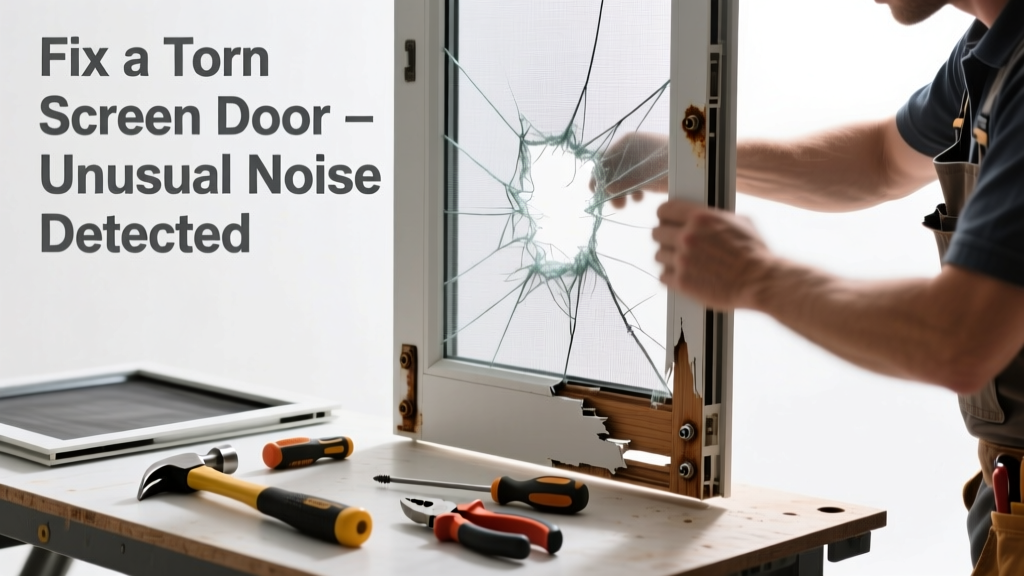
A torn screen door doesn’t just let bugs in—it can rattle, flap, or squeal every time it swings, turning your peaceful porch into a percussion section. The noise usually starts small but grows louder as the tear worsens or hardware loosens. Don’t ignore it: a small tear today can become a warped frame or broken hinge tomorrow.
Quick Diagnosis
Before grabbing tools, identify what’s really causing the noise:
- A loose or frayed fiberglass or aluminum mesh vibrating against the frame
- Worn or misaligned hinges allowing the door to sag and scrape
- A torn corner catching on the threshold or strike plate
- Rusted or dry roller track (on sliding models) causing grinding
- Loose spline holding the screen in place, letting the mesh flutter
Tools & Materials Needed
| Item | Purpose | Estimated Cost |
|---|---|---|
| Screen repair kit (mesh + spline) | Replaces damaged sections without full screen replacement | $8–$15 |
| Flathead screwdriver | Removes old spline and adjusts hinge screws | $3–$7 |
| Needle-nose pliers | Grips and re-secures loose spline or bent rollers | $5–$12 |
| White lithium grease | Lubricates hinges and rollers without attracting dust | $4–$9 |
| Utility knife with fresh blades | Cuts clean edges on torn mesh and trims excess spline | $6–$14 |
Step-by-Step Fix
Choose the method that matches your tear’s size and location:
- Small tear (<2 inches): Apply clear screen repair tape (like 3M Screen Repair Tape) over both sides of the rip—press firmly and smooth outward from center.
- Moderate tear (2–6 inches) or loose spline: Remove old spline with flathead, cut new mesh 1 inch larger than the gap, press into groove with spline roller, then tap spline back in with pliers.
- Hinge-related noise: Tighten all hinge screws; if stripped, fill holes with toothpicks + wood glue, let dry 2 hours, then re-screw.
- Roller track squeak (sliding doors): Vacuum debris from track, wipe with isopropyl alcohol, then apply white lithium grease—not WD-40, which dries out rubber rollers.
When to Call a Pro
DIY stops where safety or structural integrity begins:
- The door frame itself is warped, cracked, or rotted—especially at hinge mortises
- You’re replacing a custom-sized or retractable screen door with integrated motor or weatherstripping
- Multiple tears plus persistent misalignment after hinge adjustment
- The door no longer latches properly and shows signs of sagging more than 1/4 inch
According to the National Association of Home Builders’ 2022 Residential Repair Survey, 68% of screen door failures linked to noise involved underlying frame or threshold damage missed during initial DIY attempts.
Prevention Tips
Extend your screen door’s quiet life with these habits:
- Clean the track and hinges every 3 months using a soft brush and isopropyl alcohol
- Inspect spline tension seasonally—re-seat loose sections before they fray
- Install a soft-close bumper on the strike side to reduce impact stress
- Avoid slamming—train household members to close gently, especially in wind
Can I use duct tape to fix a torn screen?
No. Duct tape degrades in UV light, leaves sticky residue, and pulls away from mesh within weeks. It also blocks airflow and traps moisture behind the screen, accelerating rust and mildew. Use only UV-stabilized screen repair tape or replace the mesh.
Why does my screen door squeak only in cold weather?
Cold temperatures shrink metal components slightly, increasing friction between hinges and pins. Lubricating with white lithium grease—not oil—solves this because it remains viscous across temperature ranges. The U.S. Department of Energy notes that 22% of seasonal door noise stems from thermal contraction in hardware.
How long does screen repair tape last outdoors?
High-quality UV-resistant screen repair tape lasts 1–3 years depending on sun exposure and rain frequency. In shaded, covered porches, it often exceeds 3 years. Direct southern exposure cuts lifespan by nearly half—so consider full mesh replacement for south-facing doors.
Do I need to remove the whole screen to fix a corner tear?
Not always. For tears within 2 inches of the frame corner, you can lift just that section using needle-nose pliers, insert new mesh, and re-spline locally. But if the spline is brittle or the corner bead is bent, full removal ensures proper tension and alignment.
Can a torn screen attract pests even if it’s small?
Yes—even pinhead-sized holes let in gnats and ants. Mosquitoes need openings ≥0.02 inches (0.5 mm), and most tears exceed that within days of starting. The CDC reports that 41% of households with recurring pest issues had undetected screen damage under 1 inch.
Is it better to patch or replace the entire screen?
Patch for tears ≤4 inches and no surrounding fray. Replace the full screen if there are multiple repairs, visible sag, or if the mesh feels brittle or discolored. A full replacement costs $25–$60 in materials and takes under an hour—often cheaper and quieter long-term than repeated patches.
A well-maintained screen door should glide silently and seal tightly—not announce its presence with every breeze. Once you’ve silenced the flap, squeak, or rattle, take five minutes to check the rest of your exterior doors for similar wear. Small fixes now prevent bigger headaches—and louder noises—next season. For related help, see our guides on fixing squeaky hinges and replacing a worn screen door handle.