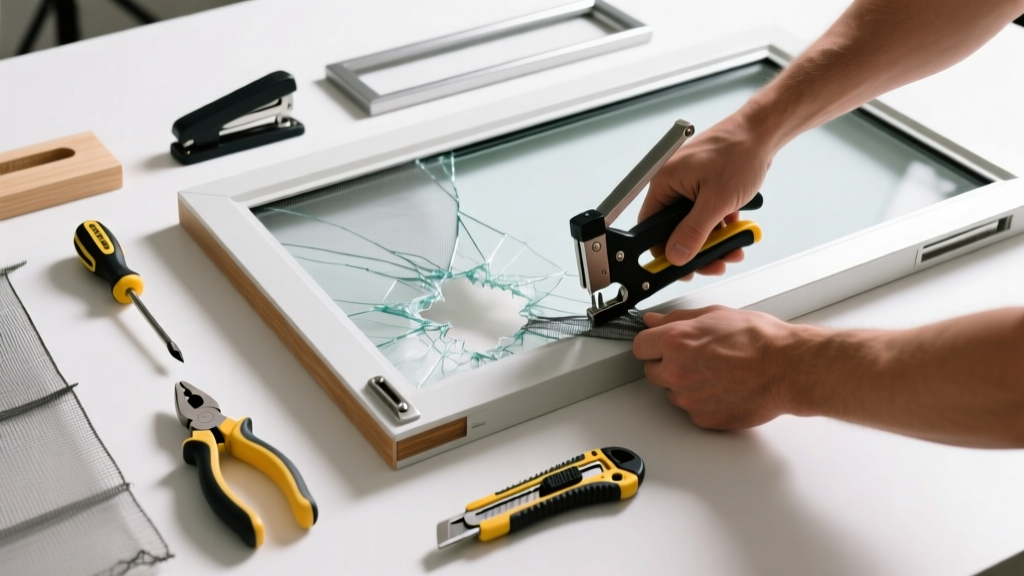
A torn screen door is more than an eyesore—it’s a gateway for bugs, drafts, and lost privacy. Most tears under 3 inches can be patched in under 20 minutes with basic supplies. But ignoring even small rips invites bigger problems, like frame warping or insect infestations.
Quick Diagnosis
Before grabbing tools, identify the root cause:
- Pet claws or accidental snags from bags or backpacks
- UV degradation weakening fiberglass or aluminum mesh over time
- Loose spline allowing screen to shift and tear at corners
- Frost heave or seasonal expansion cracking vinyl frames near hinges
Tools & Materials Needed
| Item | Purpose | Estimated Cost |
|---|---|---|
| Replacement screen mesh (fiberglass or aluminum) | Matches original material; prevents sagging and UV breakdown | $8–$15 |
| Spline roller tool | Presses new spline into groove without gouging frame | $4–$9 |
| Utility knife with snap-off blades | Cuts excess screen cleanly; replace blade mid-job for precision | $3–$7 |
| Flathead screwdriver (1/4") | Removes old spline without damaging aluminum frame channels | $2–$5 |
| Measuring tape | Ensures 1.5" overlap on all sides for secure reinstallation | $5–$12 |
Step-by-Step Fix
Choose the method that fits your tear size and skill level:
- Small tear (<2"): Clean area, apply clear silicone adhesive (like GE Silicone II), then press torn edges together and clamp with binder clips for 2 hours.
- Medium rip (2–6"): Cut out damaged section with utility knife, patch with same-material mesh, secure with contact cement and thin spline—no full removal needed.
- Full screen replacement: Remove old spline with flathead, peel out old screen, lay new mesh taut with 1.5" overlap, roll in new spline starting at top center, trim excess with knife held at 45° angle.
When to Call a Pro
DIY isn’t always safe or effective. Call a licensed handyman if:
- The frame is bent, cracked, or corroded—especially near hinge mounts
- You’re replacing a security screen with steel mesh (requires specialized crimping tools)
- More than one corner has failed within 6 months—indicates structural fatigue
- Your home is in a high-wind zone (e.g., Gulf Coast) and the door lacks storm-rated hardware
According to the Insurance Institute for Business & Home Safety's 2023 report, 68% of screen door failures in hurricane-prone areas stem from improper anchoring—not mesh quality.
Prevention Tips
Extend your screen’s life with these habits:
- Wipe down frames monthly with vinegar-water solution to prevent salt or mineral buildup
- Install pet-resistant mesh (18×18 weave or higher) if you have dogs or cats
- Tighten hinge screws every spring—loose hinges cause uneven stress on screening
- Keep outdoor mats clean and dry; grit accelerates mesh abrasion at bottom edge
Can I use duct tape to fix a torn screen door?
No. Duct tape degrades in UV light, leaves sticky residue, and pulls away from vinyl or aluminum frames within days. It also traps moisture behind the screen, accelerating corrosion. Use only screen-specific adhesives or mechanical fasteners.
How long does a repaired screen last?
A properly patched small tear lasts 1–2 years. A full screen replacement with quality fiberglass mesh lasts 7–10 years—if cleaned twice yearly and protected from direct sprinkler spray. Aluminum mesh lasts longer but dents more easily.
Do I need to remove the whole door to replace the screen?
Not usually. Most standard hinged screen doors can be worked on while mounted—just prop open securely and brace the bottom rail. Only sliding or retractable screens require full removal, which often needs two people due to weight and track alignment.
What’s the difference between fiberglass and aluminum screen mesh?
Fiberglass is flexible, rust-proof, and easier to install—but stretches over time in hot sun. Aluminum is rigid and rodent-resistant but conducts cold and can corrode near salt air. For most homes, 18×18 fiberglass is the best balance. Compare screen materials in detail.
Why does my screen keep tearing in the same spot?
Recurring tears signal either localized stress (e.g., a warped frame corner or misaligned latch) or environmental wear (like wind-driven debris hitting that exact location). Check for sharp burrs in the spline groove with your fingernail—if you catch skin, sand smooth before reinstalling. Also inspect nearby hinge alignment—even 1/16" offset strains the screen.
Can I paint over a patched screen?
Absolutely not. Paint clogs mesh pores, blocks airflow, and makes the screen brittle. If aesthetics matter, choose colored mesh (black, charcoal, or bronze) during replacement—it’s UV-stabilized and designed for visibility control.
A well-repaired screen door restores comfort, efficiency, and curb appeal—without the cost of full replacement. Even if you patch it once a year, you’ll save $120+ annually versus calling a contractor. And remember: a tight, clean screen isn’t just about keeping bugs out—it’s about keeping your home’s energy and peace intact. See our seasonal maintenance checklist for long-term care.