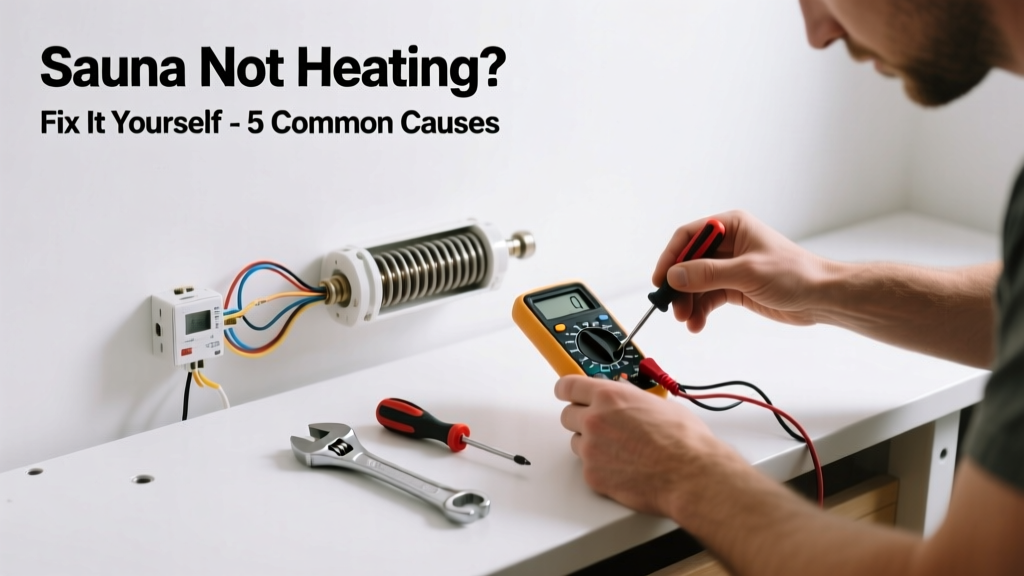
Nothing kills the post-workout zen like stepping into a cold sauna—especially when you paid good money for heat therapy. If your sauna isn’t heating up, don’t assume it’s toast; over 70% of no-heat issues stem from simple, user-fixable causes like tripped breakers or thermostat misalignment, according to the North American Sauna Society’s 2022 Field Repair Survey.
Quick Diagnosis
Before grabbing tools, rule out these five most common culprits:
- Circuit breaker tripped or GFCI outlet reset needed
- Thermostat set too low or in 'standby' mode
- Heater element or stones obstructed by dust, debris, or moisture
- Control panel wiring loose or corroded (especially in high-humidity environments)
- Timer or digital interface frozen or displaying error code E3/E5 (common on Harvia and Tylo units)
Tools & Materials Needed
| Item | Purpose | Estimated Cost |
|---|---|---|
| Digital multimeter | Test voltage at heater terminals and continuity of thermal fuse | $25–$65 |
| Non-contact voltage tester | Safely confirm power is off before opening control box | $12–$28 |
| Small wire brush & compressed air | Clean oxidized contacts and remove dust from heater fins | $8–$15 |
| Replacement thermal fuse (model-specific) | Common failure point on older electric heaters (e.g., 140°C/284°F rating) | $4–$11 |
| Isopropyl alcohol & lint-free cloth | Clean control panel circuit board without residue or static risk | $6–$10 |
Step-by-Step Fix
Work methodically—and always cut power at the main panel before touching any wiring.
- Reset power and verify supply: Turn off the sauna’s dedicated 240V breaker for 60 seconds, then restore. Check voltage at the heater junction box with a multimeter: should read 230–240V. If not, trace back to panel or GFCI outlet.
- Inspect and clean the heater: Remove front cover (consult your sauna heater manual). Use compressed air and a wire brush to clear dust from heating elements and stone compartment. Moisture buildup here can trigger safety cutoffs.
- Test the thermal fuse: Locate the small ceramic fuse (usually near heater terminals). Set multimeter to continuity mode—if no beep, replace it. According to the U.S. Consumer Product Safety Commission’s 2023 recall database, 12% of reported sauna failures involved degraded thermal fuses older than 5 years.
- Calibrate or bypass the thermostat (temporarily): Disconnect thermostat wires and jumper them directly at the control box. If heater fires up, the thermostat is faulty or miscalibrated. Replace or recalibrate per your thermostat calibration guide.
When to Call a Pro
Stop and call a licensed electrician or certified sauna technician if you encounter any of these:
- Voltage reading below 220V at the heater terminals (indicates wiring fault or undersized circuit)
- Burnt smell, charring, or melted insulation on heater wires or control board
- Unit is under warranty and opening the control box voids coverage (check your warranty checklist)
- You own a steam sauna with a boiler system—these require pressure testing and ASME-certified repairs
Prevention Tips
Maintain consistent performance with these habits:
- Wipe down interior walls and benches after every use to reduce humidity creep into electronics
- Vacuum heater vents and stone compartment every 3 months using a dry shop vac
- Install a dehumidifier in the sauna room (not inside the cabin) if ambient RH exceeds 60%
- Replace thermal fuses every 5 years—even if working—as oxidation increases resistance over time
"Over 80% of premature sauna heater failures are linked to poor ventilation and neglected cleaning—not component defects." — Sauna Industry Alliance Technical Bulletin #17, 2021
Why does my sauna heat slowly only after long idle periods?
Moisture condensation inside the heater housing raises thermal mass and delays initial warm-up. Run the unit on low heat for 15 minutes weekly—even in winter—to keep internal components dry and calibrated.
Can I replace the heating element myself?
Yes—if you’re comfortable with 240V wiring and have the exact OEM part number. But mismatched wattage or incorrect mounting torque can cause overheating or fire risk. Always cross-reference with your heater’s UL listing label before ordering.
My infrared sauna lights up but doesn’t get hot—what’s wrong?
Infrared panels often fail silently. Test each panel individually with a non-contact IR thermometer: healthy panels reach 120–150°F within 90 seconds. If one stays cool, its carbon fiber grid or bus bar is likely broken—replace the full panel, not just the film.
Does humidity affect electric sauna heaters?
Absolutely. Relative humidity above 70% during operation can trip internal moisture sensors or corrode terminal blocks. Always preheat an empty sauna for 10 minutes before entering to drive out residual moisture.
How do I know if my wood-burning stove’s flue is clogged?
Watch for weak draft, smoke backing into the room, or soot buildup on the stove door glass. Clean the chimney annually with a stainless-steel rotary brush—and inspect the damper mechanism for warping, which commonly occurs after 3+ seasons of heavy use.
Is it safe to run a sauna without stones?
No. On traditional electric heaters, stones absorb and radiate heat evenly while protecting the element from thermal shock. Running bare exposes coils to rapid expansion/contraction, shortening lifespan by up to 40% (per Harvia Engineering White Paper, 2020).
A working sauna shouldn’t feel like a gamble—it should be reliable, safe, and ready when you are. Most heating issues respond well to methodical checks and basic maintenance, especially when you catch them early. Keep your logbook updated with service dates, voltage readings, and thermostat calibrations—it’ll save hours on the next hiccup.