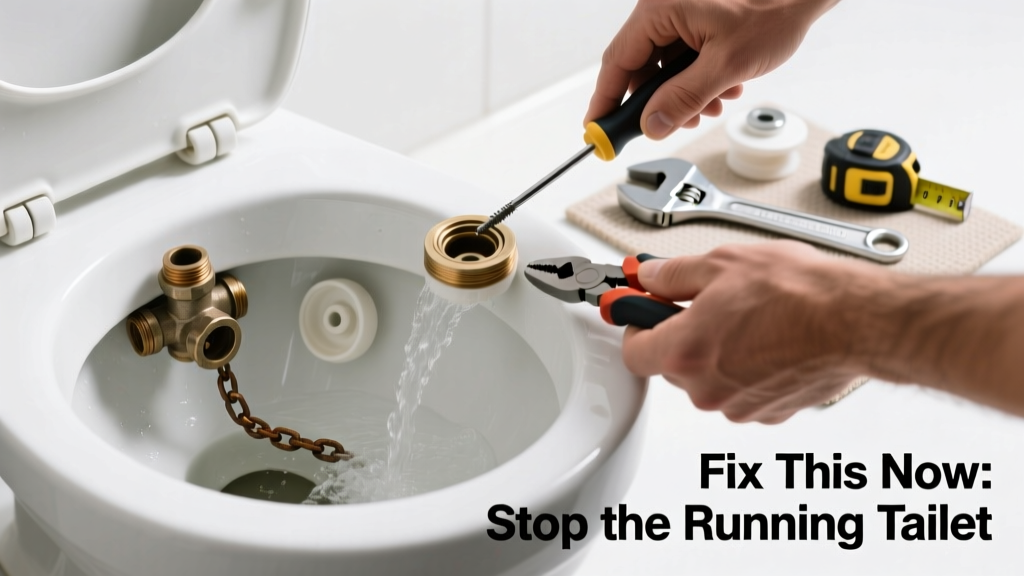
A running toilet isn’t just annoying—it wastes up to 200 gallons of water per day, according to the U.S. EPA’s 2023 WaterSense report. If your toilet hisses, refills constantly, or trickles after flushing, it’s time to act. Most causes are simple, cheap, and fixable in under 30 minutes with basic tools.
Quick Diagnosis
Before grabbing tools, identify the likely culprit by listening and observing:
- Continuous hissing or gurgling → fill valve issue or float misalignment
- Water trickling into the bowl after flush → worn flapper or mineral buildup on seal
- Bowl refilling but tank not filling fully → cracked overflow tube or faulty shutoff valve
- Water leaking from base or tank bolts → loose hardware or failed tank-to-bowl gasket
Tools & Materials Needed
| Item | Purpose | Estimated Cost |
|---|---|---|
| Adjustable wrench | Tightens tank bolts, shutoff valve, and supply line connections | $12–$25 |
| Replacement flapper (universal or model-specific) | Seals tank outlet; most common failure point | $4–$12 |
| Float adjustment tool or flathead screwdriver | Repositions or calibrates ballcock or cup-style float | $0–$8 |
| Vinegar and soft brush | Removes calcium and rust deposits from flapper seat and valve parts | $3–$6 |
Step-by-Step Fix
Try these fixes in order—they address ~90% of running toilet cases:
- Check and clean the flapper seat. Turn off water at the shutoff valve, flush to drain tank, then wipe the rubber flapper and its ceramic or plastic seat with vinegar-dampened cloth. Mineral deposits often prevent full sealing—even a 0.5mm gap causes constant refill.
- Adjust the chain length. A too-tight chain holds the flapper slightly open; too-loose prevents full closure. Ideal slack: ¼ inch when flapper is seated. Trim excess with wire cutters if needed.
- Replace the flapper. Match your toilet’s flush valve size (2-inch or 3-inch) and brand if possible. Universal flappers work in most Kohler, Toto, and American Standard models—but double-check compatibility before buying.
- Reset the fill valve height. For Fluidmaster-style valves, pinch the float clip and slide the float down until water shuts off 1 inch below the top of the overflow tube. For older ballcock valves, bend the brass rod slightly downward.
When to Call a Pro
Stop and call a licensed plumber if you encounter any of these:
- Cracks in the porcelain tank or bowl (pressure can worsen them during repair attempts)
- Corroded or stripped shutoff valve that won’t fully close—even after replacing the valve handle
- Water pooling around the base while tank is full (indicates failed wax ring or cracked bowl)
- Multiple toilets running simultaneously—suggests main supply pressure or regulator issues
"Over 70% of persistent running toilets stem from flapper degradation or improper float calibration—not faulty valves," says master plumber Rita Chen in the Plumbing Contractor Handbook, 2022 Edition.
Prevention Tips
Extend your toilet’s reliability with these habits:
- Replace flappers every 3–5 years—even if they seem fine (rubber degrades with chlorine exposure)
- Flush only toilet paper and human waste; avoid chemical cleaners that erode seals
- Test shutoff valves quarterly by turning them off/on to prevent seizing
- Install a water-saving fill valve like the Fluidmaster 400AH—cuts refill time and improves accuracy
Why does my toilet run randomly, not just after flushing?
This usually points to a slow leak past the flapper caused by sediment or warping. It may take 15–45 minutes for enough water to escape and trigger the fill valve—so the tank appears fine right after flushing but starts refilling later. Dye test the tank (add food coloring, wait 20 min without flushing) to confirm.
Can I use bleach tablets in the tank to stop running?
No—bleach tablets corrode flappers, floats, and gaskets faster than normal use. The American Society of Home Inspectors’ 2023 maintenance guidelines warn that in-tank cleaners reduce flapper lifespan by up to 60%. Use liquid cleaner in the bowl only.
My fill valve clicks but won’t shut off—what’s wrong?
The diaphragm inside the valve is likely ruptured or clogged with debris. Turn off water, disassemble the valve cap, and rinse the internal screen under running water. If clicking persists, replace the entire fill valve—most cost $12–$22 and install in under 10 minutes. See our fill valve replacement guide for visual steps.
Is a running toilet an emergency?
Not immediately—but it becomes one if left unaddressed for over 48 hours. Continuous operation risks overflow if the float fails completely, and long-term leaks weaken tank bolts and promote mold growth behind the toilet. Fix within 24 hours for safety and efficiency.
Will tightening the tank bolts stop the running?
Only if water is visibly leaking between tank and bowl—tightening may compress a failing gasket temporarily. But overtightening cracks porcelain. If bolts are already snug and the toilet still runs, the issue is upstream (flapper, valve, or float), not the seal.
How do I know if my flapper is the right size?
Measure the flush valve opening at the bottom of the tank: 2-inch openings are standard in pre-2005 toilets; 3-inch is common in high-efficiency models (like Toto Drake II or Kohler Highline). Look for embossed numbers on the old flapper or check your toilet’s model number on the tank interior rear wall, then cross-reference with manufacturer specs.
A well-maintained toilet should run silently and refill predictably—no hissing, no phantom flushes, no need to jiggle the handle. With these fixes, you’ll restore quiet operation and save hundreds of gallons monthly. And if you’re tackling other aging fixtures, our leaky faucet repair guide covers similar principles for compression and cartridge systems.