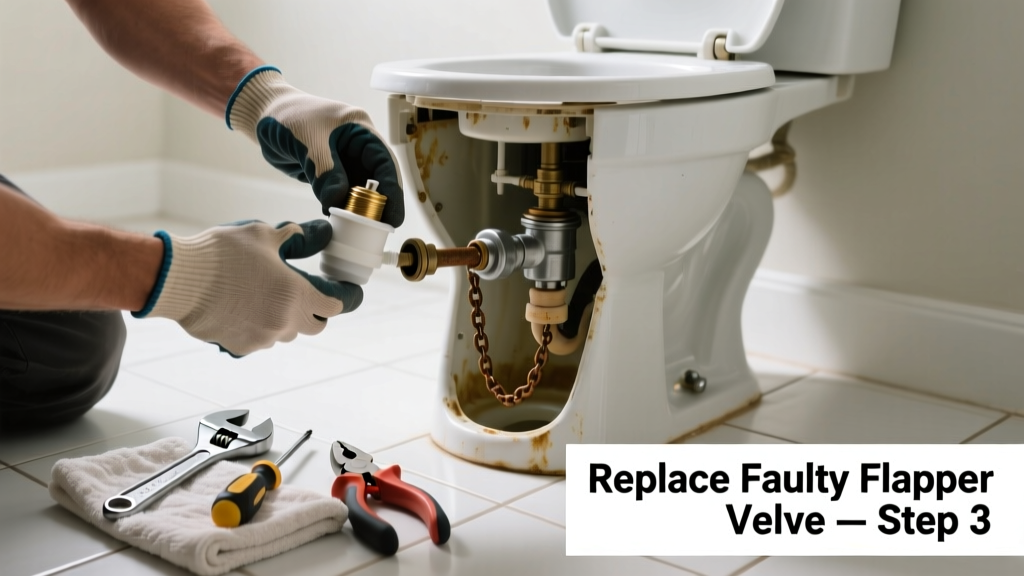
A running toilet isn’t just annoying—it wastes up to 200 gallons of water per day, according to the U.S. EPA’s 2023 WaterSense report. Most of the time, it’s not the whole toilet that’s broken; it’s one inexpensive, replaceable part. You can fix it yourself in under 30 minutes with basic tools and under $15.
Quick Diagnosis
Before grabbing tools, identify which part is failing. Listen and watch during and after flushing:
- Continuous hissing or water trickling into the bowl → likely a worn flapper or leaky flush valve seal
- Tank refills constantly, even when not flushed → usually a faulty fill valve or float misalignment
- Water rises above overflow tube and drains into it → float set too high or fill valve stuck open
- Gurgling or delayed shut-off → mineral buildup in fill valve inlet or corroded diaphragm
Tools & Materials Needed
| Item | Purpose | Estimated Cost |
|---|---|---|
| Adjustable wrench | Tightens/loosens tank bolts and supply line connections without stripping | $8–$15 |
| Replacement flapper (universal or model-specific) | Seals the flush valve opening; most common cause of running toilets | $3–$8 |
| Fluidmaster 400A fill valve kit | Industry-standard replacement for corroded or inaccurate float-valve assemblies | $12–$18 |
| White vinegar & soft brush | Cleans mineral deposits from valve seats and flapper surfaces | $2–$5 |
| Rubber gloves & towel | Keeps hands clean and absorbs spills during tank work | $0–$4 |
Step-by-Step Fix
Choose the method based on your diagnosis:
- Replace the flapper: Turn off water at shutoff valve, flush to drain tank, unhook old flapper chain, remove flapper from overflow tube pegs, snap new flapper in place, reattach chain with ½” slack.
- Swap the fill valve: Shut off water, drain tank, unscrew locknut under tank, lift out old valve, insert new Fluidmaster 400A, tighten locknut hand-tight plus ¼ turn, adjust float height to 1” below overflow tube top.
- Clean the flush valve seat: After removing flapper, scrub rubber seat surface with vinegar-soaked cloth and soft toothbrush—mineral scale prevents full seal.
When to Call a Pro
Don’t risk leaks or damage if you encounter any of these:
- Cracked porcelain tank or bowl (no patch fixes structural cracks)
- Rusted or seized tank bolts that won’t budge—even with penetrating oil and heat
- Supply line corrosion near the wall connection (risk of burst pipe)
- Constant running returns after replacing both flapper and fill valve (indicates hidden flush valve body damage or misaligned tank-to-bowl gasket)
Prevention Tips
Extend the life of your toilet’s internal parts with simple habits:
- Flush only toilet paper and human waste—never wipes, cotton balls, or feminine products
- Inspect flapper every 6 months: look for warping, stiffness, or calcium buildup
- Turn off water and drain tank once per year to wipe down valve seats and check for early leaks
- Install a water softener if your home has hard water over 7 gpg (U.S. Geological Survey, 2022)
How long does a toilet flapper last?
Most flappers last 3–5 years, but chlorine-treated municipal water and hard water can cut that to 18–24 months.
"Over 65% of running toilets we service are fixed with a $4 flapper replacement—yet homeowners wait an average of 11 days before addressing it." — American Society of Home Inspectors, 2023 Field Repair Survey
Can I use bleach tablets in the tank?
No. Bleach tablets degrade flappers, floats, and fill valve seals rapidly. They also void warranties on many modern valves. Use tank-safe cleaners like Clorox Toilet Bowl Cleaner (liquid) only on the bowl—not inside the tank.
Why does my new flapper still leak?
Check three things: (1) Chain has too much slack and gets trapped under the flapper, (2) Flapper isn’t fully seated on the valve seat due to debris or misalignment, or (3) The flush valve seat itself is pitted or cracked—requiring a full flush valve replacement.
Do I need to replace the entire flush valve?
Only if the brass or plastic valve body shows cracks, heavy corrosion, or warped threads. Most issues are resolved with flapper + seat cleaning. If the overflow tube leaks at its base, that’s a sign the flush valve gasket failed—and yes, that requires valve replacement.
What’s the difference between a fill valve and a flush valve?
The fill valve brings fresh water into the tank after flushing. The flush valve sits at the tank bottom and controls water release into the bowl. Confusing them leads to buying the wrong part—double-check before ordering.
Is a running toilet considered an emergency?
Not immediately—but if it runs continuously for >24 hours, it risks overheating the fill valve diaphragm, damaging the shutoff valve, or causing floor damage from overflow. Fix it within 12 hours if water is visibly spilling into the bowl or onto the floor.
A running toilet is rarely a catastrophe—just a clear signal that one small, inexpensive part has reached the end of its service life. With the right diagnosis and a few minutes of focused effort, you’ll restore quiet operation and save hundreds of gallons monthly. For persistent issues, consult our guide on toilet leak detection or how to replace a toilet flush valve.