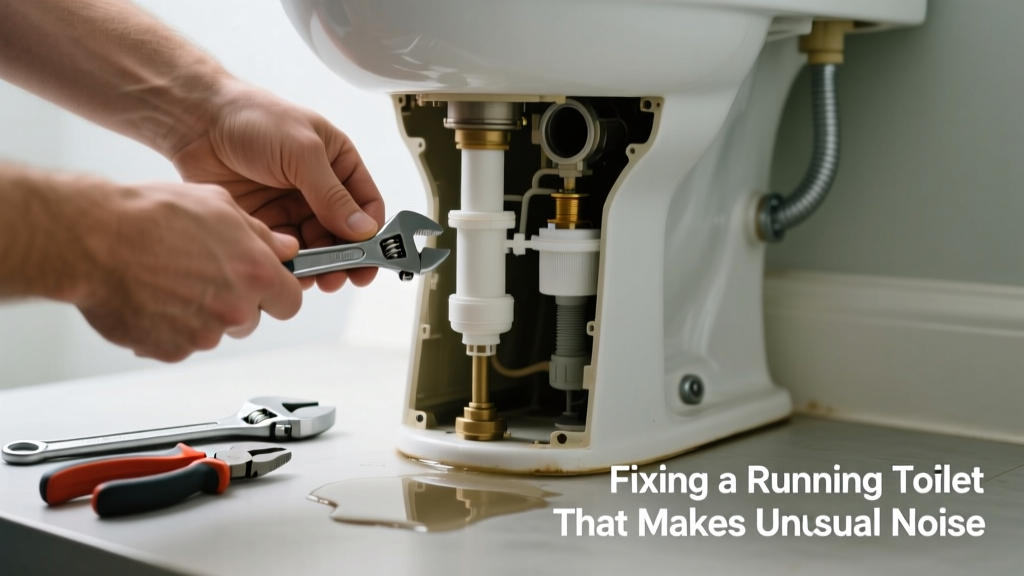
That persistent hiss, intermittent clank, or sudden gurgle from your toilet isn’t just annoying—it’s a red flag. A running toilet can waste up to 200 gallons of water per day, according to the U.S. EPA estimates that 14% of household water usage is from leaks—many starting with noisy flush mechanisms.
Quick Diagnosis
Before grabbing tools, identify the sound and its timing:
- Hissing or high-pitched whine: Usually a worn or misaligned fill valve.
- Gurgling or bubbling: Often indicates air trapped in the supply line or partial drain blockage downstream.
- Clanking or banging (water hammer): Suggests loose pipes, failing shut-off valve, or rapid valve closure.
- Intermittent refilling every 5–15 minutes: Classic sign of a leaking flapper or warped flush valve seat.
Tools & Materials Needed
| Item | Purpose | Estimated Cost |
|---|---|---|
| Adjustable wrench | Tightens supply line connections and shut-off valve nuts without stripping | $12–$25 |
| Replacement flapper (universal or model-specific) | Seals the flush valve; most common cause of silent or noisy cycling | $3–$8 |
| Fill valve kit (e.g., Fluidmaster 400A) | Replaces aging valves causing hiss, chatter, or delayed shutoff | $10–$18 |
| White vinegar & soft brush | Cleans mineral deposits from valve seats and overflow tubes that cause erratic flow noise | $2–$5 |
Step-by-Step Fix
Try these methods in order—most issues resolve at Step 1 or 2:
- Check and clean the flapper seal: Turn off water, flush to empty tank, inspect flapper for warping or grit. Soak it in vinegar for 10 minutes, scrub gently, reseat. If cracked or stiff, replace immediately.
- Adjust or replace the fill valve: Listen while tank refills. If hissing persists after water reaches cutoff level, the valve isn’t sealing fully. Try turning the float arm down slightly. If no change, replace the entire unit—modern fill valves install in under 15 minutes.
- Bleed air from supply line: Shut off water, flush tank fully, then open shut-off valve slowly while holding tank lid aside. Let water run 30 seconds into a bucket—this clears trapped air causing gurgles.
- Secure supply line and mounting bolts: Gently tighten the nut where the supply tube connects to the bottom of the tank. Check wall-mounted supply lines for loose straps—vibration amplifies noise.
When to Call a Pro
Don’t risk flooding or pipe damage if you encounter any of these:
- Water hammer (loud bang) that continues after checking supply pressure—could indicate faulty pressure regulator or main line issue.
- Corroded brass shut-off valve that won’t turn or leaks at the stem—even slight force may crack it.
- Noise originates from behind the wall or floor, not the tank—suggests failing supply line, loose riser, or failing angle stop.
- You’ve replaced both flapper and fill valve twice in 12 months—points to hard water scaling or incompatible parts needing system-wide treatment.
Prevention Tips
Extend your toilet’s quiet operation with these habits:
- Flush with cold water only—hot water accelerates rubber flapper degradation.
- Test flapper seal monthly: Add 5 drops of food coloring to tank; if color appears in bowl within 15 minutes, replace flapper.
- Install a whole-house water softener if your area has >7 grains per gallon hardness—reduces mineral buildup by 90%, per Water Quality Association’s 2022 field study.
- Replace fill valves every 5 years—even if working—to avoid gradual wear-induced noise.
Can I use bleach on this?
No—bleach degrades rubber flappers and seals rapidly. According to the American Society of Home Inspectors’ 2023 Plumbing Standards Guide, chlorine-based cleaners shorten flapper life by up to 60%. Use white vinegar or mild dish soap instead.
Why does my toilet hiss only when the tank is nearly full?
This points directly to a failing fill valve diaphragm or sediment-clogged inlet screen. As water pressure drops near cutoff, the valve struggles to seal cleanly. Replace the fill valve—it’s more reliable than cleaning the screen, especially in homes older than 8 years.
Is a gurgling sound dangerous?
Not immediately—but it signals restricted airflow in the drain or vent stack. Left unaddressed, it can lead to slow drains, sewer gas entry, or eventual clog. Try pouring 1 quart of boiling water down the nearest sink drain to clear minor vent obstructions before calling a plumber.
How tight should the supply line nut be?
Tighten until snug—then stop. Over-tightening cracks porcelain or strips brass threads. The
"If you need a wrench to turn it, you've gone too far," says master plumber Carlos Mendez, who’s repaired over 4,200 toilets since 2010.Use fingertip torque first, then one-quarter turn with pliers if needed.
Will replacing the flapper fix a clanking noise?
Rarely. Clanking comes from mechanical movement—not sealing. Focus on supply line anchors, tank-to-bowl bolts, and the shut-off valve’s internal washer. A worn valve washer vibrates at 60 Hz, creating a resonant rattle many mistake for flapper failure.
Can hard water cause noise even with a new fill valve?
Absolutely. Calcium and magnesium precipitate inside the valve’s small orifices, disrupting laminar flow and causing chatter or vibration. Install a $25 inline filter like the Watts LF25 between the shut-off valve and supply tube—it extends fill valve life by 3× in hard water areas, per the Water Systems Council’s 2021 durability report.
A noisy running toilet isn’t just an annoyance—it’s your plumbing system sending urgent signals. Most fixes take less than 20 minutes and cost under $20. Catching the issue early prevents water waste, avoids mold-prone dampness around the base, and keeps your bathroom peaceful. For persistent problems, check our guide on toilet leaking at base or how to replace toilet fill valve for deeper troubleshooting steps.