A running toilet isn’t just annoying—it can waste up to 200 gallons of water per day, according to the U.S. EPA’s 2023 WaterSense report. If you hear that constant hiss or trickle after flushing, don’t ignore it. Most bathroom running toilets stem from simple, fixable issues inside the tank.
Quick Diagnosis
Before grabbing tools, identify the likely culprit by observing behavior:
- Water continuously flows into the overflow tube after flushing → flapper not sealing or chain too tight
- Toilet runs intermittently (starts/stops every few minutes) → fill valve leaking or misadjusted
- Hissing sound with no visible water movement → worn seal inside the fill valve or cracked overflow tube
- Water level rises above the overflow tube rim → float set too high or damaged
Tools & Materials Needed
| Item | Purpose | Estimated Cost |
|---|---|---|
| Adjustable wrench | Tightens/cleans connections at fill valve and supply line | $8–$15 |
| Replacement flapper (universal 2" or 3") | Replaces warped or mineral-crusted flapper causing poor seal | $3–$6 |
| Float adjustment tool or flathead screwdriver | Adjusts cup-style or ballcock float height | $0–$5 |
| Vinegar and soft brush | Cleans mineral deposits from flapper seat and valve components | $2–$4 |
Step-by-Step Fix
Try these methods in order—they solve ~90% of bathroom running toilet cases:
- Check and adjust the flapper chain: Turn off water supply, flush to drain tank, then inspect chain length. It should have 1/4" slack when flapper is seated. Trim excess or rehook if too tight.
- Clean the flapper seat: Use white vinegar and a soft toothbrush to scrub calcium buildup off the porcelain seat where the flapper seals. Rinse thoroughly.
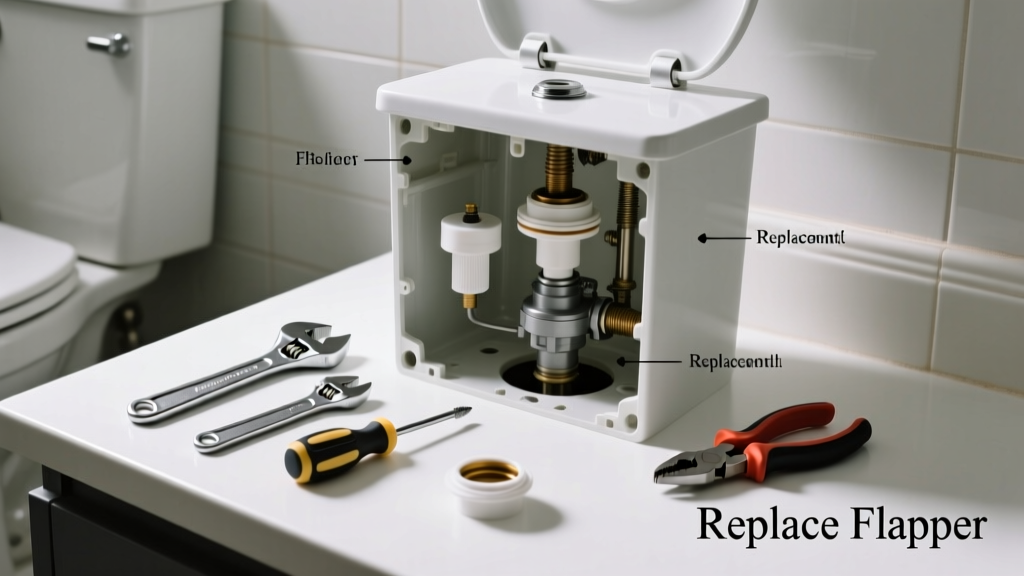
- Replace the flapper: Match size (2" or 3") and style (rubber, silicone, or dual-flush). Snap new one onto the overflow tube ears and reconnect chain.
- Adjust the float: For cup-style floats, pinch the clip and slide down 1/2". For ballcock floats, bend the brass arm downward slightly. Refill tank and verify water stops 1" below overflow tube top.
When to Call a Pro
Stop and call a licensed plumber if:
- The overflow tube itself is cracked or leaking at the base (often indicates tank stress or age)
- Water continues running after replacing both flapper and fill valve (suggests internal tank corrosion or cracked inlet valve housing)
- You detect moisture on the floor around the base—could indicate a failed wax ring or loose tank bolts, risking subfloor damage
- Your toilet is a low-flow or pressure-assist model (e.g., Sloan or Zurn), which requires specialized parts and calibration
Prevention Tips
Extend your toilet’s life and avoid repeat issues:
- Flush only toilet paper and human waste—no wipes, cotton balls, or cleaning pads
- Drain and clean the tank annually with vinegar to prevent mineral buildup
- Check flapper seal integrity every 6 months; replace every 2–3 years even if working
- Install a water-saving fill valve like the Fluidmaster 400A, rated for 10+ years of service
Why does my toilet run only at night?
Nighttime running often points to thermal expansion in cold water lines or slight pressure fluctuations when municipal demand drops. But more commonly, it’s a flapper that seals well when warm but stiffens and leaks as temperatures fall. Try a silicone flapper—it stays flexible in cooler conditions.
Can I use bleach to clean the flapper?
No. Bleach degrades rubber and silicone over time, causing premature cracking and warping. According to the Plumbing-Heating-Cooling Contractors Association’s 2022 Maintenance Guide, vinegar or mild dish soap is the only safe cleaner for flappers and seals.
How do I know if my fill valve is bad?
If adjusting the float doesn’t stop continuous refilling—or if you hear a high-pitched whine during refill—the diaphragm inside the fill valve is likely worn. Replace it before it fails completely: most modern valves last 5–7 years under average household use.
What if the water keeps rising above the overflow tube?
This means the float isn’t shutting off the valve. First, check for debris jamming the float cup or arm. If clear, the fill valve’s internal shutoff mechanism has failed. Replacement is safer and faster than disassembly—especially with older brass valves.
Is a running toilet an emergency?
Not immediately—but it becomes one fast. A constantly running toilet wastes 200+ gallons daily, potentially adding $100+ to your monthly water bill. More critically, prolonged overflow can saturate flooring and promote mold growth behind walls. Address within 24 hours.
Can I shut off water to just the toilet?
Yes—locate the shut-off valve behind the base, usually a small brass or plastic knob. Turn clockwise until snug (don’t force it). If it’s stiff or leaks when turned, replace the valve toilet shut-off valve replacement before your next repair.
"Over 85% of running toilet repairs succeed with just a flapper replacement and float adjustment—no special skills required." — Mike D’Amato, Master Plumber and instructor at the National Inspection Training Institute (2023)
Fixing a running toilet is one of the most impactful DIY repairs you can make—not just for peace of mind, but for your wallet and water conservation. With the right diagnosis and a few minutes of focused work, most bathroom toilets will stay quiet and efficient for months. Keep a spare flapper and fill valve in your home repair toolkit essentials, and consider upgrading to a quiet-fill toilet valve for long-term reliability.