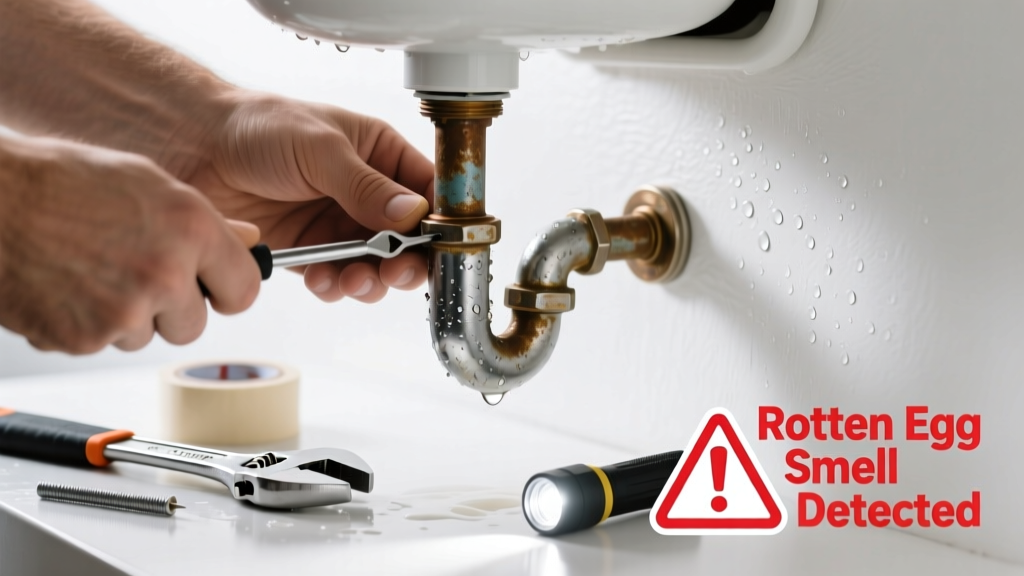
That unmistakable rotten egg odor in your tap water isn’t just unpleasant—it’s a red flag pointing to hydrogen sulfide gas or bacterial activity in your plumbing or water source. While sometimes harmless, it can signal corrosion, stagnant water, or even contamination that affects taste, fixtures, and health. Don’t ignore it—most cases are fixable in under an hour with basic tools.
Quick Diagnosis
Before grabbing tools, identify the likely source. Run cold and hot water separately—and note where the smell appears:
- Cold water only → Likely from municipal supply or well water (sulfur bacteria or geologic sulfate)
- Hot water only → Almost always the anode rod in your water heater reacting with sulfate-reducing bacteria
- Smell strongest at one faucet → Localized issue: aerator buildup or drain biofilm (not the water itself)
- Smell comes and goes → Often tied to low water use, allowing bacteria to colonize stagnant pipes or heater sediment
- Smell worsens after water heater use → Confirms anode rod or tank sediment as culprit
Tools & Materials Needed
| Item | Purpose | Estimated Cost |
|---|---|---|
| Adjustable wrench | Tighten/loosen water heater connections and drain valves | $12–$25 |
| White vinegar (1 gallon) | Kills sulfur bacteria and dissolves mineral buildup in heater | $4–$8 |
| Replacement magnesium or aluminum-zinc anode rod | Prevents H₂S production; zinc-coated rods suppress odor | $25–$45 |
| Drain hose (5-ft garden hose) | Safely route water during heater flush | $6–$12 |
| Face mask & gloves | Protect against hydrogen sulfide gas (toxic at high concentrations) | $8–$15 |
Step-by-Step Fix
Start with the most common and safest solution first—especially if the smell is hot-water-only:
- Flush your water heater: Turn off power/gas and cold water inlet. Attach hose to drain valve, run it to a floor drain or bucket. Open pressure relief valve, then drain 3–5 gallons. Refill fully before restoring power.
- Disinfect with vinegar: Drain heater completely. Pour 1 gallon of undiluted white vinegar into tank via the hot water outlet (remove heating element access panel if electric). Let sit 2–4 hours. Flush thoroughly.
- Replace the anode rod: Locate and remove the hex-head rod (usually on top of tank). Swap magnesium for a zinc-aluminum alloy rod—zinc neutralizes sulfur compounds. Tighten to 75 ft-lbs; over-torquing cracks the tank.
- Clean faucet aerators: Unscrew each aerator, soak in vinegar for 30 minutes, scrub with old toothbrush, rinse. Reinstall tightly.
- Shock-chlorinate your well (if applicable): Mix 1–2 quarts unscented household bleach per 100 gallons of well water volume. Circulate, let sit 12–24 hrs, then flush until chlorine smell disappears. Full well disinfection steps here.
When to Call a Pro
DIY stops where safety or complexity begins. Call a licensed plumber or water treatment specialist if:
- You smell gas near the water heater (could indicate combustion issues or venting failure)
- Your home has a private well and the odor persists after shock chlorination twice
- You detect black, slimy residue in pipes or fixtures—sign of sulfate-reducing bacteria colonies requiring professional biocide treatment
- Hydrogen sulfide levels exceed 0.5 ppm (confirmed by lab test), especially if accompanied by metallic taste or blue-green staining (copper pipe corrosion)
- Your water heater is over 10 years old and shows rust, leaks, or failed pressure relief valve—replacement may be safer than repair
"Over 90% of sulfur odor complaints in residential hot water systems trace directly to degraded anode rods or sediment buildup—both preventable with annual maintenance." — Plumbing Technology Journal, 2022
Prevention Tips
Keep your water smelling clean year-round with these habits:
- Flush your water heater every 6 months (more often in hard water areas)
- Set electric heaters to 140°F minimum for 2 hours quarterly to kill bacteria (then lower to 120°F for safety)
- Install a whole-house activated carbon filter if municipal water tests positive for H₂S above 0.3 ppm
- For wells, test annually for coliform bacteria, sulfate, and hydrogen sulfide—use an EPA-certified lab kit
- Avoid using softened water for outdoor irrigation—salt can accelerate sulfate-reducing bacteria growth in soil lines
Can I use bleach on this?
No—never pour bleach directly into your water heater tank. It corrodes steel linings and reacts dangerously with aluminum components. Bleach is only safe for well shock treatment (with strict dilution and flushing protocols) or surface cleaning of aerators and drains. For tank disinfection, vinegar or hydrogen peroxide-based solutions are safer and more effective.
Does boiling water remove the smell?
Boiling drives off some hydrogen sulfide gas temporarily—but it doesn’t eliminate the source. If the smell returns after cooling, bacteria or anode reactions are still active. Boiling also concentrates non-volatile contaminants like heavy metals if present. Not a fix—just a short-term workaround.
Why does only my kitchen sink smell?
This usually means the odor isn’t in your water—it’s in the P-trap or garbage disposal. Bacteria feeding on food debris produce hydrogen sulfide. Pour ½ cup baking soda + ½ cup vinegar down the drain, wait 15 minutes, then flush with boiling water. If it persists, check for hair or grease clogs—try a drain snake before chemical cleaners.
Is rotten egg water dangerous to drink?
Low-level hydrogen sulfide (under 0.5 ppm) is mostly a nuisance—not a health hazard per EPA guidelines. But higher concentrations (>1 ppm) can cause nausea, headaches, or respiratory irritation. More concerning is the presence of sulfate-reducing bacteria, which may coexist with harmful pathogens like E. coli in untreated wells. Always test well water annually.
Will a water softener fix this?
Standard salt-based softeners don’t remove hydrogen sulfide or sulfur bacteria—they may even worsen odors by providing nutrients (sodium) for bacterial growth. You need a system with catalytic carbon, manganese greensand, or oxidation filtration. Softeners paired with these media work—but standalone softeners won’t help.
How long does vinegar take to work in the heater?
Vinegar needs contact time: 2 hours minimum for light odor, 4 hours for persistent smells. Don’t exceed 6 hours—prolonged exposure risks damaging rubber gaskets or tank enamel. After soaking, flush with at least 10 gallons of fresh water before restoring power.
Fixing rotten egg water smell isn’t about masking odors—it’s about targeting the root cause: bacteria, chemistry, or equipment wear. Most homeowners resolve hot-water-only smells in under two hours with vinegar and a new anode rod. Cold-water issues demand deeper investigation, but catching them early prevents corrosion, fixture damage, and costly replacements down the line.