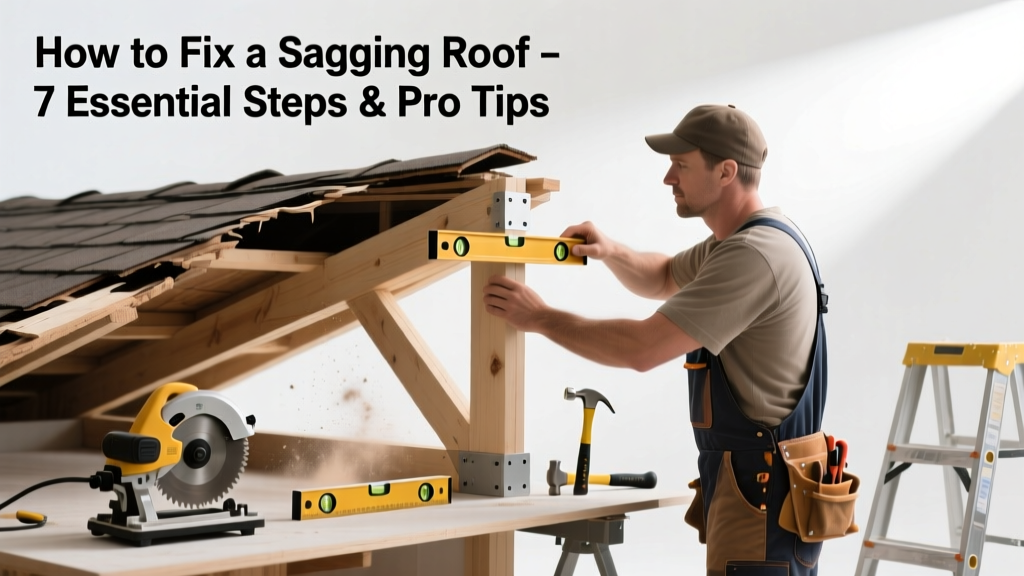
If you’ve noticed a dip in your roofline, soft spots when walking on the attic floor, or visible bowing along the ridge, your roof may be sagging — a red flag for serious structural stress. Left unaddressed, even minor sagging can accelerate wood rot, compromise insulation, and lead to costly repairs or collapse. Don’t wait until shingles start cracking or gutters pull away — early action saves thousands.
Quick Diagnosis
Roof sagging rarely happens overnight. It’s usually the symptom of an underlying issue. Pinpoint the cause before attempting repairs:
- Excessive snow or ice load that overwhelmed framing over multiple winters
- Rotted or undersized rafters or trusses (especially common in older homes built before 1980)
- Improper attic ventilation causing moisture buildup and wood decay
- Missing or failed collar ties or ceiling joists allowing walls to spread outward
- Foundation settlement shifting load-bearing walls beneath the roof structure
Tools & Materials Needed
| Item | Purpose | Estimated Cost |
|---|---|---|
| 4x4 pressure-treated lumber (10–12 ft) | Temporary support posts or permanent reinforcement beams | $22–$35 |
| Jack post (telescoping, 3,000-lb capacity) | Lifts sagging ridge beam incrementally and safely | $85–$140 |
| Construction adhesive (polyurethane-based) | Bonds new framing to old; resists moisture better than nails alone | $12–$18 |
| 16d galvanized sinker nails & 3" structural screws | Secure reinforcements without splitting aged wood | $8–$15 |
| Moisture meter (pin-type) | Measures wood moisture content—anything above 20% indicates active rot | $45–$95 |
Step-by-Step Fix
These methods assume sagging is localized (under 3 feet wide) and no major rot or structural failure is present. Always inspect from the attic first using a flashlight and ladder.
- Install temporary jack posts: Position adjustable steel posts directly under the sagging ridge beam or rafter tail. Tighten gradually—no more than 1/8" per day—to avoid cracking drywall or shifting framing.
- Add sistered rafters: Cut 2x6 or 2x8 lumber to match existing rafter length. Apply construction adhesive, then secure with 3" structural screws every 6 inches along the full length.
- Reinforce collar ties: Install new 2x6 collar ties between opposing rafters at the top third of the roof height. Use hurricane ties and structural screws to prevent wall spreading.
- Replace rotted sections: If moisture meter readings exceed 25%, cut out decayed wood and splice in pressure-treated replacements using Simpson Strong-Tie RTA brackets.
When to Call a Pro
Some sagging isn’t fixable with DIY tools—and attempting to force a lift or patch compromised framing can worsen damage or endanger lives. Call a licensed structural engineer or certified roofing contractor if:
- The sag exceeds 1.5 inches over a 10-foot span (per roof inspection checklist standards)
- You find >12 inches of soft, spongy wood or fungal growth in rafters or sheathing
- Cracks appear in interior drywall near ceilings or exterior brickwork near eaves
- Your home was built before 1970 with balloon framing and no engineered trusses
- The sag worsens noticeably within 72 hours—even after jacking
"Over 62% of premature roof failures begin with undetected sagging linked to chronic ventilation deficits," says Dr. Lena Cho, building scientist at the National Roofing Contractors Association's 2022 Field Study.
Prevention Tips
Once repaired, keep your roof stable long-term with these proven habits:
- Clean gutters twice yearly to prevent ice dams and water backup into soffits
- Maintain attic ventilation: aim for 1 square foot of net free vent area per 150 sq ft of attic floor (per IRC R806.1)
- Inspect rafters annually with a moisture meter—especially after heavy rain or snowmelt
- Install snow guards on steep roofs (>6:12 pitch) in snowy climates to distribute load
- Upgrade attic insulation to R-49 (or local code minimum) to reduce condensation risk
Can roof sagging be reversed without removing shingles?
Yes—if the issue is structural framing only and not decking failure. You’ll work from inside the attic, adding supports or sistering rafters. Shingle removal is unnecessary unless you’re replacing rotted sheathing or addressing leaks underneath.
How long does a temporary jack post need to stay in place?
At least 4–6 weeks after lifting stops and the ridge shows no further movement. Monitor daily with a laser level or chalk line. Remove only after installing permanent reinforcement and confirming zero deflection over 72 hours.
Will adding attic storage make roof sagging worse?
It absolutely can. Standard attic floors are designed for light storage (10 psf live load). Adding plywood flooring plus boxes easily exceeds 30–40 psf—overloading joists and pushing walls outward. Reinforce joists with LVL beams before converting to storage, per attic floor reinforcement guidelines.
Does homeowner’s insurance cover roof sagging repairs?
Rarely—if sagging results from gradual wear, poor maintenance, or deferred repairs. Most policies only cover sudden, accidental damage (e.g., tree impact or storm collapse). Document all inspections and repairs; some insurers may cover partial costs if you prove recent extreme weather was the trigger.
Can I use hydraulic jacks instead of telescoping jack posts?
No. Hydraulic jacks lack fine-thread control and safety locking mechanisms. They can slip or release suddenly under load, risking injury or catastrophic framing shift. Only use UL-listed, screw-type adjustable posts rated for structural lifting (e.g., PowerPost or Strong-Tie CBP series).
Is roof sagging always a sign of foundation problems?
No—most cases stem from roof-specific issues like inadequate bracing or moisture damage. But if sagging coincides with diagonal cracks in basement walls, sloping floors, or sticking doors on the first floor, get a foundation assessment from a structural engineer immediately.
A sagging roof isn’t just cosmetic—it’s your home’s warning system speaking in wood and steel. Address it methodically, prioritize safety over speed, and remember that reinforcing a sound frame today prevents emergency replacement tomorrow. Pair each repair with better ventilation and seasonal inspections, and your roof will hold its line for decades—not just years.