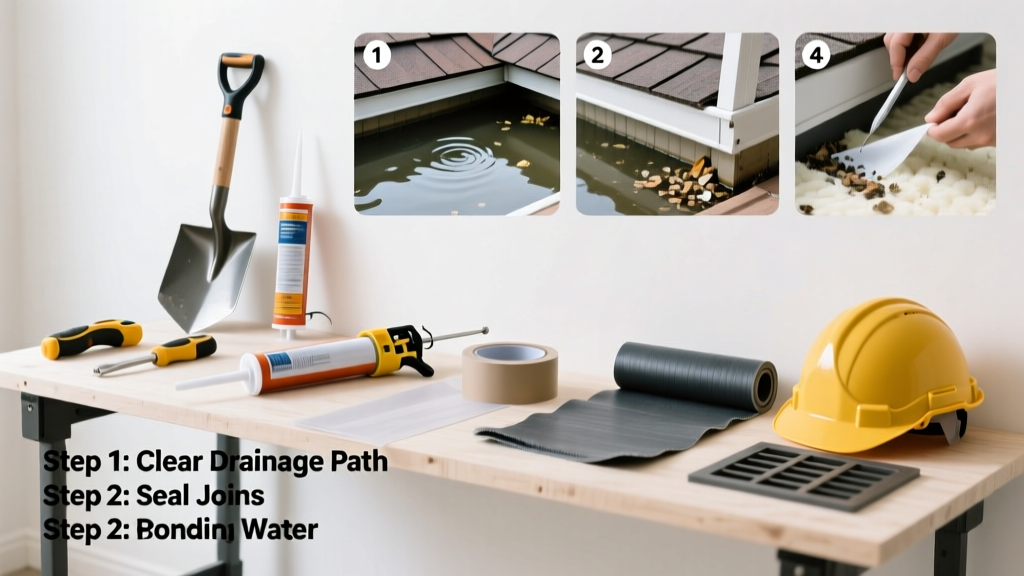
If you’ve spotted standing water on your flat or low-slope roof after rain—and it’s still there 48 hours later—you’re dealing with ponding water. Left unaddressed, it can degrade roofing membranes, rot decking, and invite mold or leaks within weeks.
Quick Diagnosis
Ponding isn’t random—it’s a symptom. Start by inspecting these common culprits:
- Inadequate roof slope (less than 1/4 inch per foot)
- Clogged or undersized drains and scuppers
- Sagging roof deck from long-term moisture exposure or framing settlement
- Debris buildup (leaves, gravel, sediment) blocking flow paths
- Failed or improperly installed tapered insulation
Tools & Materials Needed
| Item | Purpose | Estimated Cost |
|---|---|---|
| Roof drain snake or auger | Clears debris from internal downspouts and leader lines | $12–$25 |
| Roofing-grade silicone sealant | Seals minor cracks around drains and flashing | $8–$15 |
| Laser level or 4-ft carpenter’s level + straightedge | Identifies low spots and measures slope accuracy | $35–$120 |
| Tapered polyisocyanurate insulation panels | Creates proper drainage slope over existing deck | $2.50–$4.25/sq ft |
| Roofing broom & stiff-bristle brush | Removes algae, silt, and organic debris without damaging membrane | $10–$22 |
Step-by-Step Fix
Try these methods in order—start simple, escalate only if needed:
- Clear drains and scuppers: Use a roof drain snake to remove sediment and roots; flush with a garden hose at low pressure. Check interior leader lines for blockages using a flashlight and mirror.
- Scrape and clean the ponding zone: Remove algae, moss, and silt with a stiff brush and biocide cleaner (avoid bleach—it degrades EPDM and TPO membranes). Rinse thoroughly.
- Add tapered insulation: For persistent low spots >1/8” deep over 10 sq ft, install tapered polyiso panels over the existing roof (if compatible with your membrane system). Secure with adhesive or mechanical fasteners per manufacturer specs.
- Install a secondary drain: If primary drains are maxed out, add an overflow scupper or internal drain 2 inches below roof surface—this requires flashing integration and is best done by a licensed roofer.
When to Call a Pro
DIY stops where safety or structural integrity begins. Call a licensed roofing contractor immediately if:
- You spot soft, spongy, or sagging areas when walking the roof (sign of deck rot)
- Ponding covers more than 25 sq ft and persists beyond 72 hours
- Your roof is under warranty—improper repairs void coverage
- You’re working on a commercial roof or one with HVAC units, skylights, or parapet walls over 36 inches tall
According to the National Roofing Contractors Association’s 2022 Field Manual, 68% of premature roof failures begin with undiagnosed ponding—most of which could have been caught early with professional slope assessment.
Prevention Tips
Maintain drainage year-round—not just after storms:
- Inspect drains and scuppers twice yearly (spring and fall)
- Trim overhanging branches to reduce leaf accumulation
- Install gutter guards on adjacent parapet gutters
- Document roof slope with photos and laser-level readings every 2 years
- Replace gravel surfacing every 7–10 years to prevent compaction and settling
How long is it safe for water to sit on my roof?
The industry standard—per ASTM D6754—is no more than 48 hours. After that, UV degradation accelerates, microbial growth begins, and hydrostatic pressure risks membrane seam failure.
Can I use bleach to clean the algae off my ponding area?
No. Bleach breaks down EPDM, TPO, and PVC membranes, causing micro-cracking and premature aging. Instead, use a sodium percarbonate-based cleaner like Roof-A-Cide or a diluted vinegar solution (1:3 vinegar-to-water), followed by thorough rinsing.
Will adding gravel fix ponding water?
Not reliably—and often makes it worse. Gravel adds weight, compresses insulation over time, and traps moisture beneath. It also hides developing problems until they’re severe. Avoid gravel as a ‘fix’ unless specified in your roof system’s original design.
Do roof coatings stop ponding?
No. Elastomeric or acrylic coatings improve UV resistance and seal minor pinholes—but they don’t alter slope or restore drainage. In fact, improper coating application over ponding areas can trap moisture between layers and accelerate delamination.
Is ponding water covered by homeowners insurance?
Rarely. Most policies exclude damage from ‘gradual deterioration’ or ‘lack of maintenance.’ The Insurance Institute for Business & Home Safety’s 2023 report found that only 12% of ponding-related claims were paid—and only when documentation proved sudden, storm-caused drain obstruction.
Can I walk on the roof to inspect ponding?
Only if your roof is rated for foot traffic and you wear soft-soled, clean shoes. Avoid walking on wet membranes—especially EPDM—as oils and grit increase slip risk and abrasion. Use a ladder and extendable pole camera for safer visual checks from the edge.
Fixing ponding water isn’t about chasing symptoms—it’s about restoring function. A properly sloped, clean, and maintained roof sheds water like it was designed to do. If your repair feels like a bandage instead of a solution, it’s time to reassess the underlying structure—or call in a certified inspector before winter freeze-thaw cycles worsen the damage. And remember: tapered insulation upgrades often pay for themselves in extended roof life, not just leak prevention.