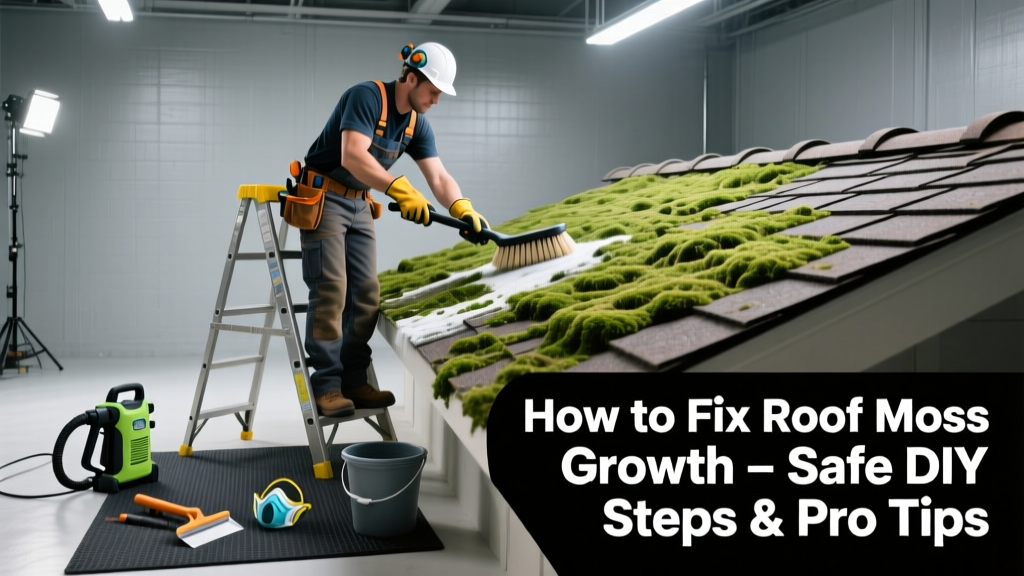
Moss on your roof isn’t just unsightly—it’s a red flag for trapped moisture, lifted shingles, and accelerated decay. Left untreated, even a small patch can shorten your roof’s lifespan by 5–10 years, especially in humid or shaded areas like the Pacific Northwest or New England.
Quick Diagnosis
Moss thrives where conditions stay damp, cool, and shaded for extended periods. Common root causes include:
- Overhanging tree branches blocking sunlight and trapping moisture
- Poor attic ventilation causing condensation and roof deck cooling
- North- or east-facing roof slopes receiving less daily sun
- Aged or granule-loss asphalt shingles with porous surfaces
- Clogged gutters or downspouts backing water onto the roof edge
Tools & Materials Needed
| Item | Purpose | Estimated Cost |
|---|---|---|
| Zinc or copper sulfate granules | Slow-release biocide that inhibits moss regrowth for 6–12 months | $12–$24 |
| Soft-bristle roof brush (non-metal) | Removes surface moss without damaging shingle granules or underlayment | $8–$15 |
| Low-pressure garden sprayer (15–30 PSI) | Applies cleaning solution evenly without forcing water under shingles | $22–$45 |
| 10% sodium hypochlorite (roof-safe bleach) or oxygen bleach | Kills moss and algae without corroding metal flashings or harming plants below | $10–$18 |
| Roof safety harness + anchor point | Required for steep roofs (>6:12 pitch) or heights over 10 feet—prevents falls | $45–$120 |
Step-by-Step Fix
Use these methods in order of severity—start gentle, escalate only if needed:
- Manual removal (for light growth): After dry weather, gently sweep loose moss with a soft-bristle brush from ridge to eave—never upward—to avoid lifting shingle edges.
- Oxygen bleach spray (moderate growth): Mix 1 cup powdered oxygen bleach per gallon of water. Spray at dawn or dusk (avoid midday UV), let dwell 15–20 minutes, then rinse with low-pressure water. Repeat in 7 days if needed.
- Zinc strip installation (preventative): Nail 6"-wide zinc strips under the cap shingles at the roof ridge. Rainwater washes zinc ions down the slope, suppressing new moss for 5+ years.
- Copper sulfate treatment (stubborn patches): Apply granular copper sulfate at 1–2 lbs per 100 sq ft along the ridge line—effective for slate or tile roofs where brushing isn’t safe.
When to Call a Pro
DIY isn’t safe or effective in these situations:
- Your roof has a pitch steeper than 8:12 or lacks secure anchor points for fall protection
- Moss covers more than 25% of the roof surface or is growing under shingle edges
- You spot curling, missing, or cracked shingles beneath the moss—this signals structural compromise
- The roof is slate, clay tile, or historic wood shake—these materials require specialized handling
- You live in a municipality with strict chemical runoff regulations (e.g., Portland, OR or Seattle, WA)
According to the National Roofing Contractors Association’s 2022 Safety Report, 37% of residential roof injuries occur during DIY moss or algae removal—most involving slips or improper ladder use.
Prevention Tips
Stop moss before it starts with consistent maintenance:
- Trim tree limbs to keep at least 6 feet of clearance above the roofline
- Install continuous soffit and ridge vents to reduce underside condensation
- Clean gutters twice yearly—especially after fall leaf drop and spring pollen season
- Inspect roof annually for damaged flashing, cracked sealant, or granule loss
- Consider installing zinc or copper-coated ridge caps during re-roofing—they’re more durable than retrofitted strips
Can I use regular household bleach?
No. Standard chlorine bleach (sodium hypochlorite >6%) degrades asphalt shingle polymers, fades color, and corrodes metal flashings and gutters. It also harms nearby soil and plants due to high sodium content. Stick to oxygen bleach or roof-specific sodium hypochlorite formulations labeled "shingle-safe."
Will pressure washing remove moss safely?
Never use pressure washing on asphalt shingles—it blasts away protective granules, exposes underlayment, and forces water into nail holes and seams. The U.S. Department of Housing and Urban Development’s Residential Roofing Guide (2021) explicitly warns against pressures above 50 PSI for any composition roof.
Does moss cause leaks directly?
Moss itself doesn’t puncture roofing—but its moisture retention lifts shingle edges, loosens nails, and accelerates underlayment rot. Over time, this creates pathways for wind-driven rain. A study by the Oak Ridge National Laboratory found moss-covered sections absorb 3× more water than clean shingles, increasing thermal stress and freeze-thaw cracking risk.
How often should I treat my roof for moss?
Treat only when visible growth appears—typically every 1–3 years depending on climate and shade. Annual visual inspections in spring and fall are smarter than routine chemical applications. Over-treating weakens shingle binders and contributes to premature failure.
Are there eco-friendly alternatives to chemical treatments?
Yes—physical removal plus zinc strips is the most sustainable long-term solution. For immediate control, diluted vinegar (1:1 with water) works on small patches but offers no residual effect. Avoid baking soda or salt: both corrode metal and harm vegetation downstream.
Can I install zinc strips myself?
You can—but only if your roof has accessible ridge cap shingles and you’re comfortable working at height with proper fall protection. Improper nailing risks leaks; misaligned strips reduce coverage. If your ridge line exceeds 40 feet or includes complex hips/valleys, hire an installer certified by the roof repair contractors directory.
Moss won’t vanish overnight, but catching it early means your roof stays intact, your energy bills stay lower (wet insulation loses R-value), and you avoid the $800–$2,500 cost of localized shingle replacement. Pair smart removal with shade management and airflow upgrades, and you’ll likely extend your roof’s service life beyond its rated warranty—especially if you’ve already invested in quality materials like architectural shingles or metal roof maintenance.