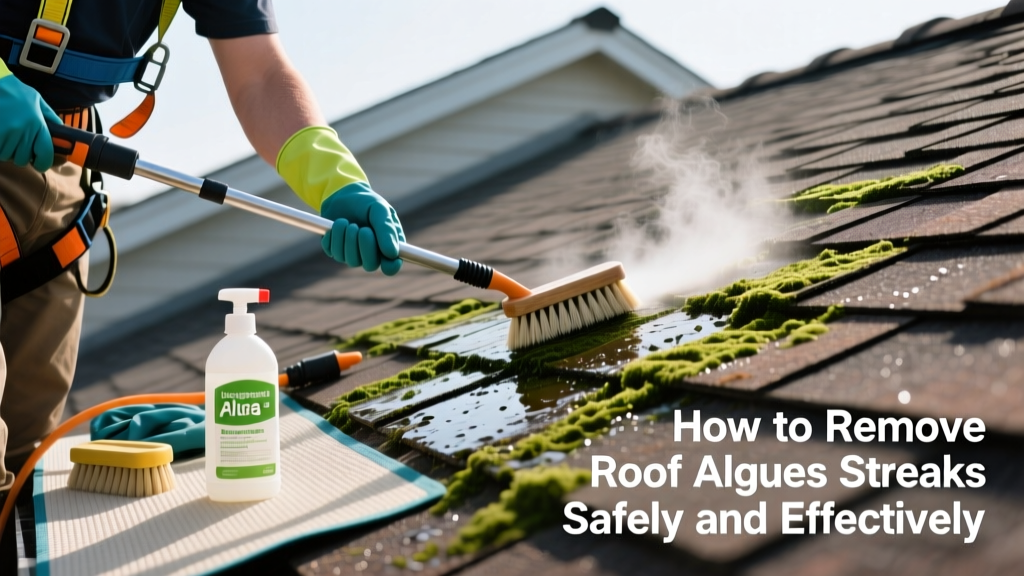
Those dark, slimy streaks creeping across your roof aren’t just ugly—they’re a sign of Gloeocapsa magma, a cyanobacteria that feeds on limestone filler in asphalt shingles. Left untreated, algae weakens granules, accelerates aging, and can cut shingle life by up to 25% (Insurance Institute for Business & Home Safety, 2023). The good news? Most cases respond well to gentle, targeted cleaning—no ladder acrobatics or harsh chemicals required.
Quick Diagnosis
Algae streaks are almost always caused by one or more of these factors:
- Shade from overhanging tree limbs or nearby structures
- High humidity and poor roof ventilation
- North- or east-facing roof slopes (less sun exposure)
- Aged or low-grade shingles with higher limestone content
- Stagnant moisture from clogged gutters or debris buildup
Tools & Materials Needed
| Item | Purpose | Estimated Cost |
|---|---|---|
| Zinc or copper sulfate granules | Kills algae at the root and prevents regrowth along ridges | $8–$15 |
| Soft-wash sprayer (low-pressure) | Delivers cleaning solution without damaging shingles | $45–$120 |
| Oxygen bleach (sodium percarbonate) | Safe, non-corrosive alternative to chlorine bleach | $12–$22 |
| Roof brush with soft, non-abrasive bristles | Gently loosens biofilm without dislodging granules | $18–$35 |
| Extension ladder + standoff brackets | Provides safe access while protecting gutters and shingles | $120–$280 |
Step-by-Step Fix
Choose the method best suited to your roof’s age, slope, and algae severity:
- Oxygen bleach soak (best for mild-to-moderate streaks): Mix 1 cup oxygen bleach per gallon of water. Spray evenly using a pump sprayer—don’t rinse. Let dwell 15–20 minutes, then gently agitate with a soft brush. Repeat after 48 hours if streaks persist.
- Zinc strip installation (long-term prevention): Nail 6"-wide zinc or copper strips under the top course of shingles at the ridge. Rainwater washes trace metals down the roof, inhibiting algae growth for 5–10 years.
- Professional soft-wash (for steep, multi-story, or heavily stained roofs): Hire a certified roof cleaner who uses <150 PSI pressure and EPA-registered biocides—not chlorine bleach—to avoid shingle degradation.
When to Call a Pro
DIY isn’t safe or effective in these situations:
- Your roof pitch exceeds 6:12 (more than 26.5°) — falls become far more likely
- You spot black streaks mixed with white, fuzzy mold or green moss—indicating deeper biological colonization
- More than 30% of the roof surface is affected, especially near valleys or flashing
- You have slate, wood shake, or clay tile roofing—these materials require specialized cleaning protocols
- There’s visible granule loss, curling, or blistering beneath the algae (signs of advanced deterioration)
Prevention Tips
Stop algae before it takes hold with these proven strategies:
- Trim tree branches to allow at least 6 feet of clearance above the roofline
- Clean gutters twice yearly to prevent moisture pooling and organic debris buildup
- Install zinc or copper strips during roof replacement—or retrofit them now
- Run attic fans or add soffit vents to reduce underside moisture and surface condensation
- Consider algae-resistant shingles (look for ASTM D7820-compliant labels) for future replacements
Can I use chlorine bleach on my roof?
No. Chlorine bleach degrades asphalt shingle polymers, dries out fiberglass mats, and corrodes metal flashings and gutters. The U.S. EPA estimates that improper roof cleaning accounts for nearly 12% of premature shingle failures linked to chemical misuse (EPA Residential Roofing Guidance, 2022). Stick with oxygen bleach—it breaks down into water, soda ash, and hydrogen peroxide.
Will pressure washing remove algae streaks?
It might—but at high risk. Standard pressure washers operate at 1,200–3,000 PSI, which easily dislodges protective granules and forces water under shingles. According to the National Roofing Contractors Association’s 2023 Field Manual, over 68% of reported granule-loss incidents were tied to improper pressure cleaning. If you must use pressure, limit it to <150 PSI and keep the nozzle 12+ inches from the surface.
How long does it take for algae to return after cleaning?
Without preventive measures, streaks often reappear in 6–18 months—especially on shaded, humid roofs. With zinc strips installed and trees trimmed, most homeowners see 3–5 years before retreatment is needed. A study published in the Journal of Building Engineering (2021) found that roofs with both zinc strips and improved airflow delayed recurrence by an average of 4.2 years.
Does roof algae affect energy efficiency?
Yes—indirectly. Dark algae streaks absorb more solar radiation, raising rooftop surface temperatures by up to 15°F compared to clean shingles (Lawrence Berkeley National Lab, 2020). That heat migrates into the attic, increasing cooling loads—and summer HVAC costs—by an estimated 3–7% annually.
Can I clean algae from a two-story roof myself?
Not safely—unless you have fall-protection training and OSHA-compliant anchor points. Over 70% of residential roof-related injuries occur on homes with two or more stories (CPSC Injury Data, 2023). Use a telescoping pole sprayer from ground level for lower sections, but hire a licensed roofer for anything beyond first-floor height.
Do algae-resistant shingles really work?
Yes—if installed correctly and maintained. These shingles embed zinc or copper granules into the surface layer. Independent testing by Underwriters Laboratories shows they resist visible algae growth for at least 10 years in humid climates—though performance drops sharply if installed over existing algae-covered roofs without prior cleaning.
"Oxygen bleach isn’t just safer—it’s more effective long-term. Chlorine kills surface algae but leaves spores intact; sodium percarbonate oxidizes the entire biofilm structure." — Dr. Lena Cho, Building Microbiologist, University of Florida IFAS Extension (2022)
Algae streaks won’t vanish overnight—and scrubbing too hard or rushing the process can do more harm than good. Patience, the right chemistry, and smart prevention turn a cosmetic nuisance into a manageable, predictable part of roof maintenance. For older roofs showing signs of wear, pair your cleaning with a roof inspection checklist to catch hidden issues early. And if you’ve got cedar shakes or historic tile, check our guide on how to clean wood shake roofs—the rules change completely there.