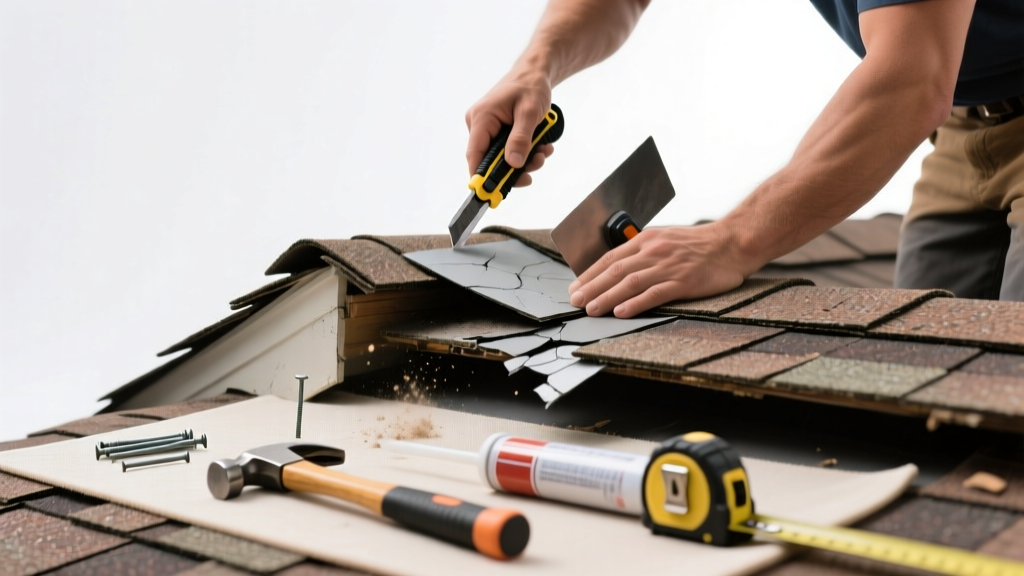
A cracked, lifted, or missing ridge cap shingle is more than an eyesore—it’s your roof’s first line of defense failing. Water can sneak in along the peak, rotting sheathing and insulation, and wind-driven rain makes it worse fast. Catching it early saves hundreds in interior repairs.
Quick Diagnosis
Ridge cap damage rarely happens in isolation. Here are the most common root causes:
- Age-related brittleness—most asphalt ridge caps last 15–20 years, same as shingles (NRCA Roofing Manual, 2022)
- Poor installation: nails driven too deep, not enough adhesive, or over-tightened during high winds
- Thermal cycling: repeated expansion/contraction from summer heat and winter freeze-thaw cycles
- Impact damage from falling branches, hail, or foot traffic during maintenance
- Improper ventilation causing excessive heat buildup under the ridge, accelerating degradation
Tools & Materials Needed
| Item | Purpose | Estimated Cost |
|---|---|---|
| Roofing ladder stabilizer | Prevents gutter damage and provides secure access to ridge line | $45–$85 |
| 3-inch roofing nails (galvanized or stainless) | Secures new cap without rusting or backing out | $8–$12 per box |
| Roofing cement (trowel-grade) | Bonds cap edges and seals nail heads; withstands UV and temperature swings | $12–$18 per tube |
| Utility knife with snap-off blades | Cuts away damaged cap cleanly without gouging underlying shingles | $6–$14 |
| Hammer or nail gun (roofing-specific) | Drives nails at proper depth—1/4" above shingle surface—to avoid cracking | $25–$220 |
Step-by-Step Fix
Choose the method that matches your damage level. All assume dry, calm weather and temperatures above 40°F.
- Minor crack or lift: Lift the affected cap section gently, scrape off old sealant, apply a 1/4" bead of roofing cement underneath, press down firmly, and nail at both ends with two 3-inch nails.
- Broken or missing cap shingle: Cut away the damaged piece with a utility knife, peel back adjacent caps slightly, slide in a new 12" x 36" ridge cap shingle (cut to match profile), seal underside with cement, and nail at top corners and center.
- Multiple loose caps (3+ sections): Remove all damaged caps, inspect underlying ridge vent or solid deck for rot or gaps, replace any rotted wood, then install new caps using manufacturer-recommended overlap (typically 6") and 5 nails per cap.
When to Call a Pro
DIY ridge cap repair crosses into dangerous or code-violating territory in these cases:
- You spot soft spots or sagging along the ridge—this signals decking rot or truss damage
- The roof pitch exceeds 8:12 (over 33°), making fall risk unacceptable without OSHA-compliant fall protection
- Your ridge uses a proprietary ventilated system (e.g., GAF Cobra, Owens Corning VentSure) requiring certified installation
- More than 30% of the ridge cap is compromised—or damage spans over 10 linear feet
- You’re in a high-wind zone (ASCE 7-22 Category II+) and local code requires wind-rated fastening patterns
Prevention Tips
Extend the life of your ridge cap—and entire roof—with these proven practices:
- Inspect the ridge twice yearly: spring (after ice dams) and fall (before winter storms)
- Keep attic ventilation balanced—aim for 1 sq. ft. of net free vent area per 150 sq. ft. of attic floor (IRC R806.2)
- Never walk directly on the ridge cap; use roof jacks or crawl boards if accessing the peak
- Re-seal cap edges every 5 years with UV-stable roofing cement—not silicone or caulk
- Trim overhanging branches within 3 feet of the ridge to prevent abrasion and debris buildup
Can I reuse a lifted ridge cap shingle?
Only if it’s intact, flexible, and shows no cracks or granule loss. Test bend: if it snaps or flakes, discard it. Reusing brittle caps leads to premature re-lifting—even with fresh cement and nails.
Do ridge cap shingles need special nails?
Yes. Use only hot-dipped galvanized or stainless steel roofing nails, minimum 12-gauge, with a 3/8" head and 3" length. Standard framing nails corrode and back out within 2 years, according to the NRCA Fastener Guidelines (2021).
How long does roofing cement take to cure?
Surface tackiness fades in 30–60 minutes, but full adhesion takes 24–48 hours in dry, 60°F+ conditions. Avoid heavy rain or foot traffic during this window—or you’ll compromise the bond. The U.S. EPA estimates that 14% of household water usage is from leaks caused by rushed repairs like this.
Is ridge cap replacement covered by insurance?
Rarely—if damage is due to wear and tear or neglect. But if a recent hailstorm or fallen tree caused it, file a claim with dated photos and a licensed roofer’s assessment. Most insurers require documentation showing sudden, accidental cause—not gradual deterioration.
Can I paint over ridge cap shingles?
No. Paint traps heat, accelerates aging, and voids manufacturer warranties. If color mismatch is an issue after repair, source caps from the same batch or order custom-matched replacements through your shingle supplier.
What’s the difference between ridge cap and ridge vent?
Ridge cap shingles cover and seal the ridge line; ridge vents are functional, slotted channels installed beneath them to exhaust hot air. You can have one without the other—but modern roofs almost always pair them. See our guide on ridge vent installation for airflow best practices.
"Over 68% of roof leaks traced to the ridge originate from improperly sealed or undersized cap shingles—not flashing or valleys," says roofing engineer Dr. Lena Torres in the Journal of Building Enclosure Design, Vol. 12, 2023.
A well-repaired ridge cap doesn’t just stop leaks—it maintains your roof’s thermal efficiency and extends its lifespan by up to seven years, especially in climates with intense sun exposure. Treat it like the critical seam it is, not an afterthought. And if you’re unsure mid-repair whether the deck feels solid or the wind picks up unexpectedly, step down and call a certified roofer—it’s cheaper than replacing soaked insulation and drywall later.