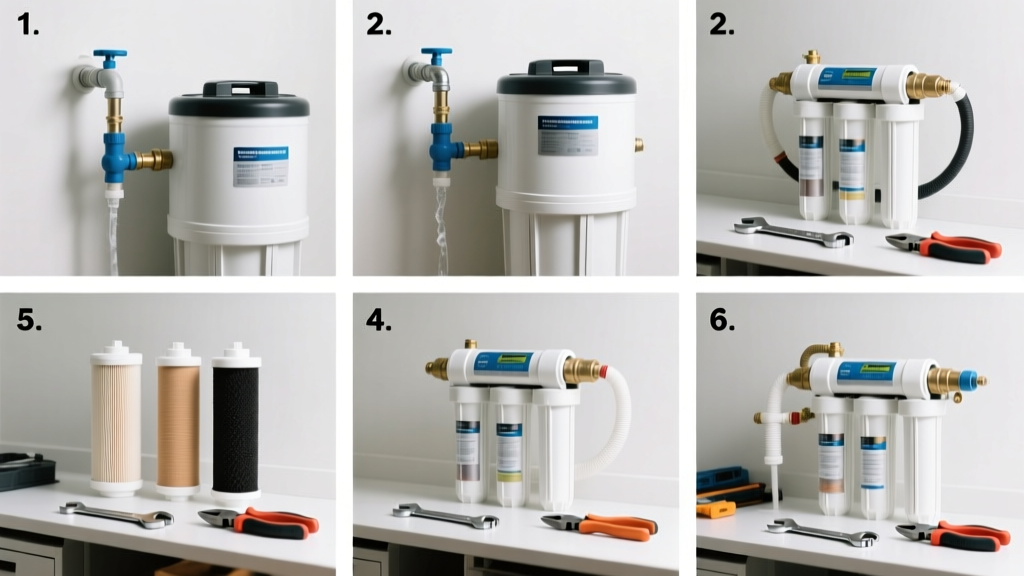
Your reverse osmosis system suddenly stopped delivering water — no drip, no stream, just silence at the faucet. That slow or zero flow isn’t just inconvenient; it often signals a clogged filter, failed membrane, or pressure issue that’s been building for weeks. Don’t replace the whole unit yet — most cases are fixable in under an hour with basic tools.
Quick Diagnosis
Before grabbing tools, eliminate the obvious culprits. These five issues cause over 90% of low-or-no-flow complaints, according to the Water Quality Association’s 2022 Field Service Survey:
- Pre-filter cartridges clogged (especially sediment or carbon)
- Tank air pressure below 7–10 psi when empty
- Auto shut-off valve stuck closed
- R.O. membrane fouled or degraded (typical lifespan: 2–5 years)
- Feed water pressure below 40 PSI (common in homes with well systems or older plumbing)
Tools & Materials Needed
| Item | Purpose | Estimated Cost |
|---|---|---|
| 3/8" wrench or basin wrench | Tightens or loosens compression fittings without damaging tubing | $8–15 |
| Pressure gauge (tank-specific) | Measures air pressure in storage tank bladder | $12–22 |
| Replacement pre-filters (5-micron sediment + carbon) | Restores feed water flow to membrane | $18–32 |
| Food-grade air pump (e.g., bicycle pump with Schrader adapter) | Recharges tank bladder to correct pressure | $10–25 |
| Bucket and towels | Catches drips during filter changes and tank servicing | $0–5 |
Step-by-Step Fix
Work methodically — start simple and move toward complex causes. Most users resolve flow issues by completing Steps 1 and 2.
- Check and recharge the storage tank pressure. Turn off feed water, open the RO faucet to relieve pressure, then use a pressure gauge on the tank’s air valve (looks like a bike tire valve). If reading is below 7 PSI, add air in 1-PSI increments until it hits 7–10 PSI (per manufacturer specs). Over-pressurizing reduces capacity and stresses the bladder.
- Replace pre-filters. Shut off feed water, open faucet to depressurize, then unscrew housings. Inspect cartridges: brown/black discoloration = carbon saturated; gray sludge = sediment clogged. Replace both — never reuse old ones. Reinstall tightly but don’t overtighten (hand-tight plus ¼ turn).
- Test feed water pressure. Attach a pressure gauge to the cold water line before the RO unit. If below 40 PSI, install a booster pump (like the Aquatec 8800) — especially critical for well systems. The U.S. EPA estimates that 14% of household water usage is from leaks, but low pressure affects filtration more than most realize.
- Bypass the auto shut-off (ASO) valve temporarily. Disconnect tubing from ASO outlet and run directly to drain while faucet is open. If flow returns, the ASO valve is faulty and needs replacement ($22–38).
When to Call a Pro
Some issues require licensing, specialized tools, or safety knowledge. Call a certified water treatment technician if:
- You detect chlorine smell or cloudy water after filter change — indicates possible membrane rupture or housing seal failure
- The R.O. membrane housing leaks under pressure, even after tightening (O-ring damage or cracked housing)
- Your home uses polybutylene piping (installed 1978–1995) — cutting into lines risks shattering brittle tubing
- Feed water tests positive for iron >0.3 ppm or hardness >10 gpg — requires pre-treatment beyond standard filters
"Over 68% of service calls for 'no flow' on residential R.O. systems involve either neglected pre-filters or incorrect tank pressure — both preventable with quarterly checks." — Water Quality Association Technician Certification Manual, 2023 edition
Prevention Tips
Extend your system’s life and avoid repeat failures with these habits:
- Replace pre-filters every 6 months — write the date on the housing with a permanent marker
- Check tank air pressure every 3 months (especially before winter, when temperature drops reduce PSI)
- Install a TDS meter ($15–25) and log readings monthly — rising TDS above 10% of source water means membrane decline
- Use a dedicated GFCI outlet for booster pumps — prevents electrical faults during humid cabinet conditions
How do I know if my R.O. membrane is bad?
Test purified water with a TDS meter: if readings exceed 15–20% of your tap water’s TDS (e.g., tap = 200 ppm, RO output = >230 ppm), the membrane is failing. Also watch for reduced flow *after* fresh filters and proper tank pressure — that’s the classic sign.
Can I clean the R.O. membrane instead of replacing it?
No — cleaning is ineffective and unsafe for residential thin-film composite membranes. Chemical cleaners risk delaminating the membrane surface or leaving residues. Replacement is the only reliable option. Commercial systems sometimes use citric acid flushes, but those require precise pH control and are not approved for home units.
Why does flow return briefly after changing filters, then drop again?
This points to a failing auto shut-off valve or check valve. Both regulate pressure differentials across the membrane. A sticky ASO valve may open during filter change (releasing pressure), then reseal prematurely once flow begins. Replace the ASO valve — it’s a $25 part with a 15-minute swap.
Is low flow dangerous or just annoying?
It’s potentially hazardous. Low flow increases contact time between water and carbon filters, which can leach spent media or harbor biofilm. The NSF/ANSI Standard 58 requires minimum flow rates to ensure proper contaminant rejection — falling below spec compromises arsenic, fluoride, and nitrate removal.
Do I need to sanitize the system after filter changes?
Yes — especially if filters sat unused for >30 days or if your home has stagnant plumbing. Flush new carbon filters for 30 minutes before use, then add 1 oz of NSF-certified sanitizer (like Sani-System) to the first-stage housing, run for 15 minutes, then flush 2+ hours. This prevents bacterial regrowth in the carbon bed.
What’s the difference between slow flow and no flow?
Slow flow (e.g., 1 cup per minute vs. normal 2–3) usually means partial blockage — clogged pre-filter or scaling on membrane. No flow almost always indicates zero pressure differential: dead tank pressure, closed feed valve, or ASO valve failure. Diagnose pressure first — it’s the fastest differentiator.
A working reverse osmosis system shouldn’t demand constant attention — but it does reward consistent maintenance. Most ‘no flow’ problems aren’t mysterious failures; they’re the system’s way of telling you it’s time to change a $20 filter or top off 8 PSI of air. Keep a log on your fridge, set calendar reminders, and treat your R.O. like the precision appliance it is — not a ‘set and forget’ fixture. You’ll save hundreds in premature replacements and enjoy crisp, clean water every time you fill your glass. For related troubleshooting, see our guides on RO leaking under sink and RO faucet dripping constantly.