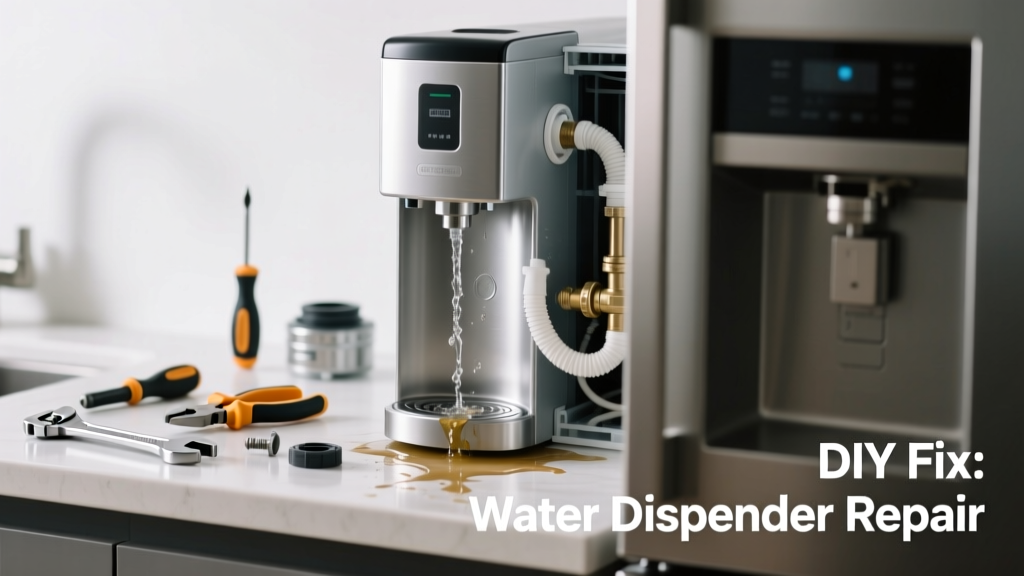
Your fridge’s water dispenser suddenly stops flowing — no drip, no gurgle, just silence. It’s frustrating when you’re parched or filling a pitcher for dinner prep, especially since the ice maker may still work fine. This isn’t always a major failure; often, it’s a simple blockage, frozen line, or misaligned switch hiding in plain sight.
Quick Diagnosis
Before grabbing tools, eliminate the obvious culprits:
- No power to the dispenser (check if the light illuminates when pressed)
- Water supply valve behind the fridge is turned off or partially closed
- Filter is overdue (most manufacturers recommend replacement every 6 months)
- Freezer temperature below 0°F causing the internal water line to freeze
- Dispenser lever switch or microswitch is broken or misaligned
Tools & Materials Needed
| Item | Purpose | Estimated Cost |
|---|---|---|
| Phillips screwdriver | Removes dispenser panel and access covers | $8–$15 |
| Replacement water filter (model-specific) | Bypasses clogged or expired filter causing low/no flow | $20–$45 |
| Shop towel & shallow pan | Catches drips during filter change or line inspection | $3–$7 |
| Heat gun or hair dryer | Gently warms frozen sections of the water tube (never use open flame) | $15–$60 |
| Multimeter (optional) | Tests continuity of dispenser switch and solenoid valve | $25–$80 |
Step-by-Step Fix
Work methodically — many issues resolve before reaching step 4:
- Check the water supply valve: Pull the fridge out, locate the shut-off valve (usually under the sink or behind the unit), and ensure it’s fully open. Turn it off, then back on fully to reset any sediment jam.
- Replace the water filter: Even if the indicator hasn’t lit, filters older than 6 months restrict flow. Install a genuine OEM or certified aftermarket filter — generic brands often swell and block lines.
- Thaw the water line: If your freezer runs below 0°F or ambient humidity is high, the plastic tube inside the door can freeze. Use a hair dryer on low heat for 10–15 minutes along the dispenser chute and door hinge area. Don’t overheat — melting insulation voids warranties.
- Test the dispenser switch: Remove the front panel (usually clipped or screwed), press the microswitch manually with a toothpick while listening for a faint click. No click? The switch is likely faulty and needs replacement.
When to Call a Pro
Stop and call a certified technician if:
- You hear a loud buzzing or humming from the rear when pressing the lever — indicates a failing water inlet valve or solenoid
- Water leaks inside the door or behind the kickplate after attempting thawing or filter replacement
- The multimeter shows no continuity across the dispenser switch *and* no voltage at the solenoid terminals (points to wiring harness damage)
- Your model uses an electronic control board integrated into the dispenser assembly (common in Samsung RF and LG InstaView units) — board replacement requires calibration
According to the U.S. EPA estimates that 14% of household water usage is from leaks — but silent failures like a stalled dispenser often go untracked until they cascade into mold or insulation damage.
Prevention Tips
- Replace the water filter every 6 months — even if the indicator light hasn’t activated
- Keep freezer temp between 0°F and 5°F; colder temps increase line freeze risk
- Run 2–3 glasses of water weekly through the dispenser during winter months to keep lines active
- Wipe the dispenser lever and surround monthly to prevent sticky residue buildup that jams switches
Why does my water dispenser work intermittently?
Intermittent operation usually points to a failing microswitch or partial ice blockage. When the switch contacts wear thin, they only make connection under certain pressure angles. Try pressing the lever slowly at different points — if flow starts mid-press, replace the switch. If it works after waiting 10 minutes, suspect freeze-thaw cycling in the door tube.
Can I bypass the water filter to test flow?
Yes — but only temporarily and with caution. Some models have a filter bypass plug; others require removing the filter and reinstalling the housing without it. Do not run the dispenser without a filter for more than 24 hours — sediment can clog the solenoid valve permanently. Always flush 3–4 gallons through the system after reinserting a new filter.
Is it safe to use vinegar to clean the water line?
No. Vinegar’s acidity degrades polyethylene tubing and rubber seals common in dispenser lines. Instead, flush with cool distilled water and use manufacturer-approved descaling solutions — like Whirlpool W10329674 — only if mineral buildup is confirmed via slow flow *after* filter replacement.
How do I know if the water inlet valve is bad?
A failed inlet valve won’t energize — you’ll hear no click or hum when pressing the lever, and no water enters the reservoir tank. Test voltage at the valve terminals with a multimeter: 120V AC present but no flow = defective valve. Less than 110V suggests control board or wiring issues. Replacement valves cost $35–$65 and require shutting off main water supply.
What if the dispenser light works but no water comes out?
This confirms power is reaching the dispenser assembly, so focus on mechanical flow path: check filter seating, inspect for kinked or disconnected tubes behind the kickplate, and verify the reservoir tank isn’t cracked or frozen solid. A cracked tank may leak only when pressure builds — look for dampness near the bottom rear of the fresh food compartment.
Can a clogged air gap cause this issue?
No — refrigerators don’t use air gaps like dishwashers. That term applies to sink drain systems. What you might be mistaking is the water filter housing’s built-in pressure relief vent or the dispenser’s internal check valve — both can stick open or closed, disrupting flow. Clean these only with compressed air, never sharp objects.
Fixing a non-working water dispenser rarely requires replacing the entire fridge — most root causes sit within arm’s reach behind a few screws or under the sink. Stay patient, document each step, and remember: if the ice maker works but the dispenser doesn’t, the problem is almost always isolated to the door assembly or its controls. For deeper electrical diagnostics, see our guide on refrigerator not cooling but light works, and for related plumbing checks, review kitchen sink leaking under cabinet.