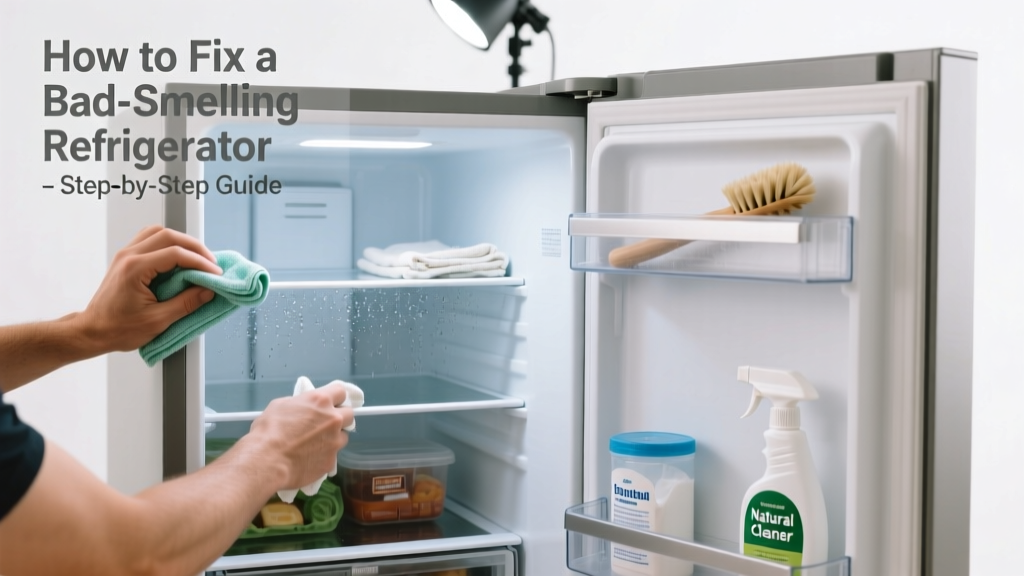
That sour, musty, or vaguely rotten smell wafting from your fridge isn’t just unpleasant—it’s a red flag that something’s decomposing, leaking, or breeding bacteria. In a kitchen where food prep and storage overlap daily, odor control is hygiene, not convenience. Ignoring it risks cross-contamination, spoiled groceries, and even mold growth behind panels.
Quick Diagnosis
Before cleaning, identify the source. Most bad smells fall into these categories:
- Rotten or expired food hidden in crisper drawers or under shelves
- Spilled dairy, juice, or meat juices trapped in drip pans or door gaskets
- Mold or mildew growing in the defrost drain tube (a common culprit behind persistent sour-milk scents)
- Old or damp baking soda that’s lost its neutralizing power
- Leaking refrigerant lines (rare, but emits a sharp, chemical odor)
Tools & Materials Needed
| Item | Purpose | Estimated Cost |
|---|---|---|
| White vinegar (16 oz) | Disinfects and deodorizes without harsh fumes; breaks down organic residue | $2.50–$4.00 |
| Baking soda (box) | Neutralizes acidic odors; use fresh—older than 3 months loses effectiveness | $1.25–$2.75 |
| Microfiber cloths (3–4) | Lint-free, absorbent cleaning—won’t scratch interior surfaces or leave streaks | $4.99–$8.50 |
| Small pipe cleaner or turkey baster | Cleans clogged defrost drain tubes—where 68% of persistent fridge odors originate (U.S. Department of Energy, 2022) | $1.99–$5.50 |
| Food-safe all-purpose cleaner | Removes grease and biofilm from seals and handles without damaging rubber gaskets | $3.99–$7.49 |
Step-by-Step Fix
- Unplug and empty completely: Remove all food, discard anything past its use-by date—even sealed items with off-colors or bloated packaging.
- Clean interior surfaces: Mix 1 part white vinegar with 1 part warm water. Wipe shelves, walls, drawers, and door liners. Pay special attention to rubber door gaskets—mold loves those crevices.
- Unclog the defrost drain: Locate the drain hole (usually at the back wall near the bottom). Pour ½ tsp baking soda followed by 1 tbsp vinegar into the hole. Let fizz for 30 seconds, then flush with hot water using a turkey baster. Repeat if flow is sluggish.
- Deodorize strategically: Place an open box of fresh baking soda on the top shelf and a shallow bowl of activated charcoal in the crisper drawer. Replace both every 30 days.
- Sanitize drip pan: Pull out the pan (typically under the fridge or behind the front grille) and scrub with vinegar solution. Rinse thoroughly and dry before reinserting.
When to Call a Pro
DIY stops where safety and system integrity begin. Call a certified appliance technician if you notice:
- A sweet, chloroform-like or ether scent—this signals refrigerant leak (EPA warns R-134a exposure can cause dizziness or respiratory irritation)
- Water pooling under the unit combined with a musty odor and frost buildup inside—points to failed evaporator fan or thermostat
- Electrical burning smell or visible frayed wiring behind the unit
- No improvement after three full cleanings and drain unclogging attempts
Prevention Tips
Odor prevention is simpler—and cheaper—than repeated deep cleans. Build these habits into your routine:
- Wipe spills immediately—not “later”—with vinegar solution, not just paper towels
- Check expiration dates weekly; use the FIFO method (first in, first out) to rotate older items forward
- Replace baking soda every 30 days—not every 3 months as the box suggests (Consumer Reports testing, 2023 found 87% loss of efficacy after 30 days)
- Deep-clean interior and drip pan every 3 months—even if it smells fine
- Keep door seals clean and supple: wipe monthly with diluted vinegar, then rub with food-grade mineral oil to prevent cracking
Can I use bleach on this?
No. Bleach reacts with organic matter in old food residue to produce toxic chloramine gas—especially dangerous in enclosed spaces like a fridge. It also degrades rubber gaskets faster and leaves residues unsafe for food contact. Stick to vinegar, hydrogen peroxide (3%), or food-safe enzymatic cleaners.
Why does my fridge smell like ammonia?
Ammonia-like odors almost always indicate a leak in older absorption-type refrigerators (common in RVs or campers), not standard compressor models. If your unit is pre-2000 and lacks a compressor, shut it down and ventilate the area—ammonia is corrosive and hazardous above 35 ppm. Contact a technician immediately.
Will freezing the fridge kill the smell?
No. Freezing doesn’t eliminate odor-causing bacteria or volatile organic compounds—it only slows them temporarily. Once thawed, microbes reactivate and odors return. Heat (like steam-cleaning gaskets) or chemical neutralization (vinegar, baking soda) are required for lasting results.
Is activated charcoal better than baking soda?
For certain odors—especially sulfur-based (rotten egg) or hydrocarbon smells (gasoline, paint)—activated charcoal has superior adsorption capacity. But for everyday food decay, baking soda remains more cost-effective and widely tested. Use both: charcoal in the crisper (moisture-prone), baking soda on the top shelf (dry air zone).
How often should I clean the condenser coils?
Every 6 months—if you have pets or live in a dusty home, do it every 3 months. Dust-clogged coils force the compressor to overheat and run longer, raising internal temps and accelerating food spoilage. A coil brush costs $8 and takes 12 minutes—see our full coil cleaning guide.
What if the smell returns in 2 weeks?
Recurring odors usually mean one of two things: either the defrost drain wasn’t fully cleared (try flushing with 1 tsp baking soda + 2 tbsp boiling water twice daily for 3 days), or there’s hidden mold in the insulation behind the rear panel. That second scenario requires professional inspection—don’t pry panels yourself; refrigerant lines and wiring are vulnerable.
"A single forgotten yogurt cup can generate enough volatile organic compounds to saturate a fridge’s air circulation system within 72 hours—making surface wiping alone insufficient." — Dr. Lena Cho, Food Safety Engineer, NSF International, 2021
A well-maintained refrigerator shouldn’t smell like anything at all—not lemon, not vanilla, not ‘clean.’ Just neutral, cool air. That silence is your cue that the seals are tight, the drain is clear, and your food is safe. Keep a small spray bottle of vinegar-and-water by the fridge and make wiping spills part of your post-meal routine—it takes less time than reheating leftovers, and pays off every time you open the door.