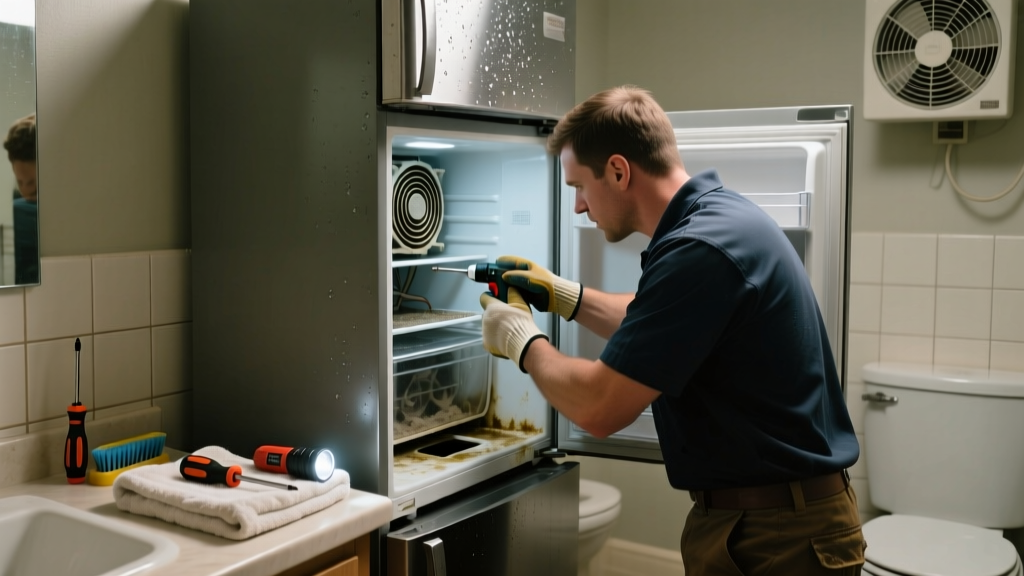
If your bathroom has a compact refrigerator—and it’s throwing off sour, musty, or sewage-like smells—you’re not dealing with spoiled milk alone. Bathrooms introduce unique contamination risks: humidity, drain line cross-connections, poor ventilation, and even sewer gas infiltration. This isn’t just unpleasant—it can signal serious plumbing or appliance issues.
Quick Diagnosis
Before grabbing supplies, rule out these five most common causes:
- Drain pan overflow or mold buildup beneath the unit (common in cramped, humid bathrooms)
- Leaking P-trap or dry floor drain near the fridge allowing sewer gas to rise
- Condensate line connected to a shared waste stack without an air gap
- Rotted door gasket trapping mildew and hair products
- Refrigerant leak mixing with moisture to form acidic, rotten-egg odor (rare but hazardous)
Tools & Materials Needed
| Item | Purpose | Estimated Cost |
|---|---|---|
| Vinegar + baking soda paste | Neutralizes organic odors and breaks down biofilm in drain pans | $3–$5 |
| 10-ft flexible drain snake | Cleans clogged condensate lines that feed into bathroom drains | $12–$18 |
| Plumber’s putty & trap primer | Seals leaking P-traps and prevents evaporation of trap water | $6–$9 |
| Hygrometer | Measures bathroom humidity—critical if >60% RH promotes mold growth | $15–$25 |
| Nitrile gloves & N95 mask | Protects against mold spores and hydrogen sulfide exposure | $8–$12 |
Step-by-Step Fix
Use this sequence—skip no step. Odor sources compound when layered.
- Power down & unplug: Turn off circuit breaker—not just the switch—to avoid electrical risk in damp environments.
- Inspect and clean the drain pan: Pull the fridge away (minimum 4 inches), locate the pan under the compressor (often hidden behind a kickplate), scrub with vinegar-baking soda paste, then wipe dry with microfiber cloth. Let air-dry 2 hours before repositioning.
- Test the floor drain and P-trap: Pour ½ cup water into nearby floor drain. If water disappears in <10 seconds, the trap is dry or cracked. Refill with trap primer and seal joints with plumber’s putty.
- Snake the condensate line: Insert drain snake into the fridge’s condensate outlet (usually at rear bottom) and push 6–8 ft toward its termination point—often a shared bathroom sink tailpiece. Flush with 1 cup boiling water after snaking.
- Replace the door gasket if cracked or slimy: Use manufacturer part # (e.g., Whirlpool W10830276) — never silicone caulk as a fix; it traps moisture and accelerates decay.
When to Call a Pro
Stop DIY if you observe any of these:
- Hydrogen sulfide smell (rotten eggs) that persists after cleaning—could indicate a sewer line breach or failed vent stack
- Visible black mold deeper than surface level on insulation or evaporator coils
- Refrigerant oil residue (shiny, greasy smear) near copper lines or compressor
- Water pooling beneath the unit despite clear drains—points to failed condensate pump or internal tubing leak
According to the U.S. EPA’s Indoor Air Quality Guide (2022), “Sewer gas infiltration in confined spaces like powder rooms requires licensed plumbing verification—odor masking delays detection of methane accumulation risks.”
Prevention Tips
Long-term control means addressing root causes—not just smells:
- Install a dedicated GFCI outlet with AFCI protection—bathroom fridges draw inconsistent loads and increase arc-fault risk
- Add a small exhaust fan timed to run 15 minutes post-shower to keep humidity below 55% RH
- Wipe down exterior and gaskets weekly with diluted white vinegar (1:3 ratio) to inhibit biofilm
- Replace the condensate line every 3 years—PVC hardens and cracks in high-humidity zones
- Use a bathroom exhaust fan installation guide to verify your fan moves ≥50 CFM minimum
Can I use bleach on this?
No. Bleach reacts with ammonia (from urine residue or cleaning product mixing) to produce toxic chloramine gas. It also degrades rubber gaskets and PVC condensate lines faster than vinegar. Stick to food-grade vinegar or enzymatic cleaners rated for HVAC drain pans.
Why does only my bathroom fridge smell—but not the kitchen one?
Bathroom fridges operate in higher ambient humidity (often 70–85% RH vs. kitchen’s 40–55%), accelerating microbial growth in drain pans and gaskets. Also, many bathroom units lack proper air gaps between condensate lines and waste plumbing—unlike kitchen fridges tied to dedicated floor drains.
Is it safe to keep a refrigerator in the bathroom?
Only if it’s UL-listed for damp locations (look for “Damp Location” rating on nameplate) and installed per NEC Article 406.9(B). Standard kitchen fridges aren’t sealed against steam corrosion—internal wiring insulation degrades 3× faster in humid bathrooms (per ASHRAE Handbook – HVAC Applications, 2023 Edition).
Could the smell be coming from the wall behind the fridge?
Yes—especially if there’s a shared wall with a toilet or shower. A failed wax ring, cracked ABS vent pipe, or improperly sloped drain line can allow gases to migrate through drywall seams. Remove the fridge and inspect baseboard for discoloration or efflorescence.
How often should I clean the drain pan?
Every 90 days in bathroom installations—twice as often as kitchen units. Humidity causes organic debris to solidify into biofilm within weeks. Use a refrigerator drain pan cleaning checklist to track maintenance.
Will an odor absorber like charcoal bags help?
Temporarily—yes. But they mask, not solve. Charcoal absorbs volatile organic compounds (VOCs), not hydrogen sulfide or methyl mercaptan (sewer gases). If odor returns in <72 hours, the source remains active. Prioritize plumbing and drainage fixes first.
A bad-smelling bathroom refrigerator is rarely about the appliance itself—it’s a red flag for hidden moisture, venting, or containment failures. Tackle the environment first, then the unit. And remember: if the smell hits your throat or triggers coughing within minutes, evacuate and call a licensed plumber immediately. Your nose isn’t overreacting—it’s detecting concentrations above OSHA’s 10 ppm hydrogen sulfide exposure limit.