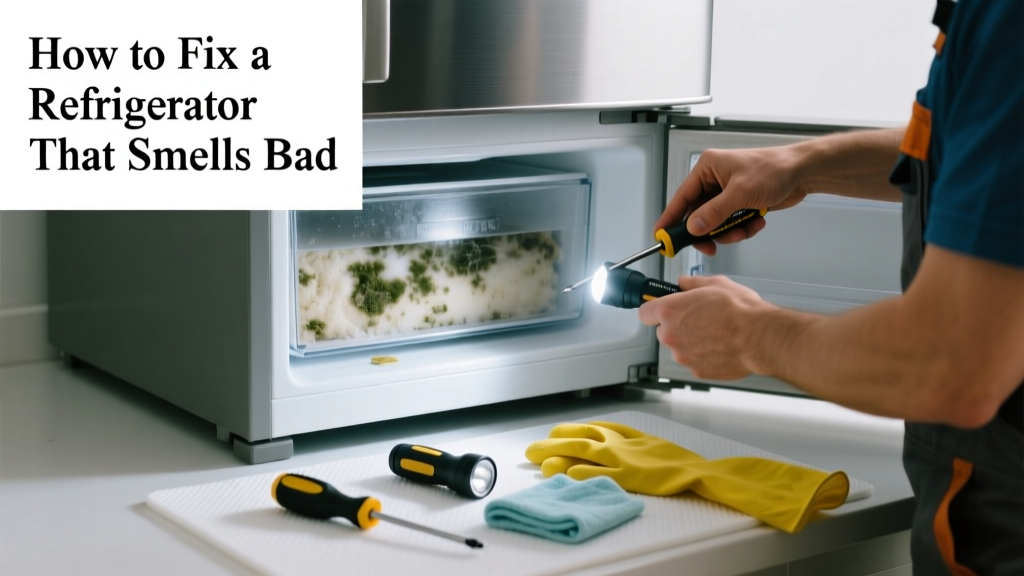
That sour, musty, or vaguely sweet stench clinging to your fridge isn’t just annoying—it’s a red flag. Most bad smells come from simple oversights like expired yogurt containers or forgotten takeout, but some point to deeper issues like drain pan mold or failing seals.
Quick Diagnosis
Before you scrub, identify the source. Here are the five most common culprits:
- Expired or leaking food (especially dairy, meat, fish, or produce)
- Mold or mildew in the drip pan (often under the fridge or behind the kickplate)
- Clogged defrost drain tube harboring bacteria and rotting debris
- Dirty door gaskets trapping crumbs and moisture
- Faulty evaporator fan or condenser coils emitting burnt or chemical odors
Tools & Materials Needed
| Item | Purpose | Estimated Cost |
|---|---|---|
| White vinegar (16 oz) | Kills odor-causing bacteria and dissolves mineral buildup in drains | $2.50–$4.00 |
| Baking soda (box) | Neutralizes acidic and basic odors; safe for interior surfaces | $1.00–$2.50 |
| Microfiber cloths (3–4) | Lint-free cleaning without scratching plastic or stainless steel | $5.00–$12.00 |
| Small pipe cleaner or turkey baster | Clears clogs in the defrost drain tube (usually ¼" diameter) | $3.00–$8.00 |
| Gloves and N95 mask | Protects against mold spores and ammonia-like off-gassing from spoiled food | $4.00–$15.00 |
Step-by-Step Fix
Follow these methods in order—most odors resolve after Steps 1 and 2. If not, proceed to 3 and 4.
- Empty and inspect: Remove all food. Check expiration dates, sniff every container, and discard anything questionable—even sealed jars with bulging lids or cloudy brine.
- Deep-clean interior: Wipe shelves, drawers, and walls with a solution of 1 part white vinegar to 3 parts warm water. Rinse with plain water and dry fully. Sprinkle baking soda on crisper drawers overnight before wiping again.
- Clean the drip pan: Pull the fridge away from the wall. Locate the pan (usually under the unit or behind the front kickplate). Empty, scrub with vinegar + baking soda paste, rinse, and dry completely.
- Unclog the defrost drain: Locate the drain hole (typically at the back wall of the freezer, near the bottom). Use a turkey baster filled with hot vinegar to flush it. Follow with compressed air or a pipe cleaner if resistance remains.
When to Call a Pro
DIY stops where safety or system integrity begins. Call a certified appliance technician if:
- You detect a persistent chemical or burning smell—this may indicate refrigerant leak or wiring fault (EPA-certified repair required)
- The odor returns within 72 hours despite full cleaning and no visible food spoilage
- You find black, fuzzy mold inside the evaporator cover (behind freezer panel) or on insulation—mold remediation exceeds DIY scope
- Your fridge runs constantly or won’t cool below 40°F after cleaning, suggesting compressor or control board failure
Prevention Tips
Odor prevention is mostly habit-based—but consistency matters. Try these proven tactics:
- Label and date all leftovers; toss anything older than 4 days
- Store strong-smelling foods (onions, fish, blue cheese) in airtight glass containers—not plastic bags
- Place an open box of baking soda on the top shelf and replace it every 3 months (not 6—Consumer Reports testing shows efficacy drops sharply after 90 days)
- Wipe down door gaskets weekly with vinegar-dampened cloth to prevent biofilm buildup
- Run a full clean cycle every 3 months—even if it smells fine
Can I use bleach on this?
No. Bleach reacts with organic residues to create toxic chloramine gas—and damages rubber gaskets over time. Stick to vinegar, baking soda, or diluted hydrogen peroxide (3%) for disinfecting non-food-contact surfaces only.
Why does my fridge smell like ammonia?
An ammonia-like odor usually signals a refrigerant leak (R-717 or older units) or decomposing animal protein (e.g., forgotten raw chicken juice). Turn off the unit immediately and ventilate the room. Do not operate until a technician confirms refrigerant integrity—according to the EPA’s 2022 Refrigerant Management Rule, even small leaks require certified handling.
Will activated charcoal help?
Yes—but only as a short-term supplement. Charcoal absorbs volatile organic compounds better than baking soda for certain sulfur-based odors (like rotten eggs), but it saturates quickly. Replace every 10–14 days. For long-term control,
"Baking soda remains the gold standard for refrigerator odor control because it chemically neutralizes acids and bases—not just masks them," says Dr. Lena Cho, food safety researcher at Cornell Cooperative Extension (2023).
Do I need to unplug the fridge while cleaning?
Yes—always. Unplugging prevents electrical hazards during wet cleaning and avoids accidental compressor cycling that could trap moisture in coils. Let the unit sit unplugged for at least 30 minutes before starting.
What’s the black gunk in my drain hole?
It’s a biofilm: yeast, mold, and bacteria feeding on sugar and protein residue from defrost water. It smells like wet dog or mildew. Don’t scrape it out dry—soak first with hot vinegar for 10 minutes, then flush. Repeat monthly if you live in humid climates (RH >60%).
Can a dirty water filter cause odor?
Absolutely. Clogged filters don’t just reduce flow—they become breeding grounds for algae and bacteria. Replace every 6 months (or per manufacturer specs), especially if you notice a musty or swampy taste in ice or water. See our guide on how to replace a fridge water filter for model-specific steps.
A well-maintained fridge shouldn’t smell like anything at all—not lemon zest, not vanilla, not ‘clean.’ Just quiet, cool air. If you catch odors early and act consistently, you’ll spend less time scrubbing and more time enjoying cold drinks. For stubborn cases, check our refrigerator not cooling troubleshooting or fridge leaking water guide—both often share root causes with persistent smells.