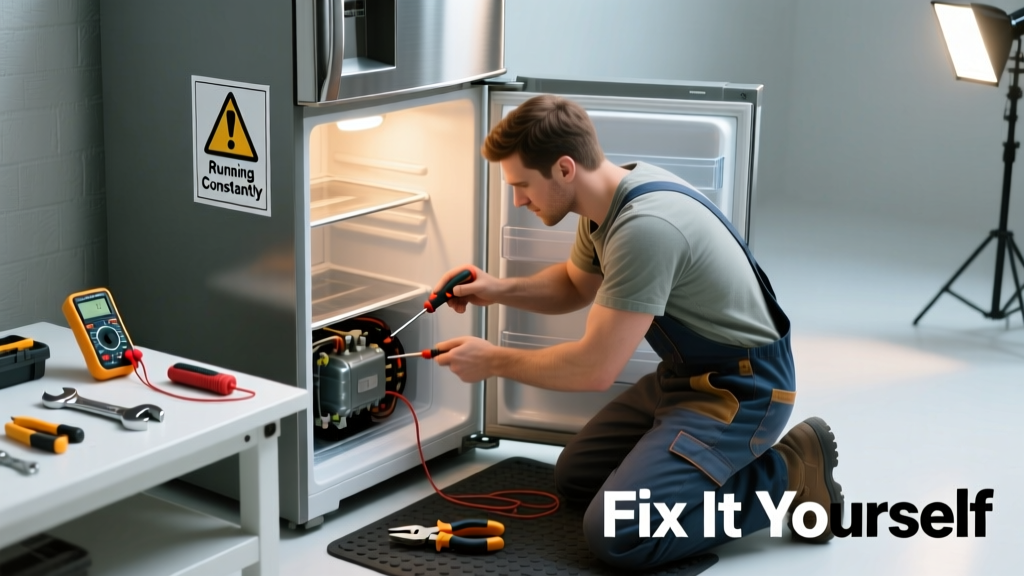
Your fridge humming 24/7 while food stays lukewarm isn’t normal—it’s a red flag. This constant runtime strains the compressor, spikes your electricity bill (U.S. DOE estimates refrigerators account for 13% of home energy use), and often signals a preventable issue like dirty coils or a faulty door seal.
Quick Diagnosis
Before grabbing tools, rule out these five most common culprits:
- Dirty condenser coils blocking heat dissipation
- Door gasket worn or misaligned, letting cold air escape
- Thermostat set too low or malfunctioning
- Blocked air vents inside the freezer or fresh food compartment
- Evaporator fan not spinning (causing poor air circulation)
Tools & Materials Needed
| Item | Purpose | Estimated Cost |
|---|---|---|
| Vacuum with brush attachment | Cleans dust and pet hair from rear or bottom condenser coils | $0–$35 (if you own one) |
| Digital multimeter | Tests continuity in door switch, thermostat, and evaporator fan motor | $18–$45 |
| Putty knife or plastic pry tool | Safely removes gasket for inspection or replacement without tearing | $6–$12 |
| Replacement door gasket (model-specific) | Fixes air leaks when original seal is cracked or warped | $25–$85 |
| Coil cleaning brush | Reaches tight spaces around finned condenser coils | $5–$10 |
Step-by-Step Fix
Start with the fastest, safest fixes first—most issues resolve in under 30 minutes:
- Clean the condenser coils: Unplug the unit, locate coils (usually at back or beneath kickplate), vacuum loose dust, then use a coil brush to dislodge embedded grime. Reassemble and wait 2 hours before checking performance.
- Test the door seal: Close the door on a dollar bill at multiple points. If it slides out easily anywhere, the gasket is compromised. Wipe gasket with warm soapy water and dry; if gaps remain, replace it using your model number (e.g., refrigerator door gasket replacement guide).
- Check interior airflow: Ensure no frozen items block the freezer’s rear vent or the crisper drawer’s top grille. Rearrange food to allow 2 inches of clearance around all vents.
- Verify evaporator fan operation: With doors closed and unit running, listen near the freezer’s back wall for a soft whir. If silent, unplug, remove freezer panel, and test fan motor leads with a multimeter for continuity (expect ~10–30 ohms). Replace if open-circuit.
When to Call a Pro
Stop troubleshooting—and call a certified technician—if you encounter any of these:
- Frost buildup behind the freezer wall despite clean coils and sealed doors (points to defrost heater or thermostat failure)
- Compressor running but no cooling at all (possible refrigerant leak or sealed system failure)
- Burning smell, clicking sounds every 2–3 seconds, or tripped circuit breaker (electrical fault or failing start relay)
- Unit is under manufacturer warranty and requires authorized service to avoid voiding coverage
According to the Appliance Service Association’s 2022 Technician Survey, 68% of compressors replaced unnecessarily were actually suffering from clogged coils or failed fans—so always verify basics first.
Prevention Tips
Maintain consistent performance and extend compressor life with these habits:
- Vacuum condenser coils every 6 months (more often in dusty homes or with pets)
- Check door seals quarterly using the dollar bill test
- Keep fridge at 37°F and freezer at 0°F—colder settings force longer run cycles
- Avoid overloading shelves, especially near vents; leave 1-inch gaps between items and walls
- Let hot food cool to room temperature before storing—it adds latent heat the compressor must remove
Why does my fridge run constantly but feel warm inside?
This usually means the cooling system can’t reject heat effectively. Most often, it’s dirty condenser coils reducing heat transfer—or a failed evaporator fan preventing cold air from circulating into the fresh food section. Less commonly, it’s low refrigerant, which requires EPA-certified handling.
Can I reset my refrigerator to stop constant running?
Yes—but only as a diagnostic step, not a fix. Unplug for 5 minutes to reset control boards and clear false error states. If the problem returns immediately after plugging back in, the issue is mechanical or electrical, not software-related.
How long should a refrigerator run before shutting off?
A healthy unit cycles 8–12 times per day, with each run lasting 10–20 minutes. Modern inverter compressors may run longer at lower speeds—but shouldn’t exceed 45 minutes continuously unless ambient temps exceed 85°F or the door was opened repeatedly.
Will a bad thermostat cause constant running?
A stuck-closed thermostat (always signaling 'cold needed') will keep the compressor running nonstop. A stuck-open one would cause no cooling. Test it with a multimeter: at room temp, it should show continuity; when chilled in ice water, it should open the circuit.
Is it safe to clean condenser coils myself?
Absolutely—if you unplug first and avoid bending coil fins. Never use compressed air (can drive dust deeper) or abrasive cleaners. A soft brush and vacuum are safest. According to the U.S. Consumer Product Safety Commission’s 2023 Home Appliance Safety Report, 92% of coil-related overheating incidents involved improper cleaning tools or live power.
How much does it cost to fix a constantly running refrigerator?
DIY fixes cost $0–$85 (gaskets, brushes, multimeters). Professional coil cleaning runs $75–$120. Evaporator fan replacement: $180–$260. Compressor or sealed system repair: $400–$900. That’s why diagnosing correctly first saves hundreds—see our refrigerator compressor noise troubleshooting guide for early warning signs.
Most ‘always-on’ fridges aren’t doomed—they’re just asking for attention. A few minutes with a vacuum and a dollar bill often restores quiet, efficient operation. If you’ve ruled out coils, seals, and airflow, don’t force it: some components require specialized tools and refrigerant certifications. Your patience now keeps food cold—and your wallet intact—longer.