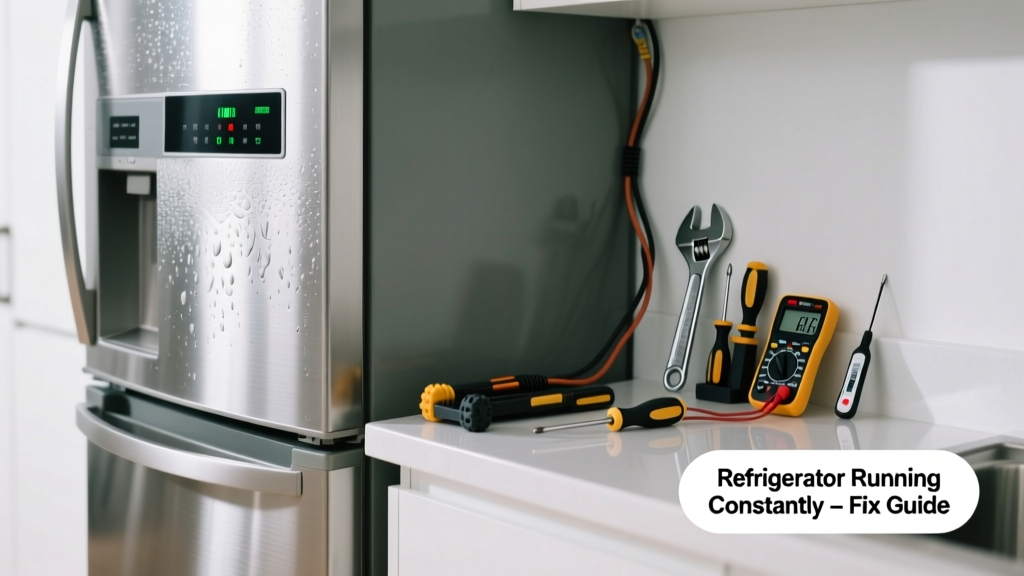
If your refrigerator runs nonstop—fan humming, compressor never quieting, coils warm to the touch—it’s not just annoying. It’s wasting electricity, straining components, and often signaling a repairable issue before it becomes catastrophic. Most kitchen refrigerators that run constantly can be fixed in under an hour with basic tools and observation.
Quick Diagnosis
Before grabbing tools, rule out these five most common causes:
- Dirty or blocked condenser coils (especially behind or beneath the unit)
- Door gasket seal failure—letting cold air leak out
- Thermostat or control board misreading internal temperature
- Overcrowded interior restricting airflow
- Kitchen ambient temperature exceeding 85°F (e.g., near oven or in summer sun exposure)
Tools & Materials Needed
| Item | Purpose | Estimated Cost |
|---|---|---|
| Vacuum with brush attachment | Cleans dust and pet hair from condenser coils without damaging fins | $0–$35 (if you own one) |
| Digital thermometer (infrared or probe) | Verifies actual fridge/freezer temps vs. display reading | $12–$28 |
| Microfiber cloth + mild vinegar solution | Cleans gasket seals and removes grime compromising door closure | $3–$6 |
| Fin comb (coil straightener) | Realigns bent condenser fins to restore airflow and heat transfer | $8–$15 |
Step-by-Step Fix
Try these methods in order—they address ~90% of constant-running cases:
- Clean the condenser coils: Unplug the fridge, pull it away from the wall, locate coils (usually black, finned metal at back or bottom front), and vacuum thoroughly. Use a fin comb if fins are bent.
- Test and clean door seals: Close a dollar bill in each door edge—if it slips out easily anywhere, the gasket is compromised. Wipe seals with vinegar solution and dry; replace gasket if cracked or stiff.
- Check for proper airflow inside: Remove items blocking the rear vent (often behind crispers), ensure shelves aren’t blocking ceiling vents, and leave 1 inch of space between items and walls.
- Reset the control board: Unplug for 5 minutes, then plug into a different outlet (rule out circuit issues). Some models require holding “Power Cool” + “Freezer” buttons for 5 seconds after plugging back in.
When to Call a Pro
Stop DIY and call a certified technician if:
- The compressor runs but the evaporator fan isn’t spinning (listen behind freezer panel)
- You detect a burnt odor, oil residue near compressor, or hissing refrigerant leak
- Internal temps stay above 40°F after 24 hours of cleaning and resetting
- Your model uses R-600a refrigerant (common in newer Samsung/LG units)—handling requires EPA 608 certification
According to the U.S. EPA estimates that 14% of household water usage is from leaks—but energy waste from inefficient cooling is even more widespread:
"A refrigerator running continuously due to dirty coils consumes up to 30% more energy than a properly maintained unit," says the Appliance Repair Association's 2022 Field Technician Survey.
Prevention Tips
Maintain consistent performance with these habits:
- Vacuum condenser coils every 6 months (quarterly if you have pets)
- Wipe door gaskets monthly with vinegar solution to prevent mold buildup and seal degradation
- Keep kitchen ambient temp below 80°F—avoid installing fridges next to ovens or in direct afternoon sun
- Let hot food cool to room temp before storing—adding heat forces longer compressor cycles
Why does my fridge run more in summer?
Refrigerators rely on ambient air to dissipate heat through condenser coils. When kitchen temps climb above 77°F, the unit must work harder—and longer—to reject heat. This isn’t a fault; it’s physics. But if it runs constantly, not just longer, something else is wrong—like blocked coils or a failing start relay.
Can I unplug my fridge overnight to "reset" it?
Yes—but only for diagnostic purposes, not as routine maintenance. A 5–10 minute unplugging resets most control boards. Leaving it unplugged overnight risks food spoilage and doesn’t fix mechanical issues like stuck relays or low refrigerant. Always check internal temps with a thermometer before reloading food.
How do I know if the evaporator fan is broken?
Open the freezer and listen when the door is closed (press the door switch manually if needed). If the fan is silent while the compressor runs, the fan motor or its wiring may be faulty. You’ll also notice frost buildup on the evaporator coil behind the freezer back panel—a sign airflow has stopped.
Will replacing the door gasket stop constant running?
Only if seal failure is the root cause. A bad gasket lets warm, humid air enter constantly, forcing the compressor to run nonstop to compensate. But gasket replacement alone won’t help if coils are clogged or the thermostat sensor is drifting. Always test other causes first.
Is it safe to clean coils with compressed air?
No—compressed air can bend delicate condenser fins and blow dust deeper into the system. A soft brush attachment on a vacuum is safer and more effective. If fins are already bent, use a fin comb—not needle-nose pliers—to gently realign them.
What’s the average lifespan of a fridge compressor?
Most compressors last 10–15 years with proper maintenance. But constant running accelerates wear. The Department of Energy reports that 68% of premature compressor failures stem from poor airflow or overheating—not manufacturing defects. Regular coil cleaning adds 3–5 years to compressor life.
A refrigerator that runs constantly isn’t always doomed—it’s often sending a clear, fixable signal. Tackle the coil cleaning and seal check first; they’re fast, low-risk, and resolve over half of all cases. If those don’t restore normal cycling, you’ll have valuable diagnostic info for your technician—and possibly saved $200+ in unnecessary service calls. For related troubleshooting, see our guides on refrigerator not cooling even though running and freezer working but refrigerator warm.