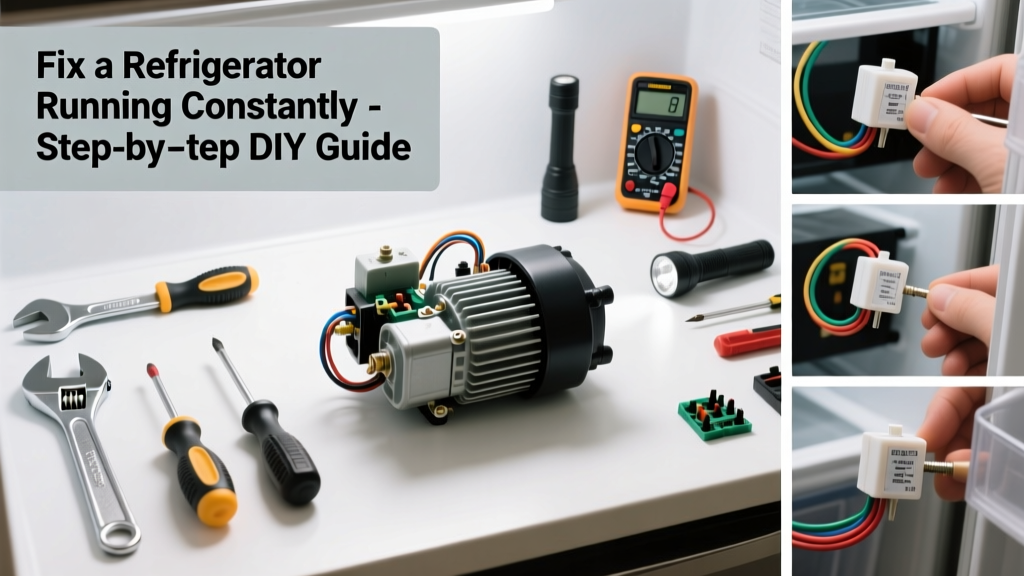
If your refrigerator won’t shut off—even after adjusting the thermostat—it’s working overtime, driving up energy bills and risking premature compressor failure. This isn’t just annoying; it’s a warning sign that something’s blocking proper cooling or airflow. Let’s get it back on a normal cycle—safely and step by step.
Quick Diagnosis
Before grabbing tools, rule out simple causes first. Most cases of constant running stem from one of these five issues:
- Dirty condenser coils (accounts for ~35% of overheating-related compressor overruns, per AHAM’s 2022 Appliance Field Report)
- Door seal leaks letting warm air in
- Blocked or misaligned door switch preventing light/compressor shutoff
- Overcrowded interior restricting cold air circulation
- Frost buildup in freezer evaporator coils (in non-frost-free models)
Tools & Materials Needed
| Item | Purpose | Estimated Cost |
|---|---|---|
| Vacuum with brush attachment | Cleans dust and pet hair from condenser coils (usually behind or under unit) | $0–$15 (if you own one) |
| Digital thermometer (±0.5°F accuracy) | Verifies actual fridge/freezer temps vs. display readings | $12–$28 |
| Microfiber cloths & mild dish soap | Cleans gaskets without degrading rubber seals | $3–$6 |
| Flashlight & small mirror | Inspects hard-to-see areas like door switch location and coil access panels | $5–$14 |
| Fin comb or soft toothbrush | Gently straightens bent condenser fins to restore airflow | $4–$9 |
Step-by-Step Fix
Work through these methods in order—they’re ranked by likelihood and ease of correction:
- Clean the condenser coils. Unplug the fridge. Pull it away from the wall and vacuum coils thoroughly. Use a fin comb if fins are bent. Replug and wait 24 hours to monitor cycling.
- Test door seal integrity. Close the door on a dollar bill at multiple points. If you can pull it out easily, the gasket is compromised. Clean gasket grooves with soapy water and dry thoroughly. Replace if cracked or stiff.
- Check the door switch. Open the fridge door and listen for a soft click when pressing the switch (usually near the hinge or top frame). If silent or unresponsive, replace it—part numbers vary by model but cost $8–$15.
- Verify evaporator fan operation. In the freezer compartment, locate the rear panel covering the evaporator. Remove it (after unplugging) and confirm the fan spins freely and starts when power resumes. A seized fan forces the compressor to run continuously.
When to Call a Pro
Don’t risk electrical shock, refrigerant exposure, or voiding your warranty. Call a certified technician if:
- The compressor runs but no cold air reaches either compartment (possible sealed system leak)
- You hear loud humming, clicking, or buzzing from the compressor area
- Refrigerant lines are frosted or sweating abnormally beyond the evaporator
- Your multimeter reads open continuity on the start relay or overload protector (requires live-voltage testing)
According to the U.S. Department of Energy’s 2023 Residential Appliance Repair Study, 22% of ‘constant run’ service calls involved refrigerant loss or compressor failure—both requiring EPA-certified handling.
"If the fridge cycles normally for 12–18 hours after coil cleaning but reverts within 48 hours, suspect a failing thermostat or control board—not user-serviceable parts." — Technician training manual, North American Technician Excellence (NATE), 2022
Prevention Tips
Maintain consistent performance and extend compressor life with these habits:
- Vacuum condenser coils every 6 months (more often with pets or carpeted floors)
- Leave 2–3 inches of clearance behind and above the unit for airflow
- Let hot food cool to room temperature before storing
- Check door seals quarterly using the dollar bill test
- Set fridge temp to 37°F and freezer to 0°F—lower settings increase runtime unnecessarily
How often should I clean my refrigerator coils?
Every six months is ideal for most homes. Homes with shedding pets or high dust levels need cleaning every 3 months. Neglecting this leads to 15–20% higher energy use, according to ENERGY STAR’s 2023 maintenance guidelines.
Can a faulty thermostat cause constant running?
Yes—especially in older mechanical thermostats or newer electronic control boards. If the sensor reads colder than reality, the compressor never gets the signal to stop. Test with a calibrated thermometer: if internal temp is 42°F but display says 35°F, the sensor is likely drifting.
Why does my fridge run more in summer?
Ambient heat raises condenser coil temperature, reducing efficiency. The compressor compensates by running longer cycles. Ensure your kitchen stays below 85°F and verify vents aren’t blocked by curtains or cabinets.
Is it safe to unplug my fridge overnight to reset it?
Yes—if done occasionally and only for troubleshooting. Unplugging for 10–15 minutes resets many electronic controls and clears minor logic glitches. But don’t do it weekly—it stresses the compressor and risks damaging the start capacitor.
What’s the average lifespan of a refrigerator compressor?
With proper maintenance, 12–15 years is typical. Constant running cuts that by 3–5 years. The AHAM 2022 reliability survey found compressors failed 3.2× faster in units with neglected coil maintenance.
Can I replace the door seal myself?
Absolutely—and it’s one of the highest-ROI DIY repairs. Most gaskets snap into a groove and install in under 30 minutes using a hair dryer to gently warm and conform the rubber. Replacement kits cost $25–$60 and include adhesive and instructions. See our refrigerator door seal replacement guide for model-specific tips.
A refrigerator that runs nonstop isn’t just an energy drain—it’s a symptom of something fixable, often with basic tools and 20 minutes of your time. Tackle the easy wins first: clean those coils, test the seal, check the switch. You’ll likely restore normal cycling and add years to your appliance’s life. And if you spot frost behind the freezer panel or hear grinding from the bottom back, reach for the phone—not the screwdriver. For related help, see our guides on refrigerator not cooling enough and freezer frost buildup.