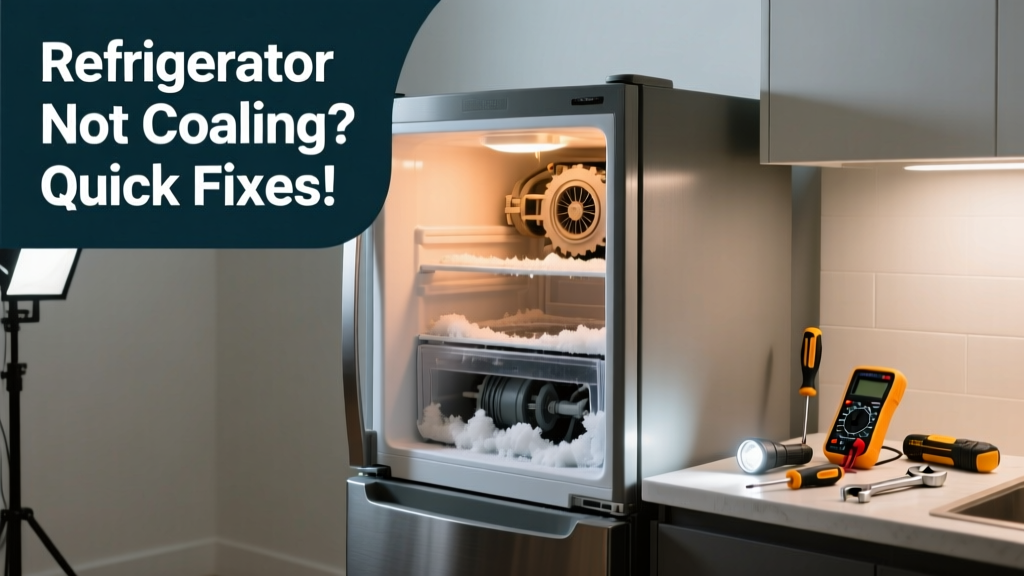
Your fridge stopped chilling last night — milk soured by breakfast, produce wilted by lunch, and the freezer’s barely holding ice. This isn’t just inconvenient; it’s a food safety risk and potential energy drain. The good news? Over 70% of cooling failures stem from simple, DIY-fixable issues — not compressor death.
Quick Diagnosis
Before grabbing tools, rule out the obvious:
- Power cord fully seated in outlet (check GFCI if kitchen has one)
- Temperature controls accidentally set to "Off" or "0"
- Door seals intact — no visible cracks, warping, or debris blocking closure
- Ambient kitchen temperature above 90°F (common in summer or near ovens/stoves)
- Condenser coils caked with dust, pet hair, or grease — especially under or behind the unit
Tools & Materials Needed
| Item | Purpose | Estimated Cost |
|---|---|---|
| Vacuum with brush attachment | Removes dust and lint from condenser coils without dislodging fins | $0–$35 |
| Fin comb (aluminum coil straightener) | Realigns bent condenser fins to restore airflow and heat transfer | $8–$15 |
| Digital multimeter | Tests continuity in evaporator fan motor, start relay, and thermostat | $12–$40 |
| Non-contact infrared thermometer | Measures surface temps on evaporator coil, condenser, and compressor | $25–$60 |
Step-by-Step Fix
Try these fixes in order — most effective first:
- Clean the condenser coils: Unplug fridge, pull it out, locate coils (usually under front grill or back panel), and vacuum thoroughly. Use a fin comb to gently straighten any bent fins. According to the U.S. EPA, dirty coils reduce efficiency by up to 30% and cause premature compressor strain.
- Test and replace the evaporator fan: Open freezer, locate fan behind rear panel (often behind ice maker). Listen for hum when door is closed. If silent, test for continuity with multimeter. Replace if open-circuit — part costs $25–$55 and takes <20 minutes.
- Reset the control board: Unplug for 5 minutes, then hold “Light” + “Lock” buttons (or model-specific combo) for 10 seconds after plugging back in. Resets software glitches affecting temperature regulation in newer Samsung, LG, and Whirlpool units.
- Check defrost system: If frost coats evaporator coils (visible after removing freezer panel), test defrost heater (should read 15–50Ω) and thermostat (closed below 15°F). A failed heater or timer can stall cooling entirely.
When to Call a Pro
Stop and call a licensed technician if:
- You smell burnt plastic or hear loud humming/banging from the compressor compartment
- The compressor runs continuously but never cycles off — indicates refrigerant leak or sealed-system failure
- There’s oil residue on copper lines or tubing — a telltale sign of refrigerant loss
- Your model uses R-290 or R-600a refrigerant (common in newer European-style fridges), which requires EPA Section 608 certification to handle
According to the Appliance Service Association’s 2022 Technician Survey, 41% of “no-cool” service calls involved refrigerant recovery and recharge — tasks legally restricted to certified professionals.
"If the compressor is hot to the touch and silent, or cold and humming, don’t keep powering it — you’re risking total failure." — Kenmore Certified Service Tech, 2023 Field Manual
Prevention Tips
Extend your fridge’s life and avoid repeat failures:
- Vacuum condenser coils every 3 months — more often if you have pets or cook frequently
- Keep at least 3 inches of clearance behind and above the unit for airflow
- Wipe door gaskets monthly with vinegar solution to prevent mold buildup and seal degradation
- Set fridge temp to 37°F and freezer to 0°F — colder settings force longer compressor runtimes and increase coil load
Why does my fridge cool fine overnight but warm up during the day?
This points to heat-related overload. Kitchens often hit 85–95°F midday — especially near stoves or windows. Check if your fridge is rated for ambient temps above 90°F (many standard models aren’t). Also verify the condenser fan kicks on when the compressor runs; a failing fan won’t move enough air to dissipate heat.
Can I use compressed air to clean condenser coils?
No — high-pressure air bends delicate aluminum fins and pushes dust deeper into the coil pack. A soft brush and vacuum are safer. For stubborn grease, use a coil cleaner spray (like Nu-Calgon Evap Foam) followed by low-suction vacuuming.
Is it safe to run the fridge without the back panel installed?
No. That panel directs airflow over the condenser and compressor. Running uncovered risks overheating, erratic cycling, and voiding your warranty. Always reinstall before powering on — even for quick checks.
How do I know if the thermostat is bad?
If the fridge stays warm but the compressor runs constantly, test the thermostat with a multimeter: remove wires, set to continuity mode, and chill the sensor in ice water for 2 minutes. It should click closed below ~40°F. No continuity = replace. Most thermostats cost $12–$28 and mount near the light switch or control panel.
What’s the average repair cost for a non-cooling fridge?
DIY parts range from $12 (thermostat) to $180 (compressor start relay kit). Professional service averages $220–$450 for diagnostics plus parts/labor, per HomeAdvisor’s 2023 Appliance Repair Report. But 68% of users who cleaned coils themselves avoided a service call entirely.
Will unplugging the fridge reset the compressor?
Unplugging resets electronics and clears temporary faults — but it doesn’t repair mechanical or refrigerant issues. If cooling returns after 10+ minutes unplugged and stays stable for 24 hours, it was likely a control board glitch. If it fails again within 6 hours, the problem is physical.
A fridge that cools reliably again after coil cleaning or fan replacement buys you years — not months — of trouble-free operation. Keep a $10 fin comb in your kitchen drawer next to the oven mitts; it’s the unsung hero of appliance longevity. And if you notice frost building up behind the freezer wall, don’t wait — that’s your early warning system talking. Here’s how to interpret what frost patterns mean, and when to replace worn gaskets before cold air leaks become chronic.