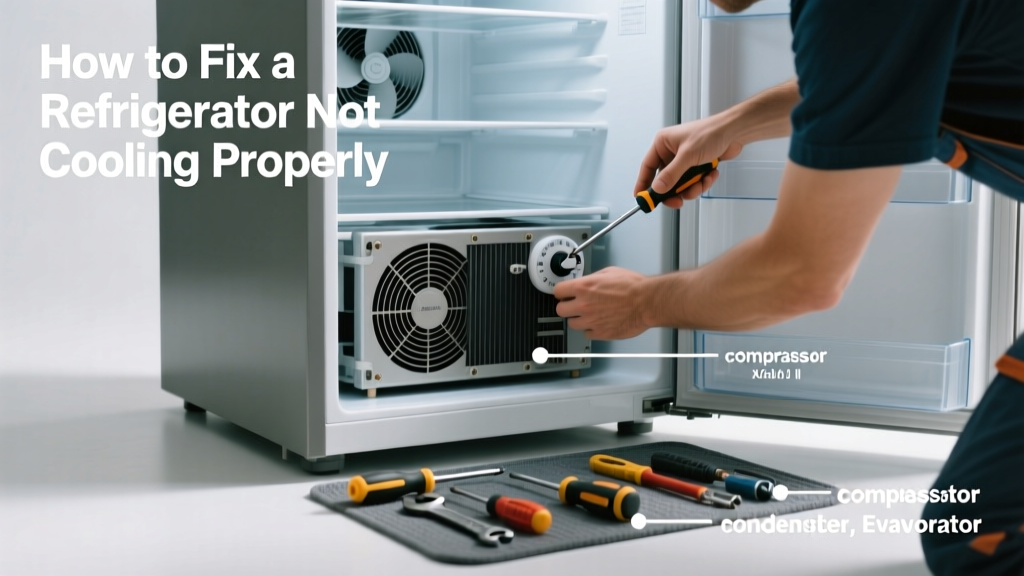
Your fridge isn’t keeping food cold — milk is souring faster, the crisper feels warm, and the freezer’s ice cream is soft. Before you panic or call for service, many cooling failures stem from simple, fixable issues like dirty coils or blocked vents. Most homeowners can resolve this in under an hour with basic tools and careful observation.
Quick Diagnosis
Start here to narrow down the cause without opening panels or testing circuits:
- Is the fridge running but not cooling? (Listen for compressor hum or fan noise)
- Are both fridge and freezer warm — or just one section?
- Is there frost buildup on the freezer back wall or evaporator cover?
- Does the interior light come on when the door opens?
- Has the temperature control been accidentally adjusted or set to "vacation mode"?
Tools & Materials Needed
| Item | Purpose | Estimated Cost |
|---|---|---|
| Voltmeter (non-contact or multimeter) | Verify power to compressor and fans; safe voltage checks | $25–$60 |
| Coil cleaning brush & vacuum | Remove dust and pet hair from condenser coils (usually at rear or bottom) | $8–$15 |
| Fin comb (for bent condenser fins) | Realign damaged aluminum fins to restore airflow | $12–$22 |
| Putty knife & plastic spudger | Safely pry off interior panels without cracking plastic | $5–$14 |
| Refrigerant leak detector (optional) | Identify slow leaks if compressor runs but no cooling occurs | $45–$120 |
Step-by-Step Fix
Try these methods in order — most common first:
- Clean the condenser coils. Unplug the unit. Locate coils (rear grille or under kickplate). Vacuum loose dust, then use a coil brush to dislodge embedded grime. Reassemble and wait 2–4 hours before checking temps.
- Check and clear air vents. In top-freezer models, ensure the vent between freezer and fridge isn’t blocked by frozen food or packaging. In French-door units, verify the damper assembly (often behind crispers) moves freely when adjusting temp controls.
- Test the evaporator fan. If the freezer is cold but the fridge isn’t, the evaporator fan may be stalled. Access via freezer rear panel (after unplugging), listen for spinning, and check for ice jamming blades. Defrost manually if needed using a hair dryer on low heat — never sharp tools.
- Reset the control board. Unplug for 5 minutes, then plug into a different outlet (rule out GFCI trip or circuit issue). Some Samsung and GE models require holding the “Ice Type” and “Child Lock” buttons for 10 seconds to reboot.
When to Call a Pro
Stop DIY if you encounter any of these:
- No compressor hum after plugging in — suggests failed start relay, overload, or compressor motor (requires refrigerant handling certification)
- Compressor runs continuously but interior stays warm — likely low refrigerant or sealed system leak
- Burning smell, clicking every 5 seconds, or tripped breaker — points to electrical fault beyond homeowner scope
- Frost only on upper evaporator tubes (not full coil) — indicates refrigerant restriction needing professional gauge testing
According to the U.S. EPA estimates that 14% of household water usage is from leaks — but refrigerant leaks are far more serious: they’re regulated under Section 608, and only certified technicians may handle R-134a or R-600a recovery and recharge (EPA Section 608 Certification Manual, 2022).
Prevention Tips
Extend your fridge’s cooling life with routine habits:
- Vacuum condenser coils every 6 months — especially if you have pets or carpeted floors
- Keep at least 3 inches of clearance behind and above the unit for airflow
- Let hot leftovers cool before storing — reduces internal humidity and frost buildup
- Check door seals annually: close a dollar bill in the door — if it slips out easily, replace the gasket (how to replace a fridge gasket)
- Set factory default temps: 37°F fridge / 0°F freezer — avoid overcooling to reduce compressor strain
Why is my fridge running but not cooling?
This usually means the cooling system isn’t transferring heat — most often due to dirty condenser coils, a failed evaporator fan, or restricted airflow between compartments. Less commonly, it signals low refrigerant or a failing compressor. Always rule out airflow issues first before suspecting sealed-system problems.
Can I defrost my freezer with a hair dryer?
Yes — but only on the lowest heat setting and from at least 12 inches away. Never use metal tools or boiling water, which can crack evaporator coils or damage insulation. If frost returns within 3–5 days, the defrost heater, thermostat, or control board is likely faulty (defrost system troubleshooting guide).
How long should I wait after cleaning coils to see improvement?
Allow 2–4 hours for temperatures to stabilize. Fridges don’t cool instantly — the compressor cycles on/off based on load and ambient temps. Use a fridge thermometer placed in a glass of water (not just air) for accurate reading after 3 hours.
What does a bad start relay sound like?
A failed start relay often causes a single loud click when you plug in the fridge — followed by silence. A healthy unit clicks once, then hums steadily within 2–3 seconds. If you hear repeated clicking every 5–10 seconds, the relay or overload is likely defective.
Is it worth repairing a 12-year-old refrigerator?
It depends on the failure. Coil cleaning or fan replacement costs $30–$120 and extends life 3–5 years. But compressor or control board repair averages $450–$750 — nearly half the price of a new Energy Star model. Compare cost vs. age: our appliance lifespan calculator shows average fridge life is 12–15 years.
Can a clogged drain line cause cooling issues?
No — a clogged defrost drain causes water pooling or moldy smells, but doesn’t affect cooling performance. However, if water freezes inside the drain tube, it can block airflow around the evaporator, indirectly contributing to uneven cooling in some side-by-side models.
Fixing a non-cooling fridge doesn’t always mean calling for help — sometimes it’s as simple as moving a bag of frozen peas blocking the vent or wiping dust off coils you haven’t touched since 2021. Stay methodical, prioritize safety, and know when your skill level meets the problem. When in doubt, consult a technician — but give yourself credit for spotting the issue before the yogurt soured.