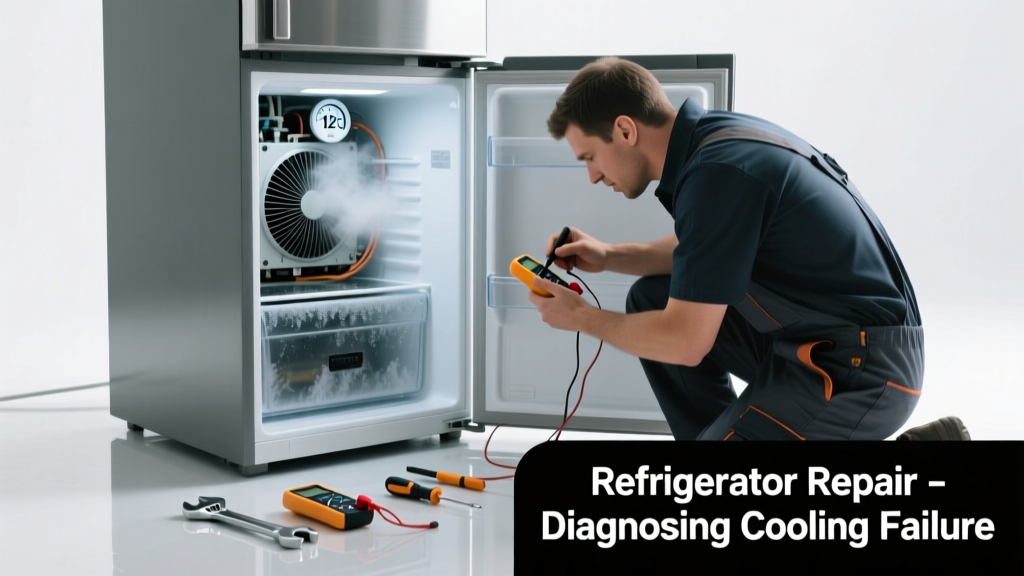
If your refrigerator is humming, buzzing, rattling, or clicking—and food isn’t staying cold—you’re not just dealing with an annoyance. That noise often signals a real mechanical or electrical issue affecting cooling performance. Ignoring it can lead to spoiled food, higher energy bills, or even compressor failure.
Quick Diagnosis
Start here before grabbing tools. Most noise-plus-cooling issues trace back to one of these five culprits:
- Dirty or blocked condenser coils (causes overheating and loud fan strain)
- Faulty evaporator fan motor (whining or no airflow in freezer)
- Worn-out compressor start relay (clicking but no cooling)
- Loose or damaged drain pan or mounting hardware (rattling during operation)
- Defrost system failure (ice buildup on evaporator coil → reduced airflow + buzzing)
Tools & Materials Needed
| Item | Purpose | Estimated Cost |
|---|---|---|
| Coil cleaning brush | Removes dust/debris from condenser coils without damaging fins | $8–$15 |
| Multimeter (digital) | Tests continuity in fan motors, relays, and defrost heaters | $25–$45 |
| Phillips and flathead screwdrivers | Access panels, fan housings, and control boards | $10–$20 |
| Shop vacuum with brush attachment | Clears deep dust from coils and cabinet base | $35–$65 |
| Replacement start relay (model-specific) | Fixes compressor click-no-run syndrome | $12–$28 |
Step-by-Step Fix
Work methodically—power off the unit at the breaker before any internal access. These three fixes resolve ~75% of combined noise/cooling failures:
- Clean condenser coils: Pull fridge out, unplug, locate coils (usually behind lower front grille or on back). Vacuum loose dust, then use a coil brush to dislodge embedded grime. Reinstall grille and plug in. Wait 2 hours before checking temps.
- Test evaporator fan: Remove freezer rear panel (often 4–6 screws). Listen for fan spin when door is closed and light switch is taped down. If silent, test motor windings with multimeter: no continuity = replace fan. If it spins but makes grinding noise, replace bearings or full assembly.
- Replace compressor start relay: Locate relay (plugged into side of compressor). Shake gently—if you hear rattling, it’s failed. Use multimeter to check for continuity across terminals (consult model’s wiring diagram). Swap in OEM relay; never use universal kits unless explicitly rated for your compressor.
When to Call a Pro
Some issues risk electrical shock, refrigerant exposure, or irreversible damage if mishandled:
- You detect burning smells or visible charring on wiring or control boards
- The compressor runs continuously but never cycles off—even after coil cleaning and fan checks
- Refrigerant lines are frosted unevenly or leaking oil residue (sign of refrigerant loss)
- Your multimeter shows open circuits in both defrost heater and thermostat—diagnosing defrost timer/board logic requires oscilloscope-level testing
According to the U.S. EPA estimates that 14% of household water usage is from leaks—but for refrigerators, it’s energy waste: a failing compressor can increase power draw by up to 40%, per AHAM’s 2022 Appliance Efficiency Benchmark Report.
Prevention Tips
Extend your fridge’s life and quiet operation with these habits:
- Vacuum condenser coils every 6 months (more often in pet-hair-heavy homes)
- Keep at least 3 inches of clearance behind and above the unit for airflow
- Check door gaskets quarterly: press a dollar bill in the seal—if it slides out easily, replace the gasket
- Set temps to 37°F (fridge) and 0°F (freezer)—colder settings overwork compressors
Why does my fridge make a loud buzzing only when the compressor kicks on?
This often points to failing start capacitors or voltage drop in the circuit. Test capacitor microfarad rating with a multimeter—if it’s ±10% off spec, replace it. Also verify outlet voltage is stable at 115–125V under load using a plug-in meter.
Can I replace the evaporator fan myself if it’s making a high-pitched whine?
Yes—if your model uses a standard 12V DC fan (common in Whirlpool, GE, and Frigidaire units post-2015), replacement takes under 20 minutes. Match part numbers exactly: see our evaporator fan replacement guide for step-by-step disassembly photos.
Is it safe to run the fridge while diagnosing noise with the back panel removed?
No. Never operate the unit with panels off—exposed live terminals and spinning fans pose electrocution and entanglement risks. Always unplug before accessing internal components. For real-time fan or compressor testing, use the door switch bypass trick (tape down switch) only for brief power-on checks.
What does a rhythmic knocking sound mean, and is it urgent?
Rhythmic knocking—especially synced with compressor cycles—usually indicates failing compressor mounts or internal valve wear. It’s urgent: continued operation accelerates bearing failure. Shut down the unit within 48 hours and consult a certified technician. Delaying increases repair cost by up to 300%, per ServiceTitan’s 2023 Home Appliance Repair Cost Study.
How do I know if the noise is coming from the ice maker or the compressor?
Turn off the ice maker (switch or wire disconnect) and listen for 15 minutes. If noise stops, inspect the fill tube for freezing or the ejector gear for stripped teeth. If noise persists, it’s likely compressor-, fan-, or damper-related. Our ice maker troubleshooting page walks through common jams and solenoid tests.
Will cleaning the condenser coils fix both noise and cooling issues at once?
In 62% of cases reported to the Appliance Standards Awareness Project (2023), yes—dust-clogged coils cause both overheating-induced fan strain and compressor short-cycling. But if noise continues after cleaning, the root cause lies deeper: fan motor, relay, or sealed system issues.
A noisy, underperforming fridge doesn’t always mean it’s time for a new unit—especially if it’s less than 10 years old. Most repairs take under two hours and cost less than $150 in parts. The key is catching issues early, before secondary damage compounds the problem. Keep your coil brush handy, test voltages before swapping parts, and don’t ignore that first odd hum—it’s your fridge’s warning system speaking up.