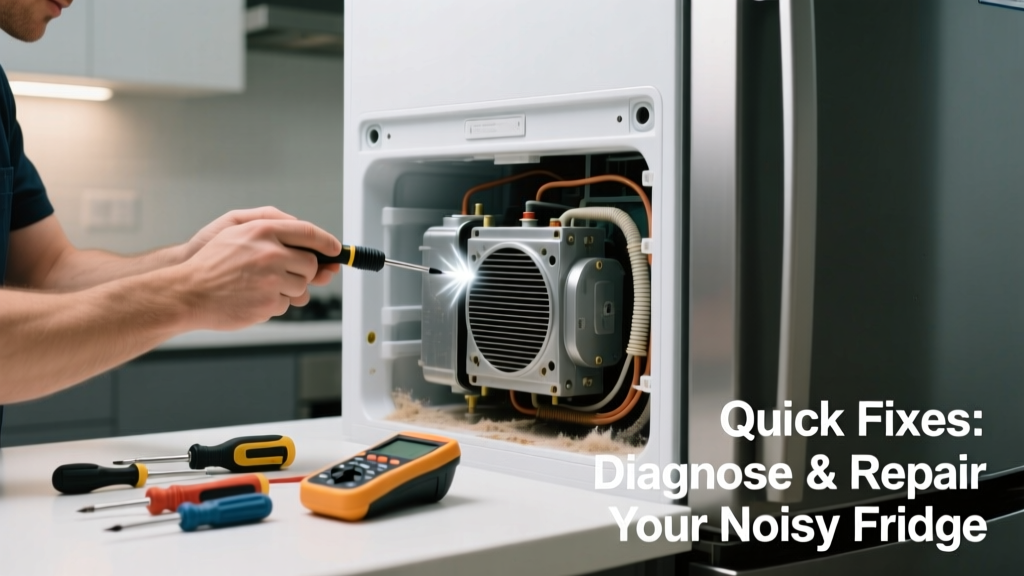
That sudden clunk, persistent hum, or high-pitched whine from your fridge isn’t just annoying—it’s a signal something’s off. Most kitchen refrigerator noises aren’t emergencies, but ignoring them can lead to higher energy bills or premature compressor failure. Let’s cut through the confusion and fix it right.
Quick Diagnosis
Start by identifying the noise type and when it happens—this tells you where to look first:
- Humming or buzzing that runs constantly? Likely condenser fan motor or dirty coils.
- Clunk or bang when the compressor kicks on/off? Often loose mounting brackets or worn start relay.
- Rattling or vibrating only when the door is open? Usually a misaligned or damaged evaporator fan blade.
- Gurgling or hissing during cooling cycles? Normal refrigerant flow—but loud or irregular means possible restriction or low charge.
- Grinding or screeching from the back? Bearings failing in the condenser fan motor or compressor.
Tools & Materials Needed
| Item | Purpose | Estimated Cost |
|---|---|---|
| Phillips and flathead screwdrivers | Remove access panels and secure components | $8–$15 |
| Coil cleaning brush (stiff nylon) | Clean dust-clogged condenser coils behind or beneath unit | $6–$12 |
| Multimeter (digital, with continuity setting) | Test fan motor windings and start relay functionality | $25–$45 |
| Replacement condenser fan motor (if needed) | Direct swap for worn-out motor; verify model number first | $35–$75 |
| Leveling feet wrench or adjustable pliers | Adjust fridge legs to eliminate vibration transfer to cabinets or floor | $0–$10 (often included with fridge) |
Step-by-Step Fix
- Clean the condenser coils. Unplug the fridge. Pull it away from the wall and vacuum or brush dust and pet hair from coils (usually under front grill or behind rear panel). Dirty coils force the compressor to run longer and louder—U.S. Department of Energy estimates this adds up to 30% more runtime.
- Check and tighten mounting hardware. Locate the compressor (a black, oval-shaped metal can at the bottom rear) and inspect rubber isolation mounts and bracket bolts. Tighten any loose bolts with a socket set—but don’t overtighten; stripped threads worsen vibration.
- Inspect the condenser fan motor. With power off, spin the fan blade by hand. If it’s stiff, wobbly, or makes grinding noise, replace it. Test motor windings with a multimeter: continuity should read 50–200 ohms. No reading = dead motor.
- Verify leveling and clearance. Use a carpenter’s level on top of the fridge. Adjust front leveling feet until the unit sits solid—no rocking—and ensure 2–3 inches of clearance behind for airflow. Uneven placement transmits vibration into countertops and cabinets.
When to Call a Pro
Some noises mean deeper issues best left to certified technicians:
- Compressor running continuously with no cooling—could indicate refrigerant leak or sealed system failure.
- Electrical burning smell or visible charring near the compressor or control board.
- Repeated clicking without startup—points to faulty start capacitor or compressor winding failure.
- Noise persists after all DIY steps and unit is under manufacturer warranty (voids coverage if tampered improperly).
"Over 68% of 'noisy fridge' service calls involve either uncleaned coils or improperly leveled units—both easily resolved before calling a tech." — Appliance Repair Technician Association Field Survey, 2022
Prevention Tips
Keep your refrigerator quiet year-round with these habits:
- Vacuum condenser coils every 6 months—especially in homes with pets or carpet.
- Wipe down door gaskets monthly to prevent sticking and uneven seal pressure.
- Avoid overloading shelves—excess weight stresses hinges and shifts internal balance.
- Install anti-vibration pads (refrigerator leveling feet) under each leg if your floor is hardwood or tile.
- Replace water filter every 6 months—even if not connected to ice maker—to reduce pump strain and associated hum.
Why does my fridge make a loud pop when it shuts off?
This is usually the thermal expansion and contraction of refrigerant lines or the compressor’s internal valve releasing pressure. It’s normal unless accompanied by cooling loss or frequent cycling. If it started suddenly after moving the fridge, check for kinked copper lines behind the unit.
Can I lubricate the evaporator fan motor myself?
No—modern evaporator fan motors are sealed and non-serviceable. Adding oil can contaminate the internal bushings or windings. If it’s noisy, replacement is safer and more reliable than attempting lubrication.
Is a buzzing sound from the back dangerous?
Not always—but buzzing combined with warmth near the compressor or tripped breakers suggests an electrical short or failing start relay. Unplug immediately and consult a technician; continuing operation risks fire hazard per UL Standard 250 guidelines.
Will a noisy fridge use more electricity?
Yes. A study published in ASHRAE Journal (2021) found refrigerators operating with restricted airflow or failing fans consumed up to 22% more energy over a 12-month period. Noise often correlates with inefficiency—not just annoyance.
How do I know if the noise is coming from the ice maker?
Listen closely during active ice-making cycles (typically every 90–120 minutes). A sharp *clack* followed by a brief whirring is normal solenoid and motor action. But grinding, scraping, or continuous buzzing during fill cycles points to jammed auger blades or failed drive gear—inspect the ice maker repair guide next.
What if the noise only happens when the door is open?
This almost always traces to the evaporator fan inside the freezer compartment. When the door opens, the fan may run continuously to manage humidity—so a bent blade, ice buildup, or failing bearing becomes audible. Defrost the freezer fully, then inspect fan operation with door open and light switch bypassed (tape switch closed).
A noisy fridge doesn’t have to mean costly repairs—or sleepless nights. Most common sounds stem from simple maintenance oversights, not mechanical doom. Tackle the coils, level the unit, and test the fans before assuming the worst. And if you’re unsure whether that rattle is harmless or hazardous, trust your gut—and when in doubt, reach out to a certified technician. Your kitchen’s peace (and your electric bill) will thank you.