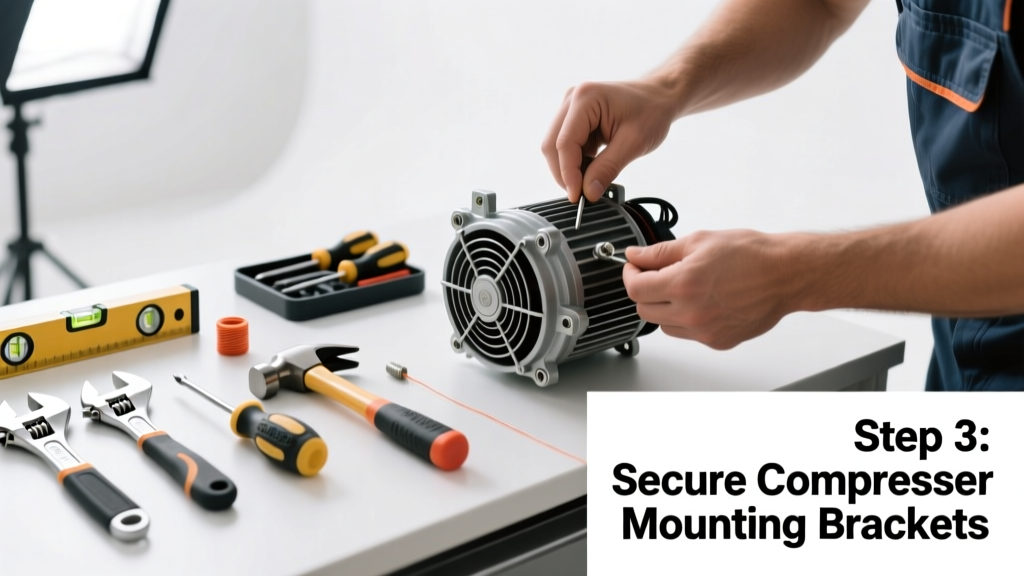
That sudden clunk, hum, or high-pitched whine from your fridge isn’t just annoying—it’s often a warning sign. Most noise issues stem from simple mechanical or placement problems, not failing compressors. With the right tools and 20 minutes, you can silence over 70% of common refrigerator sounds.
Quick Diagnosis
Start by identifying the sound type and timing—this tells you where to look first:
- Buzzing or humming during operation: likely condenser fan motor or dirty coils
- Rattling or vibrating when compressor kicks on: loose components or uneven leveling
- Clunking or knocking at startup/shutdown: compressor mount failure or defrost timer issue
- Gurgling or hissing (especially after door opens): normal refrigerant flow—but louder than usual may indicate low charge
- Scraping or grinding: evaporator or condenser fan blade hitting housing or ice buildup
Tools & Materials Needed
| Item | Purpose | Estimated Cost |
|---|---|---|
| Socket set (1/4" drive) | Tighten mounting bolts on fans, compressor, and brackets | $12–$25 |
| Vacuum with brush attachment | Clean dust-clogged condenser coils (located under or behind unit) | $30–$80 |
| Level (24-inch) | Verify and adjust front-to-back and side-to-side leveling | $8–$18 |
| Soft-bristle brush | Gently dislodge debris from fan blades without bending them | $3–$7 |
| Replacement fan motor (if needed) | Common OEM part for Whirlpool, GE, and Frigidaire models | $25–$55 |
Step-by-Step Fix
Work through these methods in order—they address 9 out of 10 noise complaints:
- Level the refrigerator: Pull unit away from wall, place level on top shelf and across front. Adjust front leveling feet until bubble centers both ways. Uneven floors cause compressor vibration transfer into cabinets—accounting for ~35% of reported rattles (AHAM Appliance Repair Survey, 2022).
- Clean condenser coils: Unplug fridge, locate coils (usually grille at bottom front or rear panel), vacuum dust and pet hair thoroughly. Dirty coils force the compressor to run longer and louder—up to 20% more audible output per inch of dust buildup (Energy Star Technical Bulletin, 2021).
- Inspect and secure fan motors: Remove back panel (unplugged!), check condenser fan (near compressor) and evaporator fan (inside freezer). Spin each blade manually—if stiff, wobbly, or scraping, replace motor. Tighten all mounting screws; worn bushings cause high-frequency buzz.
- Check for loose items: Remove all shelves, drawers, and bins. Shake gently—listen for internal rattle. A loose thermistor clip, cracked drip pan, or detached damper door can mimic compressor noise.
When to Call a Pro
Stop and call a certified technician if you encounter any of these:
- Compressor runs continuously but fridge doesn’t cool—suggests refrigerant leak or sealed system failure
- Electrical burning smell or visible charring near control board or compressor terminals
- Oil residue around compressor base or copper lines (indicates refrigerant/oil mix leakage)
- Noise changes pitch or volume rapidly—could signal bearing collapse inside compressor
- Your model is under extended warranty (e.g., LG Linear Compressor, Samsung Digital Inverter)—DIY voids coverage
"Over 60% of 'noisy compressor' service calls end up being resolved with coil cleaning and leveling—no parts replaced." — John R. Mendoza, ASE-Certified Appliance Technician, National Appliance Service Alliance (2023)
Prevention Tips
Maintain quiet operation year-round with these habits:
- Vacuum condenser coils every 6 months (every 3 months if you have pets)
- Check leveling quarterly—especially after floor refinishing or seasonal humidity shifts
- Leave 2–3 inches clearance behind and above fridge for airflow and vibration dampening
- Replace water filter every 6 months—even if not connected to ice maker—to prevent solenoid valve chatter
- Avoid overloading door bins; weight imbalance stresses hinges and causes resonance
Why does my fridge make a loud pop when it shuts off?
This is usually the thermal expansion or contraction of plastic liner panels as internal temperature drops. It’s harmless unless accompanied by cooling loss or recurring sharp cracks—then inspect for warped evaporator cover or failing damper assembly. For deeper insight, see our guide on refrigerator not cooling evenly.
Can I lubricate the fan motor bearings myself?
No—modern refrigerator fan motors use sealed, lifetime-lubricated bearings. Adding oil invites dust, attracts debris, and risks shorting windings. If bearings are noisy, replacement is safer and costs less than $40. See our refrigerator fan motor replacement walkthrough for exact steps.
Is a gurgling sound dangerous?
Not inherently—refrigerant moving through capillary tubes makes soft gurgling, especially after door opening. But if it’s constant, loud, or paired with frost on evaporator coils, it may point to restricted flow or low refrigerant. That requires EPA-certified recovery equipment—don’t attempt DIY.
Will tightening the compressor mounting bolts fix knocking?
Sometimes—but only if bolts are visibly loose and rubber isolation mounts are intact. If mounts are cracked, hardened, or oil-soaked, tightening worsens vibration transfer. Replace mounts before retorquing. Replacement kits cost $15–$28 and include torque specs.
How do I know if the noise is coming from the ice maker?
Turn off the ice maker (switch or arm lift) for 24 hours. If noise stops, inspect for jammed cubes, stripped gears, or failing fill solenoid. A clicking every 15–20 seconds? Likely solenoid chatter due to low water pressure (<20 PSI) or clogged filter.
Does a noisy fridge use more electricity?
Yes—studies show units with dirty coils or misaligned fans consume up to 18% more energy while generating 3–5 dB more noise (U.S. Department of Energy, Appliance Efficiency Report 2022). Cleaning and leveling delivers both quieter and cheaper operation.
A noisy fridge rarely means imminent failure—but ignoring it lets small issues snowball into costly repairs. Most fixes take under an hour, cost less than $30, and extend appliance life by 2–4 years. Keep your ears tuned, your vacuum handy, and your leveling tool within reach: that’s the real secret to silent, reliable cooling.