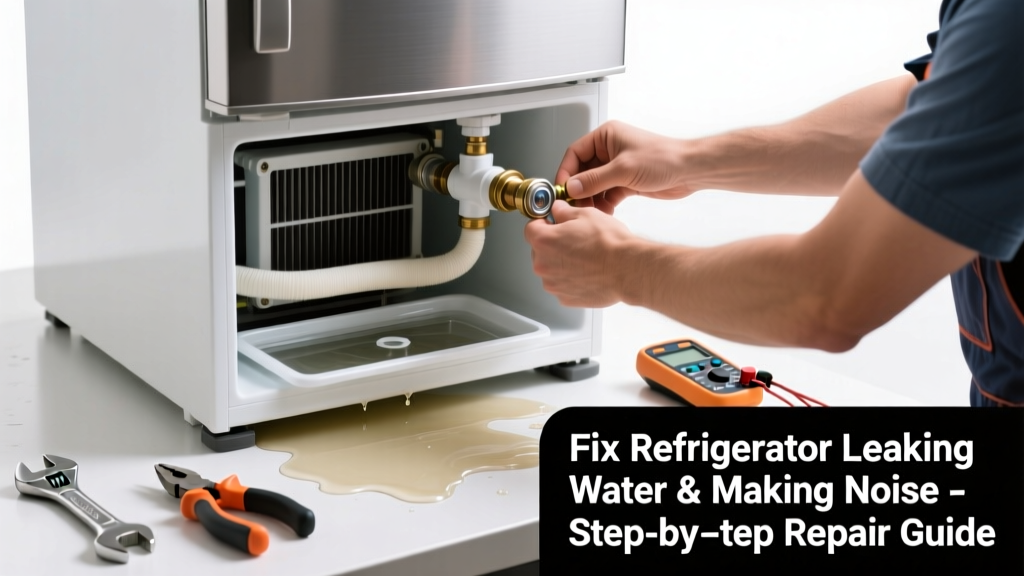
Your fridge is dripping water onto the kitchen floor—and humming, buzzing, or gurgling like it’s trying to tell you something urgent. That combo isn’t just annoying—it’s a red flag that something’s wrong with drainage, cooling, or internal components.
Quick Diagnosis
Before grabbing tools, identify the most likely culprit using these common causes:
- Blocked or frozen defrost drain tube (most frequent cause of both leaks and gurgling)
- Clogged condensate pan under the unit (leads to overflow + sloshing sounds)
- Faulty water inlet valve (causes hissing, knocking, and drip near the back)
- Cracked or misaligned drip pan (water pools and vibrates with compressor cycles)
- Failed evaporator fan motor (whining or grinding noise + inconsistent cooling → frost melt leaks)
Tools & Materials Needed
| Item | Purpose | Estimated Cost |
|---|---|---|
| Shop vacuum with narrow nozzle | Clears deep clogs in defrost drain without disassembly | $45–$80 |
| Flexible pipe cleaner or turkey baster | Dislodges ice or debris in narrow drain tubes | $3–$12 |
| Distilled white vinegar | Dissolves mineral buildup and organic gunk in drain lines | $2–$5 |
| Replacement drip pan (model-specific) | Replaces cracked or warped pan that no longer holds condensate | $12–$35 |
| Multi-meter (for advanced checks) | Tests continuity of water inlet valve or fan motor windings | $25–$65 |
Step-by-Step Fix
Follow these methods in order—start simple, escalate only if needed:
- Clear the defrost drain: Locate the drain hole inside the freezer (usually behind rear panel or under crisper drawer). Use warm vinegar solution and turkey baster to flush; repeat until water flows freely into pan below.
- Inspect and clean the drip pan: Pull the fridge forward, unplug it, and remove the lower access panel. Wipe out mold/muck, check for cracks, and rinse with diluted vinegar. Let dry fully before reassembling.
- Test the water inlet valve: If leak occurs only during ice maker or water dispenser use—and you hear loud 'thunk' or hissing—turn off water supply, disconnect valve wires, and test resistance with multimeter (should read 200–600 Ω). Replace if open or shorted.
- Check evaporator fan operation: Listen at freezer vent while door is closed. No airflow? Remove rear freezer panel and verify fan spins freely. If seized or noisy, replace evaporator fan motor.
When to Call a Pro
Stop and call a certified technician if you encounter any of these:
- Refrigerant leak signs: oily residue on copper lines, sharp chemical odor, or hissing near compressor
- Compressor cycling constantly with no cooling—and water pooling beneath unit
- Electrical burning smell or visible charring on control board or wiring harness
- Leak persists after all DIY steps and you measure >1/4" standing water in drip pan after 24 hours
According to the U.S. EPA, 14% of household water usage stems from undetected leaks—including those from faulty appliance components like refrigerator water valves (EPA WaterSense, 2022).
Prevention Tips
Maintain your fridge year-round to avoid repeat issues:
- Clean the defrost drain every 6 months—even if no symptoms appear
- Keep ambient kitchen temperature between 60°F–85°F to reduce condensation load
- Level the refrigerator properly (front slightly higher than rear) so doors seal tightly and defrost water drains correctly
- Replace water filter every 6 months—clogged filters increase inlet valve strain and pressure spikes
Can I use bleach to clean the drain tube?
No. Bleach corrodes aluminum drain pans and degrades rubber tubing over time. Stick with distilled white vinegar or a 50/50 mix of warm water and baking soda. For stubborn biofilm, use enzymatic drain cleaner labeled safe for appliances.
Why does my fridge only leak when the ice maker runs?
This points directly to the water inlet valve or supply line. A failing valve may not seal fully, allowing slow drip into the fill tube or ice mold—then overflow during defrost. Check for calcium deposits on valve screen; replace if valve body feels warm or hums continuously.
Is it normal to hear gurgling after cleaning the drain?
Yes—brief gurgling (under 30 seconds) is air moving through newly cleared tubing. Persistent gurgling or bubbling suggests residual blockage or improper drain slope. Recheck alignment of drain tube where it connects to pan.
How do I know if the drip pan is cracked or just dirty?
Wipe dry and inspect under bright light: hairline cracks often show as thin dark lines. Fill pan with 1 cup water—if it seeps within 2 minutes, it’s compromised. Replacement pans cost less than $25 and are model-specific—find yours via our parts lookup tool.
What noise means the compressor is failing?
A continuous, high-pitched whine or loud metallic clunking—not rhythmic hum—is concerning. Also watch for compressor running nonstop with warm interior temps. Compressor failure requires certified refrigerant handling per EPA Section 608 rules; never attempt DIY replacement.
Will unplugging the fridge stop the leak temporarily?
Only if the leak source is active-cycle related (e.g., ice maker fill or defrost heater activation). But unplugging won’t fix underlying clogs or cracks—and risks food spoilage. Always diagnose first; power down only during repair steps requiring electrical safety.
A well-maintained refrigerator should run quietly and stay dry for years—but when water and noise team up, it’s rarely coincidence. Tackle the drain first, then move methodically through the system. Most cases resolve in under 90 minutes with basic tools—and prevent far costlier repairs down the line.