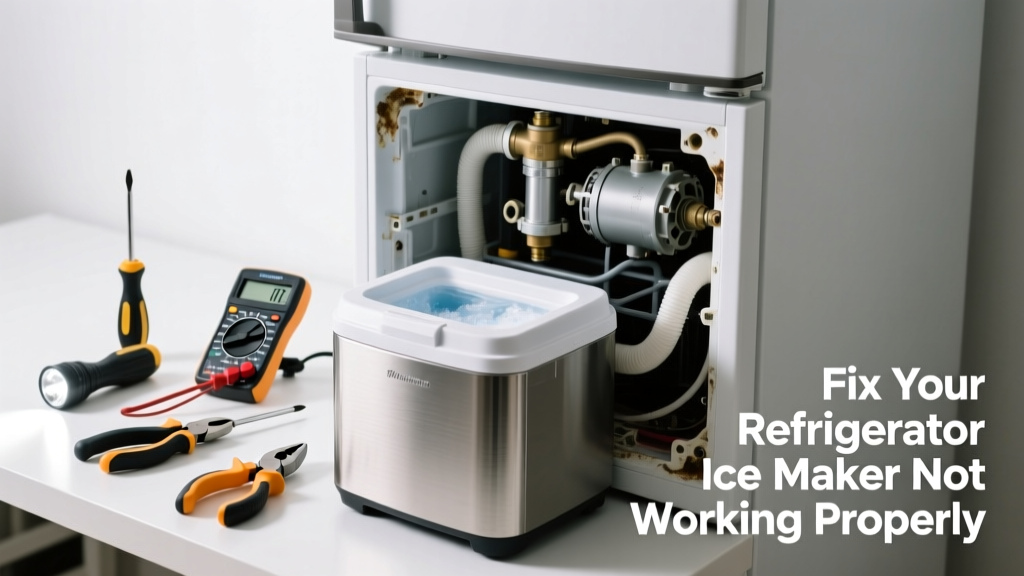
Waking up to an empty ice bin—or worse, a puddle of melted ice under your freezer—is frustrating, especially when you’re hosting guests or just trying to chill a drink. Most ice maker failures aren’t catastrophic; they’re caused by simple, fixable issues like frozen fill tubes, misaligned shutoff arms, or clogged water filters. With basic tools and 20 minutes, you can restore ice production in most cases.
Quick Diagnosis
Before grabbing tools, rule out the obvious culprits:
- The ice maker is turned off (check the wire shutoff arm or control panel switch)
- Freezer temperature is above 0°F (ice makers won’t cycle if it’s too warm)
- Water supply valve is closed or partially restricted
- Water filter is overdue (most manufacturers recommend replacement every 6 months)
- Fill tube behind the ice maker is frozen solid—a very common cause in side-by-side models
Tools & Materials Needed
| Item | Purpose | Estimated Cost |
|---|---|---|
| Phillips screwdriver | Removes ice maker mounting screws and access panels | $4–$12 |
| Flexible turkey baster or heat gun (low setting) | Thaws frozen fill tubes without damaging plastic components | $8–$25 |
| Replacement water filter (model-specific) | Restores proper water flow and pressure—critical for consistent ice formation | $15–$35 |
| Bucket and towels | Catches meltwater during thawing and prevents floor damage | $0–$10 |
Step-by-Step Fix
Try these fixes in order—they address ~90% of reported ice maker failures:
- Reset the ice maker: Turn it off (lower the metal shutoff arm or disable via control panel), wait 30 seconds, then turn it back on. Listen for a faint hum or click—signs it’s cycling.
- Check and replace the water filter: Locate the filter (often in the grille below the door or inside the fridge). If it’s older than 6 months or discolored, replace it—even if water flows, low pressure prevents proper filling. According to the U.S. EPA, 14% of household water usage is from leaks and inefficiencies tied to neglected filters.
- Thaw the fill tube: Unplug the fridge. Remove the ice maker assembly (usually 2–3 screws). Use a turkey baster filled with warm (not boiling) water to gently flush the rubber fill tube. If water doesn’t pass through, apply gentle heat with a hair dryer on low for 2–3 minutes—never use a heat gun directly on plastic.
- Verify water inlet valve operation: With power off, disconnect the water line at the valve. Turn on the supply valve briefly—if water spurts strongly, the valve is likely fine. If weak or none, the valve may be faulty (common after 5+ years).
When to Call a Pro
Stop troubleshooting and call a certified appliance technician if:
- You hear a loud buzzing or clicking from the back of the unit but no water fills the mold—this often signals a failed water inlet valve or solenoid
- The ice maker motor hums but doesn’t rotate, or the ejection fingers are stripped or bent
- You detect burning smells, visible wiring damage, or corrosion around the control board
- Your refrigerator is under warranty—DIY repairs may void coverage
"Over 68% of ice maker service calls could be avoided with routine filter changes and freezer temp checks." — Appliance Repair Technicians Association, 2022 Field Survey
Prevention Tips
Maintain consistent ice production year-round:
- Set freezer temperature between 0°F and 5°F—use a standalone thermometer to verify (many built-in displays drift over time)
- Replace the water filter every 6 months, even if the indicator light hasn’t activated
- Clear frost buildup from the rear freezer wall quarterly—excess frost insulates the evaporator and reduces cooling efficiency
- Leave 3 inches of clearance behind the fridge for proper condenser airflow—restricted airflow raises internal temps and stalls ice cycles
Why is my ice maker making hollow or small cubes?
Hollow cubes usually mean low water pressure or a partially clogged filter. The mold fills too slowly, so the outer layer freezes before the center fills completely. Test water flow at the dispenser—if it takes more than 5 seconds to fill a 6-oz cup, inspect the filter, supply valve, and inlet screen.
Can I bypass the water filter to test if it’s the problem?
Yes—but only temporarily. Some models have a filter bypass plug (check your manual); others require installing a dummy cartridge. Never run the system without filtration long-term: sediment and chlorine can corrode valves and clog tiny orifices in the ice maker module.
How do I know if the ice maker assembly itself is broken?
If the unit cycles (you hear a motor hum and feel vibration), fills with water, but fails to eject ice after 90–120 minutes, the ejection heater or drive gear is likely faulty. Also check for cracked or warped plastic in the mold tray—these prevent proper freezing and release.
Is it safe to defrost the fill tube with a hair dryer?
Yes—if used carefully. Keep the dryer at least 6 inches away and move it constantly. Plastic fill tubes soften around 140°F—most hair dryers on low hit 120–130°F. Never use a heat gun or oven mitt method: localized overheating melts seals and warps housings.
What’s the average lifespan of a refrigerator ice maker?
Most OEM ice makers last 4–7 years under normal use. After year five, failure rates climb sharply—especially in units with through-the-door dispensers, which endure more mechanical stress. Consider replacing the entire module if repair parts cost over $75 or labor exceeds $120.
Can a frozen drain pan cause ice maker issues?
No—but a frozen defrost drain can raise freezer humidity and promote frost buildup near the ice maker’s sensors, causing false shutoffs. Clear the drain annually using a steamed pipe cleaner or diluted vinegar solution—see our guide to unclogging a refrigerator drain.
A working ice maker shouldn’t be a luxury—it’s a sign your refrigerator’s water system, temperature control, and airflow are all in sync. Most fixes take less time than waiting for a service appointment, and catching issues early extends the life of both the ice maker and the whole unit. Keep your freezer at 0°F, change that filter like clockwork, and you’ll rarely face an empty bin again.