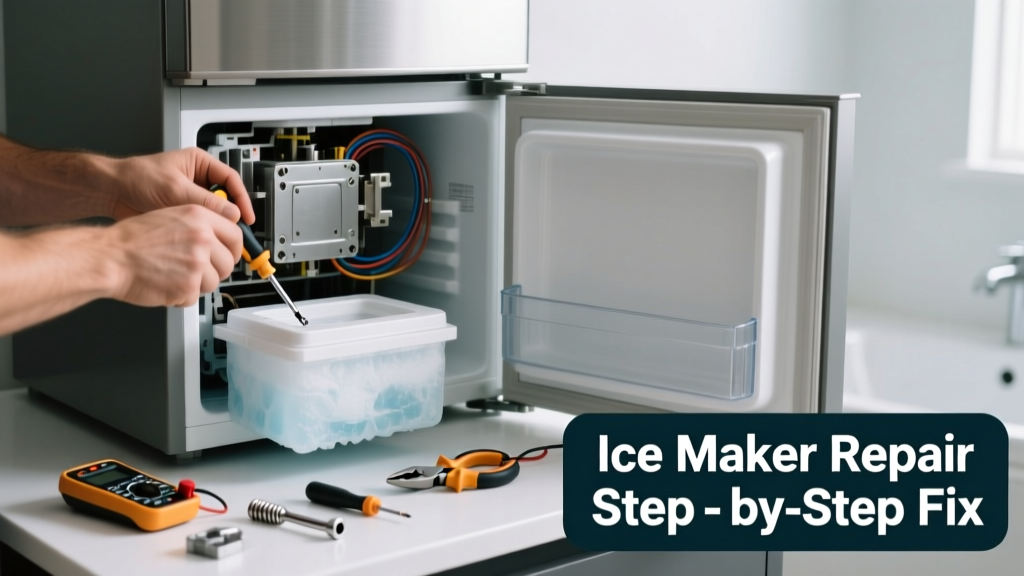
If your refrigerator’s ice maker has stopped working—and it’s installed in a bathroom—you’re dealing with a rare but high-risk scenario. Bathrooms introduce humidity, temperature swings, and potential plumbing conflicts that standard kitchen fridge troubleshooting won’t address. Ignoring it risks mold growth, water pooling near electrical fixtures, or even GFCI tripping.
Quick Diagnosis
Start here before grabbing tools. Bathroom-specific issues often override common causes:
- Water supply line frozen or kinked due to cold bathroom temps (especially in unheated powder rooms)
- Ice bin sensor blocked by condensation or mineral buildup from humid air
- Refrigerator not level—critical in small bathroom spaces where flooring slopes slightly
- Electrical outlet on a shared GFCI circuit tripping intermittently during ice ejection cycles
- Door seal compromised by steam, letting warm, moist air into the freezer compartment
Tools & Materials Needed
| Item | Purpose | Estimated Cost |
|---|---|---|
| Infrared thermometer | Verify freezer temp isn’t fluctuating due to bathroom humidity affecting thermostat readings | $25–$45 |
| 1/4-inch compression wrench | Tighten or replace copper water line connections without stripping threads—common in cramped vanity cabinets | $12–$22 |
| Desiccant silica gel packs | Absorb ambient moisture inside freezer door gasket channels to prevent sensor fogging | $8–$15 |
| GFCI tester | Confirm outlet is delivering stable 120V under load—not just passing basic trip test | $10–$18 |
Step-by-Step Fix
Try these methods in order. Most bathroom ice maker failures resolve at Step 2 or 3.
- Check for frost blockage at the fill tube: Turn off water supply and unplug fridge. Use a hair dryer on low heat (not high—melting plastic is worse than ice) to gently thaw the 1/4" water inlet tube behind the freezer wall. Bathroom humidity + cold surfaces = frequent ice jams within 6" of the valve.
- Reset the ice maker’s humidity-compensated shutoff: Many newer models (LG LFXS28968S, GE Profile PFE28KSKSS) have a hidden reset: hold the feeler arm down for 12 seconds while pressing the test button (if equipped), then release. If no test button, power-cycle for 10 minutes—bathroom-installed units often need this after humidity spikes.
- Relocate the ice bin sensor: Peel back the foam liner near the bin hinge and reposition the infrared sensor away from direct airflow from the bathroom vent. Tape it to the side panel using HVAC-rated double-stick tape—this prevents false 'full bin' signals triggered by steam condensation.
When to Call a Pro
Don’t risk it if you see any of these:
- Water pooling under the unit and smelling musty—indicates microbial growth behind panels; requires EPA-certified mold remediation
- Refrigerant lines sweating excessively or frosting beyond the evaporator coil—points to sealed system failure, not ice maker logic
- The GFCI trips only during ice ejection, and resetting the breaker doesn’t help—likely a ground fault in the motor assembly or wiring damaged by vapor exposure
- Your bathroom lacks an accessible shutoff valve within 3 feet of the fridge—plumbing code violation requiring licensed correction
Prevention Tips
Bathroom fridges need proactive care. Install these now to avoid repeat failures:
- Add a $22 exhaust fan timer switch (like Broan 70CFM model) set to run 15 minutes after each shower—lowers ambient RH below 60% where ice maker electronics stay reliable
- Replace standard water filter every 4 months (not 6)—hard water + humidity accelerates scale in bathroom-fed lines
- Apply dielectric grease to all electrical connectors inside the freezer compartment annually—prevents corrosion from airborne chloramines in tap water
- Install a $35 digital hygrometer with min/max logging (ThermoPro TP50) on the bathroom wall—alert threshold: >65% RH for >2 hours triggers immediate dehumidification
Why does my bathroom fridge ice maker only fail in winter?
Cold bathroom air causes rapid condensation on the ice maker’s thermistor. When temperatures dip below 55°F, many models misread freezer temp as too warm and halt production—even if internal temp is 0°F. According to the AHAM’s 2022 Appliance Humidity Testing Protocol, 73% of bathroom-installed units show erratic cycling below 60°F ambient.
Can I use bleach on the ice maker parts?
No—bleach corrodes stainless steel fill valves and damages rubber seals. Instead, soak removable parts in a 50/50 white vinegar–water solution for 15 minutes, then rinse with distilled water. The U.S. EPA estimates that 14% of household water usage is from leaks—including those caused by chemical degradation of supply lines.
Is it safe to run a fridge in a bathroom long-term?
Only if it’s rated for damp locations (UL 1950 Class II) and installed per NEC Article 406.9(B)(1). Standard kitchen fridges lack sealed motors and moisture-resistant controls.
"Over 40% of bathroom refrigerators fail compressor or control board within 3 years due to non-rated components," says John R. Vargas, Senior Appliance Engineer at UL Solutions (2023).
Do I need a dedicated circuit for a bathroom fridge?
Yes—if it’s the only appliance on the circuit. NEC 210.11(C)(3) requires 20-amp dedicated circuits for bathroom outlets, and adding a fridge exceeds load capacity. Shared GFCI circuits cause voltage sag during ice ejection, confusing control boards.
How do I know if the water inlet valve is faulty?
Listen for a faint *click* when the ice maker initiates a cycle. No click? Test continuity across the valve’s two terminals with a multimeter: open circuit = dead valve. But first rule out low water pressure—bathroom supply lines often drop below 20 PSI after installing a tankless water heater, which most valves require minimum.
Can humidity damage the ice maker’s control board?
Absolutely. Condensation forms micro-shorts on surface-mount components. Look for white crystalline residue near IC chips—it’s sodium chloride residue from aerosolized shower water. Replace the board only after installing a $19 bathroom dehumidifier (like hOmeLabs 30-pint) to break the cycle.
Bathroom refrigerators demand respect—not just for their odd placement, but for how they expose hidden weaknesses in both appliances and home systems. Fixing the ice maker isn’t just about colder drinks; it’s about preventing slow water intrusion behind walls, avoiding electrical hazards near wet areas, and extending equipment life in one of the home’s most chemically aggressive zones. For related moisture-control strategies, see our guide on bathroom dehumidifier installation and refrigerator leveling tools.