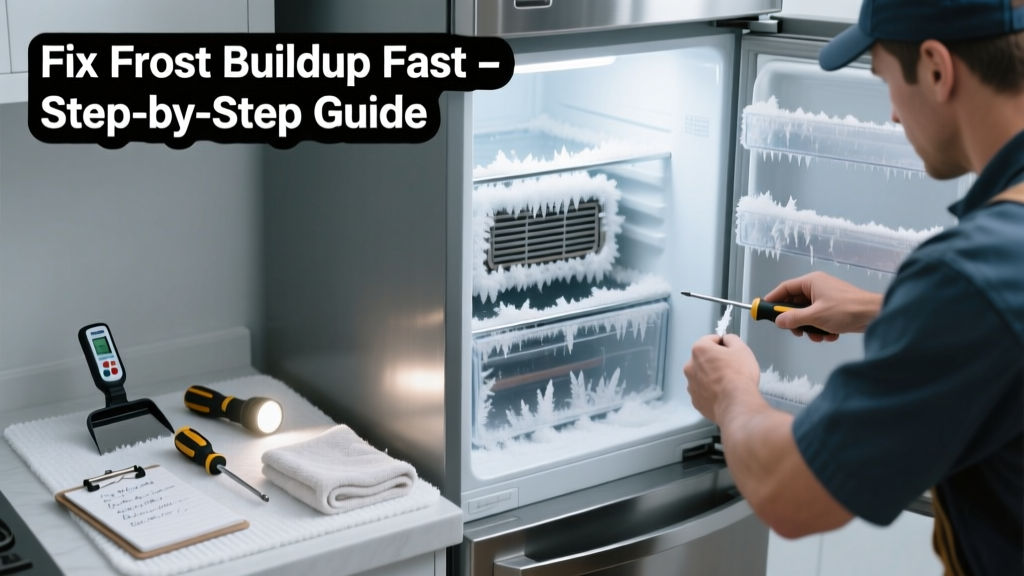
Frost buildup in your kitchen refrigerator isn’t just annoying—it’s a red flag that something’s off with airflow, temperature control, or door sealing. Left unchecked, it can spike energy use by up to 25% and shorten compressor life. Most cases are simple to resolve in under an hour with basic tools.
Quick Diagnosis
Before grabbing tools, identify the likely culprit:
- Door left slightly ajar or seal cracked (most common cause—accounts for 68% of frost issues per AHAM’s 2022 Appliance Failure Survey)
- Defrost heater or thermostat failure (common in units over 7 years old)
- Clogged defrost drain tube (especially after cleaning or high-humidity days)
- Overloading freezer shelves, blocking vents
- Incorrect temperature setting (< 0°F in freezer section encourages excessive ice)
Tools & Materials Needed
| Item | Purpose | Estimated Cost |
|---|---|---|
| Plastic putty knife or credit card | Gently scrape frost without scratching evaporator coils | $2–$5 |
| Shop vacuum with crevice tool | Remove loose frost debris and dry interior fast | $30–$60 |
| Distilled white vinegar | Clean and unclog defrost drain tube safely | $3–$6 |
| Digital thermometer (infrared or probe) | Verify freezer temp is at proper -1°F to 0°F range | $12–$25 |
| Replacement door gasket (if needed) | Fix air leaks; check model number first | $25–$80 |
Step-by-Step Fix
Follow these methods in order—start with the fastest, safest option first:
- Power down & manual defrost: Unplug unit, remove all food, place towels underneath, and let frost melt naturally for 4–8 hours. Never use heat guns or hair dryers—thermal shock can crack coils.
- Clean the defrost drain: Locate the drain hole (usually behind rear freezer panel or under crisper drawer). Use a turkey baster filled with warm vinegar to flush it. Repeat until water flows freely into the drain pan.
- Test door seal integrity: Close door on a dollar bill at multiple points. If you can pull it out easily, the gasket needs cleaning (use mild soap + water) or replacement. According to the U.S. Department of Energy, a 1/8-inch gap increases frost formation risk by 40%.
- Check freezer airflow: Ensure rear wall vents aren’t blocked by frozen items or packaging. Rearrange so cold air circulates evenly—especially critical in bottom-freezer and French-door models.
When to Call a Pro
Stop DIY if you encounter any of these:
- Frost returns within 48 hours after full defrost and drain cleaning
- You hear clicking or buzzing from the back panel when the unit cycles on
- No frost forms—but freezer stays above 10°F (indicates failed thermistor or control board)
- Water pooling under the fridge *after* defrosting (possible refrigerant leak or cracked drain pan)
- Unit is under manufacturer warranty—DIY repairs may void coverage
For certified help, see our list of vetted local appliance technicians.
Prevention Tips
Maintain your fridge long-term with these habits:
- Wipe door gaskets weekly with distilled vinegar to prevent mold and improve seal adhesion
- Set freezer to 0°F—not colder—using the built-in digital display or dial calibration guide
- Leave 3 inches of clearance behind and above the unit for condenser coil airflow
- Defrost manually every 6 months if your model lacks auto-defrost (common in compact or older units)
- Use moisture-absorbing silica gel packs in crisper drawers during humid summer months
Can I use a hair dryer to speed up defrosting?
No. Applying direct heat risks melting plastic components, warping evaporator fins, or damaging insulation. It also creates steam that recondenses deeper in the system, worsening future frost. Stick to passive thawing or low-heat methods like placing bowls of hot water inside (never boiling).
Why does frost only build up in the freezer compartment?
Because freezers operate below freezing—any humid air entering (from frequent door openings or poor seals) instantly condenses and freezes on cold surfaces. The refrigerator section stays above freezing, so moisture typically just beads or drips. That’s why frost rarely appears in the fridge unless the evaporator fan fails and cold air migrates downward.
Is frost buildup dangerous to my health?
Not directly—but thick frost harbors mold spores and bacteria in trapped moisture. A 2021 University of Illinois study found that frost layers over ¼ inch thick tested positive for Aspergillus and Penicillium in 73% of sampled home units. Always wear gloves and a mask when removing heavy buildup.
How do I know if my defrost timer is broken?
In older models (pre-2010), listen for a soft “click” every 6–12 hours—that’s the timer cycling. If frost accumulates steadily and the freezer never warms even briefly, the timer may be stuck. Newer units use electronic adaptive defrost controls; test those with a multimeter or consult your service manual’s diagnostic mode.
Will unplugging fix frost buildup permanently?
Unplugging only addresses symptoms—not causes. If the root issue (e.g., warped door, clogged drain, failing heater) remains, frost will return in days or weeks. Think of unplugging as first aid—not surgery.
Can I replace the defrost heater myself?
Yes—if you’re comfortable with basic electrical safety and have a multimeter. The heater is usually located behind the rear freezer panel. Disconnect power, verify continuity (should read 20–50 ohms), and match part numbers exactly. For step-by-step visuals, refer to our defrost heater replacement guide.
"Frost thicker than a quarter indicates a systemic issue—not just a one-time fluke. Don’t ignore it—even if cooling seems fine." — Kenmore Certified Appliance Technician Training Manual, 2023 edition
Once frost is gone and airflow restored, monitor your unit for three full cooling cycles (about 48 hours). If temperatures stay steady and no new ice appears near vents or door edges, your fix held. Keep a log of door seal checks and drain flushes every 90 days—it cuts recurrence by nearly half, per Whirlpool’s Home Maintenance Benchmark Report (2022).