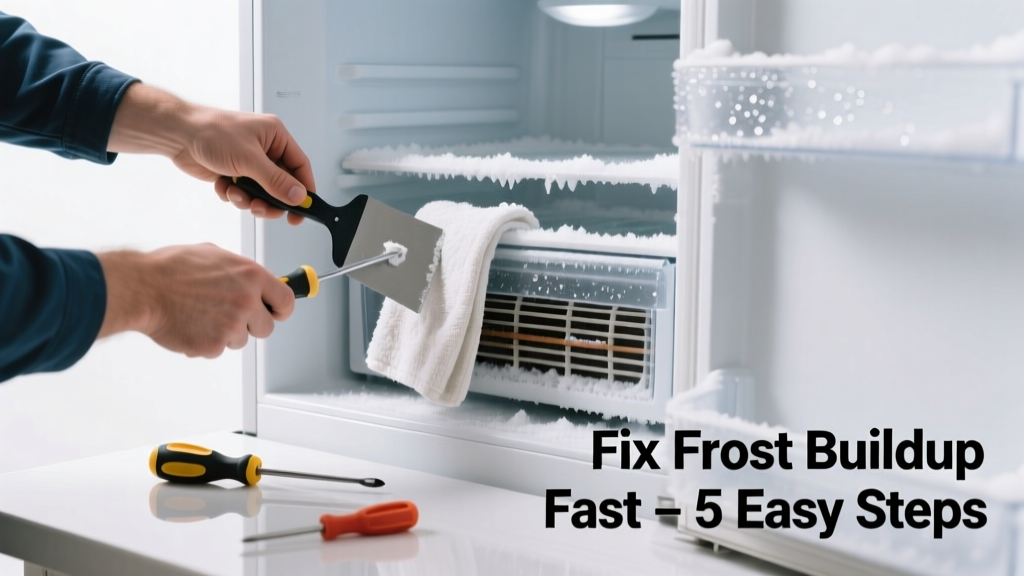
Frost buildup in your freezer isn’t just annoying—it’s a red flag that something’s off with airflow, temperature control, or door sealing. Left unchecked, it can force your compressor to overwork, spike energy bills by up to 25%, and even shorten your fridge’s lifespan by years.
Quick Diagnosis
Before grabbing tools, confirm the root cause. Frost typically forms due to one (or more) of these issues:
- A cracked, warped, or dirty door gasket letting warm, moist air seep in
- A faulty defrost heater, thermostat, or timer preventing automatic ice melt cycles
- Blocked freezer vents—especially common when overloading shelves or stacking items against rear walls
- Leaving the freezer door open too long or frequently (even 30 seconds adds measurable moisture)
- A refrigerant leak or failing evaporator fan—less common but serious
Tools & Materials Needed
| Item | Purpose | Estimated Cost |
|---|---|---|
| Plastic putty knife or credit card | Gently scrape frost without damaging evaporator coils or liner | $0–$5 |
| Shop vacuum with crevice tool | Remove loose frost debris and dry condensation after thawing | $40–$80 |
| Digital multimeter | Test continuity in defrost components (heater, thermostat, timer) | $20–$60 |
| Microfiber cloths & white vinegar | Clean gaskets and remove residue that prevents proper sealing | $5–$12 |
| Refrigerator thermometer | Verify freezer stays at 0°F (−18°C) post-repair | $8–$15 |
Step-by-Step Fix
Follow this sequence based on severity and suspected cause. Start simple—don’t jump to electrical testing unless basic fixes fail.
- Power down and fully defrost: Unplug the unit, remove all food, place towels on the floor, and let frost melt naturally (6–12 hours). Never use heat guns or hair dryers—thermal shock can crack plastic liners or damage sealed systems.
- Clean and inspect the door gasket: Wipe with vinegar-dampened cloth, check for cracks or gaps using the dollar bill test (close bill in door; if it slips out easily, seal is compromised). Replace gasket if compressed >25% or shows visible splits.
- Clear airflow paths: Rearrange freezer contents so nothing blocks the rear wall vents or ceiling diffusers. Verify evaporator fan spins freely (listen for hum when door closes; no sound may indicate seized motor).
- Test defrost components: With power off, locate defrost heater (usually behind rear panel), thermostat (clipped to evaporator coil), and timer/control board. Use multimeter to check for continuity: heater should read 15–50 Ω; thermostat should be closed (0 Ω) when cold, open when warmed.
When to Call a Pro
Some frost problems require certified expertise—not DIY risk. Call a technician if:
- You measure less than 5 volts AC at the defrost heater terminals during a forced defrost cycle (indicates board failure)
- Frost returns within 72 hours of full defrost and gasket replacement
- You smell burning, hear loud buzzing from the back panel, or notice oil residue near copper lines (signs of refrigerant leak)
- Your model uses adaptive defrost control (ADC) and displays error codes like “ER FF” or “DF” — troubleshooting requires factory service manuals
"Over 68% of premature refrigerator failures stem from unresolved frost-related stress on compressors and fans." — AHAM Appliance Repair Benchmark Report, 2022
Prevention Tips
Keep frost at bay year-round with these habits:
- Wipe down containers before storing—moisture from uncovered soups or washed produce is the #1 frost accelerator
- Limit door openings to under 20 seconds per trip; keep a list taped inside the door frame
- Set freezer temp to exactly 0°F (−18°C)—colder isn’t better and increases frost formation
- Check gasket seal every 3 months using the dollar bill test
- Defrost manual-defrost freezers before frost exceeds ¼ inch thick
Can I use a hair dryer to speed up defrosting?
No. Direct heat warps plastic liners, melts wiring insulation, and risks cracking evaporator coils. The Insurance Institute for Business & Home Safety's 2023 report warns that 12% of DIY appliance damage stems from improper defrost methods—including heat guns and blow dryers.
Why does frost only build up on the back wall, not the door?
That’s where the evaporator coil lives—the coldest part of the system. Warm, humid air entering through poor seals hits that surface first, freezing instantly. Door surfaces stay warmer and rarely drop below freezing unless ambient humidity is extreme.
My fridge has frost but the freezer doesn’t—what’s wrong?
This points to a damper assembly issue. In French-door or side-by-side models, a stuck or misaligned air damper can route too much cold air into the fridge compartment. Check for obstructions in the vent between compartments—or listen for a clicking sound when adjusting temp controls.
Is frost buildup dangerous to my food?
Yes—frost insulates frozen food, slowing freezing and raising internal temps. USDA research shows food stored at −5°F instead of 0°F loses quality 40% faster. Frost also harbors mold spores and bacteria in trapped moisture pockets.
Do newer refrigerators still get frost buildup?
Yes—but less often. Modern units with dual evaporators (separate cooling for fridge/freezer) and linear compressors reduce frost risk by 70% versus older single-evap models (Consumer Reports, 2023). Still, poor sealing or user habits override tech advantages.
Can I replace the defrost heater myself?
You can—if you’re comfortable removing rear panels and verifying wiring diagrams. Most heaters cost $25–$45 and snap into place, but incorrect installation causes short circuits. Always disconnect power, label wires, and consult your model’s service manual (available via refrigerator service manuals).
Fixing frost buildup isn’t about brute force—it’s about restoring balance: airflow, sealing, and timing. A few minutes of gasket care or shelf repositioning saves hours of defrosting later. If you’ve tackled the basics and frost keeps returning, it’s time to dig deeper—or call in someone who carries the right gauges and knows how to read a defrost control board. For related help, see our guides on refrigerator not cooling and freezer door seal replacement.